Banking on Relationships with Toni North
Most banking advice for small business owners focuses on rates, fees, and features. Toni North, branch manager at SSB Bank in Pennsylvania, argues the more durable variable is the person on the other side of the desk — and whether that person knows anything real about your business.
On this episode of The Authority Formula Podcast, host George Wright III talks with North about how she built a decades-long banking career on relationships rather than product quotas, what genuinely earns a customer's trust, and why so many people stay with a bank that treats them like an account number. If you run a small business, or you've been putting off a banking decision because switching feels like a hassle, her perspective is worth borrowing.
How Toni North Turned a Teller Job Into a Career in Relationship Banking
North's entry into banking was almost accidental. Her fiancé's relative worked at a bank, North was looking for work, and after a single conversation with the manager she was told she could start the next day.
She spent her first four years as a teller. When she became pregnant with her first son, she told a customer she planned to stay home. He told her flatly that she'd be back. She was. After her second pregnancy she said she was finished with banking for good. Same customer, same prediction. He was right again.
What kept pulling her back wasn't the industry — it was the people in it. As she describes it, the interaction with customers, meeting new people, and making friends with them is what has driven her return, over and over.
That origin story matters because it explains her operating model. North didn't learn relationship banking from a training manual. She learned it from standing at a teller window long enough that customers started predicting her future.
"Build a Relationship, Not a Product"
North spent time in large institutions before joining SSB Bank, and her description of the difference is blunt.
"The big banks just kept pushing you and pushing you to sell, sell, sell, and they looked at a customer as a number. SSB looks at a customer as a friend, as a family member. And there was no pushing of products on the customer. Build a relationship, not a product."
The distinction is worth sitting with, because it applies well beyond banking. A sales-quota culture optimizes for the transaction in front of you. A relationship culture optimizes for the next twenty years of transactions you haven't had yet.
North's version of this is practical rather than philosophical. She treats every customer walking through the door as though they're related to her, and she asks herself what she would want done for her if she were the one coming in. That's not a script. It's a decision rule she can apply to situations no policy manual anticipated.
What relationship-based banking actually looks like day to day
Asked what the phrase means to her personally, North doesn't reach for abstractions. She greets every customer by name. She knows whether they have children or grandchildren, whether they're going on vacation, and what life events are underway. The point, in her words, is to be able to talk with them — not just wait on them and get them out the door.
That level of knowledge has a compounding effect. One customer started with North back when she was a teller, cashing her paycheck. That woman is now 92, has no family in Pittsburgh, and North has effectively taken her under her wing. Many of North's customers have her cell phone number, and she maintains those relationships outside the branch as well as inside it.
How She Earns Trust With Business Owners
Trust, in North's telling, comes down to two habits.
The first is refusing to recommend something she isn't genuinely behind. She won't tell a customer to do something she isn't passionate about.
The second is admitting when she doesn't know. If a customer asks about a service and she isn't certain of the answer, she won't improvise one on the spot. She asks for a day to research it and gets back to them.
"I always feel like telling the truth to the customer brings them back time and time again."
For business owners evaluating any professional relationship — banker, accountant, attorney, agency — that's a useful filter. The person willing to say "let me find out" is usually more valuable than the person with an instant answer for everything.
Why People Don't Switch Banks — and How to Make It Painless
Wright raised the dichotomy directly: people want the security of a big bank and the personal attention of a small one. So why do they stay put even when they're unhappy?
North's answer is friction, not loyalty. Once someone has direct deposits arriving automatically and bills drafting out of an account, the thought of transferring all of it feels like too much work. They don't want to spend the time.
Her solution is to absorb that work herself. When a customer comes in, she walks them through the transition step by step. If that means calling the utility company to handle a switchover, she'll make the call.
She described an older couple who has followed her from bank to bank. The husband was rattled about moving all of his direct deposits, and he asked directly whether she was going to push him toward internet banking — something he wanted no part of, along with a debit card. She didn't. Everything transferred, he settled in, and he told her plainly that the reason he was there was because he couldn't walk into another bank and get the individual attention he needed.
What a Community Bank Can Offer a Small Business
For businesses just starting out, North points to accounts with no fees attached. Monthly fees, she notes, can add up to real money for a company that doesn't yet have the resources to absorb them.
The access is the other differentiator. SSB doesn't route customers through a central customer service number. You call the local branch and talk to a person. And if a customer needs something the branch doesn't currently offer, North takes it to upper management to see whether they can source it.
She also pointed to something she'd never witnessed in her big-bank years.
"The first week that I started at SSB, the president was down on the teller line, like being a teller and talking with customers. I'm like, 'Oh my God, I've never seen this done before.' The same with the CFO. They interact with customers every day on the main floor. They're not in some big office hiding away."
North's community involvement runs alongside the banking work. She started her career in the same neighborhood she still serves — a predominantly Jewish area with a number of organizations that, in her view, do significant good for Jewish residents and for the everyday person alike.
Action Steps
- Audit what your current bank actually knows about you. If nobody there can name your business, your growth plans, or your seasonal cash flow, you're getting a product, not a relationship.
- Test the access before you commit. Call the institution you're considering and see whether you reach a real person at a local branch or a phone tree designed to keep you away from one.
- Ask a prospective banker to handle the switch. North walks customers through direct deposits and automatic bill payments step by step, including calling utility companies. If transition friction is your only reason for staying, that reason can be removed.
- Price the small stuff. For an early-stage business, no-fee account options can free up meaningful monthly cash that would otherwise disappear into maintenance charges.
- Adopt the "let me research that" habit in your own business. North credits her willingness to admit uncertainty — and follow up within a day — as a core reason customers keep coming back.
North's closing advice to local business owners was characteristically low-pressure: come in, let her show you what's available, and decide for yourself. In an era where more of banking is being handed to software, her argument is that high tech still needs high touch — and that the institutions still willing to put a president on the teller line are the ones worth a conversation.
Toni North
Toni North is an Assistant Vice President and Branch Manager at SSB Bank. Drawing on years of experience across multiple banking institutions, she specializes in building lasting deposit relationships through personalized service and trust. Toni brings practical insight into how relationship-driven banking strengthens customer loyalty, communities, and long-term business growth.
Read the full transcript
Toni North: [00:00:00] The big banks just kept pushing you and pushing you to sell, sell, sell, [00:00:05] and they looked at a customer as a number. SSB looks at a customer as [00:00:10] a friend, as a family member and there was no pushing of products [00:00:15] on the customer. Build a relationship, not a product[00:00:20] George Wright III: Welcome to the Authority Formula Podcast, the show that helps you [00:00:25] grow your business, attract new opportunities, and leave your competition behind. I'm George [00:00:30] Wright III, your host, partnering with Valiant CEO Magazine to bring you the world's top [00:00:35] entrepreneurs, thought leaders, and experts. Let's dive into the strategies they use to dominate [00:00:40] their markets and become the authority in their field.[00:00:45] Okay, guys, welcome back to the podcast. George Wright [00:00:50] III. I'm your host, and I'm joined today by a really special guest, [00:00:55] Toni North. Toni, how are you? Toni North: I'm good. How about you, George? George Wright III: I'm good thank you. I [00:01:00] really was looking forward to having you on because we're gonna be talking a little bit about banking about [00:01:05] relationships. We're gonna be talking about small business growth and community. And so [00:01:10] for those of you listening, do me a favor make sure you follow the show. We've got some really good episodes coming up. But also [00:01:15] I wanted to give you a quick introduction of Toni because there's a real strategic reason I have her on the [00:01:20] show today and I think if you have a small business or you're an entrepreneur or you're looking to grow your business you're gonna get a lot [00:01:25] out of this. But Toni North is a longtime banking professional. [00:01:30] She's actually the branch manager at SSB Bank in Pennsylvania. [00:01:35] And she's got an extensive experience and background in multiple financial institutions. Her approach to [00:01:40] banking is built around personal relationships trust and understanding the individual needs of [00:01:45] customers because she believes that banking should go way beyond transactions and serve more as a connector [00:01:50] between people and businesses. And her philosophy of teamwork makes the dream work really [00:01:55] reflects the emphasis that she has on collaboration. So Toni I really wanted to dig into this with [00:02:00] you because you have this extensive background in banking and so maybe you could take me back to [00:02:05] the beginning. How did you get into banking, and what has kept you passionate about banking and [00:02:10] relationships this long? Toni North: That's a great question. I started at the [00:02:15] time my fiancé his relative was in banking and [00:02:20] I was looking for a job. She asked me to come in and talk to her [00:02:25] manager. Went in, talked to him, and at that time, he's like, " You can [00:02:30] come a-aboard tomorrow." I'm like, "Tomorrow?" He's like, "Yeah, come aboard [00:02:35] tomorrow." So for the first four years that I worked as a teller, [00:02:40] liked it, and then I got pregnant with my first son, and I remember [00:02:45] telling a customer, "Oh, I'm gonna stay home and be a stay-at-home mom." [00:02:50] And he said, "No, you're not. You're coming back." I said, "What makes you say that?" He's like, [00:02:55] "I just know it." He was right. George Wright III: He was right. Toni North: After my maternity [00:03:00] leave, I came back, got pregnant a second time, and told him, "This is it. [00:03:05] I don't want to do banking." And he's like, "Mm-mm. You're coming back." Came [00:03:10] back and been in it ever since. And it's just the [00:03:15] interaction with the customer, meeting new people, making friends with them, that just keeps driving [00:03:20] me back and back. George Wright III: Yeah, so it is interesting, 'cause as we talked, I realized that, you know, [00:03:25] and this is the same with a lot of business, relationships are such a key, and you, you seem to [00:03:30] thrive on that, and that's kind of helped you, um, to stay consistent and also achieve quite a bit in the [00:03:35] banking industry. So you, you actually are now, uh, a branch manager at SSB Bank, [00:03:40] and I, I'm curious what brought you to SSB Bank and what attracted you to kind of this [00:03:45] community banking model? Toni North: The big banks just kept pushing you and pushing you [00:03:50] to sell, sell, sell, and they looked at a customer as a number. SSB [00:03:55] looks at a customer as a friend, as a family member. Um, [00:04:00] and there was no pushing of products on the customer. Build a relationship, [00:04:05] not a product. George Wright III: Yeah, I love that. And, and you kind of mentioned a c- a comment about big [00:04:10] banks, and I think, you know, a lot of customers, clients of the bank, or [00:04:15] even just business owners, you know, they, they love having the idea of security of a big bank, but they, [00:04:20] they, they really hate that they're just a number. What do you see as the big differences between, [00:04:25] um, big banks and what you try to do at, at your, at your bank [00:04:30] location? Toni North: Every customer coming through the door, George, I act like they are [00:04:35] related to me, and I put myself in their shoes as to [00:04:40] what would I like to have, uh, done for me if I was coming in the [00:04:45] bank as a customer. And, you know, just build on that relationship. George Wright III: Yeah, and [00:04:50] I think that you... I, I was curious because you really have built your reputation around [00:04:55] relationships, and so when you say, you know, like, relationship-based banking, what, what does that kinda mean to [00:05:00] you personally? Toni North: You know, greet every customer by their name. You know [00:05:05] if they have children or grandchildren if they're going on vacation [00:05:10] whatever it is a life-changing event in their life. You know be able to talk to them [00:05:15] about it, not just wait on them and get them out the door. George Wright III: Yeah, it seems like [00:05:20] no matter where you go in business, whether you're trying to, you know, because obviously the finances are important, [00:05:25] people do appreciate that. They know that you have their best interests at heart, and so I think that's probably what [00:05:30] separates really great bankers, banking relationships from average ones. How, what have you [00:05:35] done over the years to really earn trust with business owners or customers? And maybe you have [00:05:40] story or something you can share, but how do you earn trust with a... you know, outside just the [00:05:45] relationships, with business owners or customers of the bank? Toni North: So one is I would [00:05:50] never just tell them to do something if I wasn't passionate about it. [00:05:55] And if there was a question about a service or something that they're asking about and I really [00:06:00] didn't know, I'm not gonna just give them an answer on the spot. [00:06:05] I will tell them "Give me a day to research this. I'll get back to you." [00:06:10] And I always feel like telling the truth to the customer brings them back time and time [00:06:15] again. George Wright III: Yeah, they wanna know that you're really looking out for their best interests, but also that you're willing to maybe go to work and [00:06:20] do the research for them. So is important. I feel like- That trust is coming up more and [00:06:25] more in business nowadays as well as something that it has to be earned, and it has to be, [00:06:30] you know, you can't just come out with great products, 'cause everybody's got great products, and better deals, and better rates, [00:06:35] and all of that right now. What are you guys doing at your bank and as an individual banking [00:06:40] professional? What do you do to provide value for these local businesses [00:06:45] outside what the typical products are? Toni North: Give them individual [00:06:50] customer service when they come into the bank. If they need something that we don't [00:06:55] have, I will go and see if we can get that service for [00:07:00] them with upper management, so that we can service them fully. George Wright III: Yeah. [00:07:05] It seems like you have some pretty long-term relationships. You told me about a relationship you [00:07:10] have with one of your customers that's much older right now that you still continue to kind of [00:07:15] help. It almost feels like you kind of take it more than just a banking relationship [00:07:20] with your customers. You see them as almost family, right? Toni North: Right. Right, and that's what happened with [00:07:25] that customer. She started when I was a teller, and coming in with [00:07:30] her paycheck, and she's 92 today. And [00:07:35] she had no family in Pittsburgh, and I kind of took her under her wing, [00:07:40] took her under my wing as, like, a grandmother and aunt and [00:07:45] just is helping her along the way. George Wright III: With a bank, it's like anything else, whether it's [00:07:50] finance, accounting, everything like that. When your relationships understand your business [00:07:55] more, you're able to grow better because you know what resources are available to [00:08:00] you. So what are the... what are some of the ways that you actually stay in personal connection [00:08:05] with your clients and stuff there at the bank? Toni North: A lot of them have my cell phone number. [00:08:10] I continuously keep a relationship with them outside of the bank, besides the [00:08:15] bank George Wright III: Obviously when you see it differently than just a banking client, that makes a big difference. [00:08:20] So one of the other reasons I wanted to kinda have you on the show today is because we're [00:08:25] getting ready to do something a little different. It's a little bit different than your typical banking institution does. We're getting [00:08:30] ready to launch some, a media effort with a, a brand new magazine in your local [00:08:35] business area, as well as podcasts. And it started originally as an [00:08:40] idea to be able to help grow small businesses. So I wanted to talk to you a little bit about the community [00:08:45] and what you felt why you felt so tied into the local community and [00:08:50] why with the bank or outside the bank, you felt this desire to help grow [00:08:55] the local community and how that kinda ties in. Because everybody thinks of you as the branch [00:09:00] manager, so obviously the finances and everything are important, but you have this desire to also help the [00:09:05] community, right? Toni North: Right. I started my banking career in this community [00:09:10] and just stayed here the whole time. And get to know all the different [00:09:15] organizations in the area. We're in a predominantly, like, Jewish neighborhood, so [00:09:20] there's a lot of Jewish organizations around here. And a lot of them do [00:09:25] such good things for not only Jewish individuals, but [00:09:30] the everyday Joe. It's amazing. George Wright III: While we're talking about this, because as we're [00:09:35] growing local businesses, I think a lot of times people think of banks as simply [00:09:40] that, you know, just their financial institution. But you guys have a desire to really be more than that, [00:09:45] maybe a catalyst for business in the area. So what are some ways that you help [00:09:50] local businesses that big banks can't do? Toni North: For a small business [00:09:55] starting out, we have accounts that there's no fees involved in it. And sometimes [00:10:00] those fees can be a lot of money monthly for a small business that's just [00:10:05] starting out and don't have the resources for all that. So that's a big [00:10:10] thing. George Wright III: Yeah. And I think a lot of times when businesses are getting started or even [00:10:15] when they're struggling those are the things the little things do add up right? They make a big difference. Do you [00:10:20] have examples of any clients that you've worked with or examples with your bank [00:10:25] itself that you feel like sort of exemplify that client relationship that you [00:10:30] are, you're having locally? Any particular examples that come to mind? Toni North: I have [00:10:35] an older couple that has followed me from bank to bank, and [00:10:40] the husband is up in age, and he was getting really rattled because he had to [00:10:45] transfer all his direct deposits here. And his wife kept reassuring him [00:10:50] each time, because she still does a part-time consulting with a [00:10:55] local school here in the area. And- She keeps telling him each [00:11:00] time, "Don't you worry about it. Toni will be there to help you along the way. [00:11:05] We've trusted her this long, you know, trust her now." And [00:11:10] he's fine. We got everything transferred over, and he's fine now. [00:11:15] And he's like, "You know the reason why we're, I'm here is because of you," he said, "because [00:11:20] I can't walk in the other bank and get the individual attention that I need." George Wright III: Yeah [00:11:25] and we're in this world where relationships are being replaced by [00:11:30] technology and AI and the ability to just bank online and most of that individual [00:11:35] attention is obviously gone, right? And it, Toni North: it kind of- And that's one of the things that he actually [00:11:40] asked before we went ahead and changed everything, like, "Are you gonna push [00:11:45] me to the internet? I don't do anything on the internet, don't want to [00:11:50] do anything. I don't want a debit card." And, you know- George Wright III: Interesting ... Toni North: we, yeah. [00:11:55] George Wright III: All, it's, it's all kinds of individuals, right? And everybody has different needs. I'm curious 'cause [00:12:00] we talked about this before. There's a lot of people that are hesitant [00:12:05] to move banking relationships, and maybe it's just because they've always done something [00:12:10] a certain way. It's a real dichotomy because people want the security of big [00:12:15] banks, but they want that personal attention. What do you think are the biggest reasons that keep [00:12:20] people from moving their banking relationships? Toni North: I think that once they get [00:12:25] tied into a direct deposit going automatically into their account, or they have [00:12:30] bills that come out of their accounts, the thought of transferring all that stuff [00:12:35] over to another bank is just too much. They don't wanna take the time to do it. [00:12:40] But well, normally what happens is when they come here, George, I will [00:12:45] take And go step by step with them. If that means I have to call [00:12:50] the utility company to get that switchover, I'll do that. George Wright III: And so you [00:12:55] try to make it very seamless for them. Is that the main way that you're able to sort of like ease their [00:13:00] concerns? Toni North: Exactly. George Wright III: Yeah, 'cause it's like anything else. People are... They get comfortable doing what [00:13:05] they're doing, but then they don't realize all the benefits that they could be having. They're paying these extra fees. They're paying [00:13:10] all this other stuff and they don't have any, you know, support. There's nothing worse than calling and getting put [00:13:15] into a phone tree where you're trying to figure out how to get through to a live person. It's like the worst- Right, right ... [00:13:20] right? So, Toni North: um- That's another thing. We don't have a customer [00:13:25] service number that you call. You call the local branch, and you talk to a [00:13:30] person and give you individual attention. George Wright III: Yeah. It's, isn't it alm- it's almost [00:13:35] like every time I call one of those systems, it's like their whole goal is to try to get you not to [00:13:40] talk to somebody. Like, even when you say, "I wanna talk to a representative." "Well, what is it about? And then where do you [00:13:45] wanna go with it?" And you're like, "Geez, just give me somebody to talk to," right? Toni North: Exactly. [00:13:50] George Wright III: Oh, that's funny. You you had an interesting comment about the bank president and CFO. What [00:13:55] were you saying about that? This is a perfect example of large bank, small [00:14:00] hometown feel is that people can actually interact with them, right? Toni North: Yeah. The first [00:14:05] week that I started at SSB, um, the president was [00:14:10] down on the teller line, like being a teller and talking with customers, [00:14:15] and I'm like looking like, "Oh my God, I've never seen this done before," because I [00:14:20] came from big banks. The same with the CFO. They interact with customers every [00:14:25] day on the main floor. They're there. Customers see them. They're not in [00:14:30] some, um, big office hiding away. George Wright III: Yeah such a great example. I [00:14:35] thought that was interesting too, because you don't expect a bank as big as SSB is, right, to have that [00:14:40] happen. This has been great Toni. I really wanted to take this time, and we acknowledge your [00:14:45] experience and some of the things that you've had over the years and what you're bringing to the local community, so we're excited [00:14:50] about some of the things you have coming up. Is there any advice you would give to maybe a local business owner [00:14:55] or someone looking to change relationships or even just that are looking to create [00:15:00] success in the local community? Just anything top of mind for you that you would say to them? Toni North: At [00:15:05] least come, let me talk to you, let me show you what we have to offer here at [00:15:10] SSB. And I think once you come in the doors, you're gonna love it. George Wright III: I think at [00:15:15] the end of the day, relationships are becoming more and more important, especially in this age of [00:15:20] technology and AI. It's really that idea of having the high tech, high touch. You you wanna have the [00:15:25] security of knowing that you have a lot of options, but also that, that small town feel. So [00:15:30] this has really been great, Toni. I appreciate you taking some time. And guys, for those of you listening, make sure [00:15:35] you do us a favor. Share this episode. Let's get the word out for the bank there. But also let us know what we can do to [00:15:40] help you. Hit us up. Let us know what you're struggling with, what you're working on, what you're winning at. That's the whole purpose of the [00:15:45] podcast, is in order to help you guys really grow your businesses and increase your [00:15:50] overall success in life. So have an amazing day. We'll talk with you [00:15:55] [00:16:00] soon.
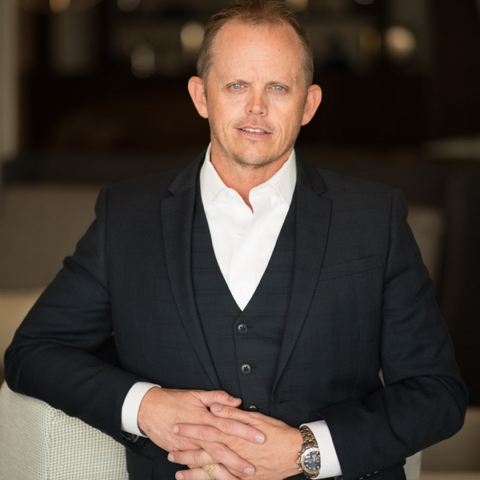
George Wright III
George Wright III is an entrepreneur, investor, and the host of The Authority Formula Podcast. Over more than two decades he has founded and scaled several multimillion-dollar companies and built a renowned seminar business that put some of the world's biggest names and brands on stage. With 25+ years across marketing, sales, and executive leadership, he has made a career of turning expertise into authority — and authority into lasting influence.
Today his mission is singular: help driven entrepreneurs and experts position themselves as the trusted authority in their field. Through The Authority Formula Podcast and Authority Media Network, George shares the strategies that turn knowledge into a platform, audience, and brand that compounds over time.
More about George →