Terry Rich on Building an Epic Life Through Innovation and Integrity
Terry Rich has run a cable company in the early days of MTV and CNN, turned around a struggling zoo, given away a billion dollars as CEO of the Iowa Lottery, and cracked the largest lottery fraud in U.S. history. On The Authority Formula Podcast, George Wright III sat down with Rich to unpack the mindset, habits, and systems behind a career that refuses to stay in one lane.
What emerges from the conversation is less a biography and more a playbook: a set of repeatable principles for entrepreneurs who want to grow, adapt, and stay one step ahead.
Why Failure Is Not the Enemy
Most people treat failure as a detour. Terry Rich treats it as the road itself.
Happiness doesn't happen when you make a goal. Happiness happens on the way to success.
Rich spent decades proving this in practice. When he wrote to what he thought was Gillette seeking a television endorsement deal, he got a polite letter back explaining he had written the wrong company. Rather than quit, he channeled that same promotional energy into a centennial event for a town of 50 people, eventually landing national television coverage and discovering the satellite uplink technology that would generate $15 million in revenue on its very first weekend.
In fact, if you haven't failed, you haven't pushed the envelope far enough.
The lesson is not that failure is something you tolerate on the way to success. It is that failure is where the best information lives. The 43 failed press releases for that centennial event taught Rich everything he needed to pull off a satellite broadcast that changed his career. When astronauts were sent to the moon, mission control had to course-correct more than 90 percent of the time. The rocket still landed.
How to Create an Environment Where New Ideas Thrive
Rich introduced a communication framework at the Iowa Lottery called COT, standing for "consider or throw away." The concept is simple and the impact is significant.
If I say consider or throw away in an email, you can hit delete. You don't even have to read it. I just wanted to get the idea off my chest.
When a leader signals that an idea carries zero obligation, employees stop filtering their own suggestions out of fear. The receptionist with a sharp observation no longer buries it in a suggestion box that might not get read for weeks. She sends a COT email. The culture shifts from one where people try to impress the boss to one where ideas get a fair hearing before anyone decides whether to act.
Rich pairs the COT system with a deliberate brainstorming process drawn from his books "Dare to Dream" and "Dare to Create." Generate 100 ideas first. Remove the no-men, the people who reflexively say it will never work. Set the list aside. Then bring the team back together, including the skeptics, to find the top three. By the time the group selects priorities, everyone has contributed and everyone is invested.
What the Largest Lottery Fraud in U.S. History Teaches About Internal Risk
Rich's decade at the Iowa Lottery produced a billion dollars in payouts and one of the most consequential white-collar crime investigations in U.S. history. The case, detailed in his book "The $80 Billion Gamble," centered on Eddie Tipton, the security officer for the Multi-State Lottery Association who wrote the code that controlled the drawings and then used that access to fix winning tickets.
The fraud held for years because Tipton had something most internal threats share: motive, opportunity, and rationalization. Rich now uses those three elements as a diagnostic for any organization.
Motive shows up when financial pressure builds through divorce, debt, or addiction. Opportunity exists when a single person controls too many steps of a process, the way a church secretary who both collects and disburses funds creates a structural gap. Rationalization arrives when someone decides that working hard without adequate recognition justifies taking what they believe they are owed.
Remove any one of those three conditions and the risk drops sharply.
How to Build an Innovation Budget Without Betting the Farm
Rich's advice for entrepreneurs who want to stay on the cutting edge without exposing everything they have built is practical and repeatable. Start by working for someone else and building your side venture at night and on weekends until cash flow is self-sustaining. Once the business generates real profit, carve out a fixed percentage, Rich suggests something like 5 to 10 percent, and treat it as a research and development fund.
The framing matters. He compares it to walking into a casino with a set amount of cash. When that amount is gone, you leave. You call it entertainment. The entrepreneur who dips back into operating funds to chase a failing experiment is the one who goes home sick.
That same discipline applies to hiring. Entrepreneurs are often poor CEOs, Rich argues, not because they lack vision but because scaling requires different skills than founding. Surround yourself with a strong accountant, a strong lawyer, a strong salesperson, and bring in advisors as unpaid board members early. Let the experts handle what they are built for so you can stay focused on the ideas.
Why Accepting Change Is Non-Negotiable
Rich returns to one image more than any other throughout the conversation: the taxi driver who assumed Uber could never happen. Every industry that failed to evolve offers the same lesson in a different wrapper.
Cable television was the disruptive upstart once. Rich got in early, took the stock options no one else wanted, and rode the wave. The same pattern played out in technology and now in artificial intelligence. The question is never whether change is coming. The question is whether you are positioned to move with it or against it.
Raise your hand for the assignments no one else wants. Volunteer for the thing you have never done before. Get noticed. Build the skill set. When the wave arrives, you will be ready to move.
Action Steps
- Adopt the COT system in your team communications. Label exploratory ideas "consider or throw away" so employees know when to act and when to simply receive a thought.
- Build a dedicated R&D budget, even if it is small. Treat it as a capped experiment fund, not operating capital, so you can innovate without threatening the core business.
- Audit your internal controls for the fraud triangle: motive, opportunity, and rationalization. Look for single points of control where one person handles too many steps of a financial process.
- When brainstorming, separate the idea generation phase from the evaluation phase. Collect 100 ideas first, then bring the group back to prioritize the top three.
- Hire for your weaknesses before you feel the gap. Bring in advisors as board members early, and let experts lead the functions that are not your strength.
Terry Rich's career is a running demonstration that the most interesting opportunities tend to show up in places you never planned to go. A farm in Iowa, a cable startup with stock options nobody understood, a zoo losing $600,000 a year, and a lottery office hiding a fraud that took seven years to crack. Each one required the same posture: raise your hand, accept that failure is part of the process, and keep moving forward. It is never too late to start living the life you were meant to live.
Terry Rich
Creative. Lucky. Energetic. Fraud-busting. Terry Rich is a successful CEO and President of 25 years who loves to engage and entertain audiences across the globe. Under his leadership, state lottery sales and profits increased by 50%. He also led the Blank Park Zoo to profitability from a $600,000 deficit while positioning it as the second largest attended attraction in the state. But his national insight on business, banking, gaming, TV production, marketing and PR led him to success in his professional career and to his passion for public speaking. Oh, and he’s also given away over $1 billion. Terry lead the team that cracked the largest lottery fraud in US history. During the investigation, Terry oversaw day-to-day operations while considering long-term consequences, adapting quickly to change, and delivering on promises. Before that, he started four successful entrepreneurial businesses, and has numerous national media appearances including ABC, NBC, HBO, CBS, 20/20, CNN, CNBC, USA Today and The New York Times; a movie host on Starz! and appeared as a panel guest on the "Tonight Show". His production of a Fox Sports show called “Socker Slam” is currently a featured documentary on the Hearst streaming service “Very Local”. He’s a disruptive innovator and entrepreneur with a drive for integrity and honesty. He’s worked in the trenches, survived new business trends, and had success with generational changes. Terry’s keynotes are energetic, motivating, and perfect for an early morning, lunch or after dinner presentation. Terry Rich has authored two
Read the full transcript
Welcome back to the Authority Is podcast, where we help you to grow your business, attract new opportunities, and outpace your competition. My name is George Wright III. I'm your host, and I've been partnering up with Valiant CEO Magazine to bring you the hottest entrepreneurs, thought leaders, and experts from around the world that are crushing it in business. Together, we're going to unpack strategies and tactics that they're using to become the authority in their field. And my goal is to help to inspire and motivate you to do the same. So let's get right into it. Okay. Welcome back. George Wright III here. And I'm joined with an amazing guest. You guys are going to just be blown away. You're going to be so happy. Terry Rich, welcome to the podcast. Thank you very much. You're setting the bar pretty high here, George. Oh, no, I haven't even begun, man. You got to sit back for a minute. Guys, Listen to me. I had like a little short introduction for Terry, but I got to read you some of this guy's background. It's definitely going to inspire you. But I love how you describe Terry as creative, lucky, energetic, and fraud busting. That is just like a taste of what we're talking about here. But at the end of the day, Terry is a keynote speaker, an author, a panelist, been on The Tonight Show, giving away a billion dollars. correct the largest US lottery fraud ever. I mean, this guy's run four completely separate, distinct businesses. He's a great speaker, great innovator. I love the idea of innovation, by the way. So Terry, like there's so much stuff to unpack in the limited time we have, I almost don't even know where to start. Oh, I'll follow you. I'll follow you, George. I love it. I love it. Well, tell me this. How did you, because we can fast forward to the lottery here in a second. We got some ideas you guys are just not going to want to leave for a second, but give us some of your background. Give us a little bit of the lay of the land, kind of where you've come from and and how you got into this, because even with all that intro, I know you're a marketer. I know you're you're a promoter, you're a speaker. Tell us just a little bit about your background. Lay the backdrop for us here. I fell into it. Hey, I grew up on a farm in Iowa, a little dinky town in Iowa, a town of 50. I went to school, going to be a math major or a physics professor. And some guy said, said, hey, you can go over here and make a talk and make a living. I thought, I'm in. So I got into TV and radio and all my buddies went into broadcast television. And I was dumb enough to say, well, I waited too long to send out a resume. So somebody called and said, hey, they need somebody to help with the cable television that's being built. Brand new, just starting. No way. Okay. They said they couldn't pay me much, but they gave me these things called stock options. Well, lo and behold, it was the greatest growth opportunity, just like somebody getting into Google for the first time. I got to work with the Ted Turners and the help create MTV and CNNs and all of those travel the country. And we built this cable system up bigger and bigger and bigger. And in that learned a lot about innovation and entrepreneurship, because we couldn't touch anything that didn't seem to turn to gold. Everybody wanted cable television, because it was the new up and coming thing with all these new networks. And my dad once told me, he said, hey, work hard for someone, which is what I was doing. And, you know, make a living, do a good job. When you turn 62, you're going to get your Social Security and you're going to be happy. Well, at age 40, we cashed it out. Somebody took a run at our stock and lo and behold, we cashed out. And I now had the money I thought I ever needed in life. And I thought, well, happiness doesn't happen when you make a goal. Happiness happens on the way to success. And all of the excitement of having and starting new companies really got me going. So then I started my own companies. And during the cable years, although I failed a few times, I learned about doing satellite uplinks. And so I was doing these free previews. You'd turn on, hey, Mars, you're showing free HBO. So we'd get on and say, hey, now's the time to call in between the movies and call us now. And the first one we did sold $15 million. It was kind of like making infomercials with C-SPAN. It was long-form programming that we used the cable networks, and then we'd get on and sell it. And so I had my own company doing those. And on the side, then we started two or three other companies, bought and sold a radio station, started when we had MPEG-1. I had an MPEG-1 transfer of business and those sort of things. But at age 50, you know what happened, George? What's that? Midlife crisis. Oh, wow. And at that point, I said, I want to get off the road. I want to be with my family. I made the money. And I got a call and someone said, hey, they're about ready to close the zoo. Would you be interested in running the zoo? Well, I told you I was on the farm. I thought, if I could be a farmer, I sure as heck could take care of giraffes too, huh? So we turned to a zoo that was losing $600,000 a year, turned it around, got a lot of people in, marketing, promotion, doing basic business, blocking and tackling. And ultimately, got a $15 million endowment, so it's going to be around forever, built it to the second largest cultural attraction in the state. Then got a call from the governor and said, hey, we need someone to run the lottery, a guy retired. Well, never really done that either, so got in it. And as you heard, gave away a billion dollars over the 10 years I was there. But in the middle, it had a vendor who tried to steal from everyone and took us seven years. But we cracked the largest lottery fraud in U.S. history. So today I travel the world telling people the story, that story and why and how you want to protect yourself internally so you don't have internal fraud. Don't go through what I went through. So that's my history. That's my that's my deal. And wow. Well, you yeah, you bridged over a lot of really cool stuff, which we're going to try to unpack. Well, I'll let you lead. It all follows. You know what's funny? I got to tell you, Terry, you made a couple of comments. And I always tell people to listen to the show. Success leaves clues. And there are common traits of successful and happy and fulfilled people. And you said them almost like they were just second nature. But I know that they were probably through long lessons. But you said things like happiness is found along the way and things like that, that I think a lot of people don't realize and tell later in life. But I want to kind of back you up because I do agree with what you said. But it seems to me, it seems to me that you've done some pretty random stuff, but you've, you've really done things that when you talk about them, really are things you sound like you love, you enjoy. Do you think a secret or a key to your success is that you were doing things you love or were you just following the paths? They weren't necessarily things you were passionate about, but they just were things you turned into that because going from business to fraud, to cable, to, you know, all those different things. It seems like it was almost kind of happenstance to a degree, or was it that you were following paths that you were good at? Help me understand a little bit. Well, looking back now, I think I'd give some pieces of advice of what happened to me that I would suggest. First is, I always raise my hand. If somebody, the boss came in and said, hey, the toilets need clean, janitor's gone, I'd be the first raised man because you become noticed. If you just volunteer, do things you've never done before, and you're going to learn some new things. The second is failure is the first step to success. So I failed many, many times. In fact, first time I failed, I got into the cable business. I was on camera. I was doing a TV show and I looked out and I didn't have any of the five o'clock shadow and it's five o'clock. So I wrote to Gillette and said, hey, I love your razor. And if you'd like me to come out and be on TV, I'd love to do that. So I wrote him a letter, sent it to New York, thinking in two weeks, said, call me and I'd be on national television. And during that two weeks, probably like you feel when you play Powerball or Mega Millions, I thought, what if, what if it happens? You know, it's better to have tried and failed than to succeed at doing nothing. That was my old college professor, try something new. So I got the letter in two weeks and I had this excitement about being on national television. It said, dear Mr. Rich, we're glad you like the razor, but you wrote the wrong company. Gillette makes that, here's their address. So I failed that, but that excitement got me going just a few years later when I did a promotion out of the blue, tried something no one else had tried, and that was try to get people in for a centennial that only had 50 people lived in the town. We did a hundred year centennial and we tried to adopt a national celebrity and ultimately landed on Johnny Carson Tonight Show Oh wow I wrote 44 letters Only one person responded that when we wrote 44 letters or press releases only one press person called I failed 43 times with that one person was from United Press International. They threw it on the national scope. With all the publicity we got, we had ABC, NBC, CBS, and Today Show, Good Morning, all in this little town of 50 and 12,500 people showed up. But that isn't the secret there. The secret was I failed, but I learned during that, the Carson show talked about uplinking via satellite, which had never been done in our state. And that's, remember, I was in the cable business at this time. So why couldn't I do these free previews? And so I called around and they said, yeah, we can get you a satellite uplink. When do you want it? And the first weekend, as I told you, we did $15 million in net worth for the company, all because I failed 43 of the 44 times. So I learned all that. I love your perspective and your message on failure, because I think a lot of people as entrepreneurs, they hear you've got to fail. It's the gateway to success. It's the price you pay for success. But it seems to me, and I've heard this from a few real high-end CEOs, that it's also your perspective on failure. People that don't view failure as a bad thing you got to go through to be successful, you seem to have this perspective that failure is, the way you look at it is it's really an opportunity for success. It's just the way you phrase it really, to me, makes me feel like your perspective on failure is not the struggle you got to go through, but literally the opportunities you go through to get to success. Would you say that's kind of a good description? I think that's a great way to say it. In fact, if you haven't failed, you haven't pushed the envelope far enough. You're not going after the entire market. Think about when we sent three people to the moon. Project managers are notorious. When I was a CEO and you have a project manager, here's the date, here's our program, here's our goal, and boom, boom, boom, boom. And then they fail once and they quit. Oh, sorry, it ain't going to work. Well, we failed over 90% of the time when we sent three men to the moon. They said 10, 9, 8, 7, 6, 5, 4, 3, 2, 1. They didn't say, okay, we'll talk to you in two weeks. It's all planned out. They said, oh my God, it's going the wrong way. we got a course correct over 90% of the time. And how many times have you tried that one idea you think's a million dollar idea and some little thing didn't go quite right, so you quit. That's not that. Failure is the first step to success. You find ways to make it work. Yeah, well, I was gonna say, not just the first step, but you also said something else, which I thought was key, was do something you've never done. Meaning, people try and they do things they wanna do and they do things they're comfortable with and they fail their way and things. But it seems to me your track record is a great, great path that shows you gotta do things you've never done because there's entrepreneurs that don't know what they wanna do. And then there's entrepreneurs that are stuck in the rhythm of what they do. But if you don't try things you've never done before, first of all, you have to be willing to fail to do that, right? But try things you've never done. Man, you've got some great examples of that. And you gotta accept change. Most people, hey, it's been working. Why do we need to change? Well, think about taxi drivers who thought there would never be anything called Uber. In the day, you got to realize that things change and you've got to be part of that change. That's that's what boils down to the book that I wrote called Dare to Dare to Dream and then Dare to Create. I separated. I figured out that if I separate the creative portion of coming up with 100 new ideas and I've already tried to throw in 50. Some one of those might stick. And then you separate that from act. So you get everybody together. Let's get 100 ideas. And any idea is a good idea. You get rid of the no-mans. The people say, no, man, that'll never work. And you write down 100 ideas, and then you put them away. You don't judge them. When you come back, though, you let the lawyers and the accountants and everybody in a meeting. And again, when you create a new idea, you want as diverse a look as possible. If everybody looks like you or me, we aren't going to get the best idea because we're in a global society now, a very diverse society. You want to make as much money as you can, so you want to get all the ideas. And once you have those ideas, you bring in the no-mans back in, and they help everybody as a team then find the top three ideas. And now you've got the whole team supporting it because it's there. It's not just the one idea. I love it. Yeah, that one didn't work, so I'm not very creative, right? No, but you know what? I just love the way you put things. And it's both from a frame reference of experience, but also opportunity and openness because you have so many things going on. But being open, being willing to fail, you know, knowing that you've got to do things that are new. So let me ask you this, because I want to dig for a second into this lottery content. Sure, sure. You've got that book, The $80 Billion Gamble, right? True crime story of the largest lottery fraud in U.S. history. Can you give us just a quick, by the way, when you tell your story, it all just sounds like this amazing, you know, coasting, you know, up into the right chart of growth. I'm sure you had a lot of ups and downs, but this win of identifying a lottery fraud, what was going on at that time? Tell me a little bit about that. Well, so I take the lottery job. You come in, you get all excited. Hey, let's paint the wall green. Let's put animals on the lottery ticket, all these different things that are going on. And all of a sudden, one day, I get a call and say, hey, something's screwy here. I was actually on a cruise ship on vacation. They said, someone just called in. We had a lottery ticket worth $16.5 million. It was a multi, it had about 18 states. It's kind of like a mini Powerball so that we could have bigger jackpots. And they said, hey, we had a winner on this jackpot and no one showed up. And so that's logical. You're getting your accountant, you're getting, you know, big deals. We kept getting on, hey, you know, look for this ticket. It could be yours. Then we started getting the cranks, you know, cranky people who said, Hey, I think the clerk stole it. Or someone called and said, my husband, I think it's in the mafia because he drives a truck and I haven't seen him for six months. He comes in half of that money's money, you know, those kinds of things. But we got a call from a lawyer in Canada said, I have the ticket and here are the serial numbers. And no one else could tell you the serial numbers because only the person with the ticket had it. Yeah, right. And it clicked. And so the person who had our frontline employee in the culture that we had, all of a sudden something didn't sound right because he said, I'm going to send you the ticket. You send me the $16.5 million. Ding, ding, ding. All right, buddy, she said. She sent it up to our security and our public relations folks. And they started asking questions and they said, what were you wearing? Well, obviously when you buy a lottery ticket, you're on camera in a store. So he said, well, I wore this tweed shirt. No, the picture we had had about a three, 400 pound guy with a black hoodie. And we said, no, I didn't write it in. Our security guy said that the guy just created fraud. So we're calling in the Department of Criminal Investigation. Yeah, this is a big deal. This is a lot of money. This is a lot of money. It's big. We're trying to figure it out. Make a long story short. When it's all said and done, three years later, we talk about the ticket itself. We had to investigate where it was bought. We figured out who had the ticket. It went through three different lawyers from Canada to New York and back down to Texas. and the client, we couldn't figure out how that person would know anybody to why that person just wouldn't come in. And we ultimately released the video of the guy buying the ticket. And someone said, wait a minute, that is Eddie Tipton. Eddie Tipton was the security officer for the multi-state lottery association who wrote the code, compiled the code and oversaw the drawings of this hot lotto jackpot drawing. No questions. We couldn't figure out how he was associated with the guy in Texas, but we connected the two because they were on, here's one lesson. If you're going to do something illegal, don't use social media. One was the CEO of the others, the COO of a, of a it company in Texas. And so we connected him and ultimately busted him and he received up to 25 years in prison. But wow. Crazy part was he, uh, he bought two hot dogs when he bought the ticket. And you know what he is, he brought his brother up when he was found guilty to testify and say how Eddie was a great guy, but he said, that ain't my brother. My brother don't eat hot dogs. And Associated Press picked up that quote and put it on a national wire And a guy in Texas said wait a minute i think that a guy that was investigated for money laundry so they said check his brother too and all of a sudden we busted immediately five jackpots across the united states and he put out up to 50 of these computers to draw state lottery drawings along with this national one that we had now this isn't powerball or mega millions because they're drawn to balls this week these were computer-drawn game. So long story short, we busted it, and I learned some simple lessons in life. If you want to know if somebody can steal within your, you know, you get a good employee, if usually point number one, according to the certified fraud examiners, is you want more money. Well, George, you and I want to always make more money, but this is where you go through a divorce, you got gambling problems, you're drinking too much, you're on drug problems, then you say, I got to have more money. You know, you bust you. The second is you have opportunity. Think about a church where the church secretary, Aunt Wilma, takes in the money and also writes the checks and also writes the purchase orders. You're probably right for fraud. That's opportunity. And the final one is rationale. At some point, when do you say, and this is what Eddie said when we got him and he did a proffer afterwards that said, well, George, I was working really hard and whoever over here was making more money, I just learned. But those all three together, you're ripe for fraud. So that's kind of what I, the story I tell when I go out on the road. You know, I love, I love though, that you, you, you learn lessons from all these things, whether it's just something that happens or not. And I think that integrity and ethics and things like that are a big thing in business right now, because, you know, some people don't, they don't know what to believe. They don't know what to see there, but there are some simple principles like you just mentioned. So I really like that. I think that's a really good. And another thing, though, that I just kind of bring it back a little bit to the business end, the thing I noticed about what you said is creating this environment of innovation is something that you and I kind of mentioned earlier, that I think you've learned those lessons because you've always been thinking out of the box. You've always been doing other things. What are some ways for businesses, based on lessons you've learned, that they can create an environment of innovation, people doing things that they don't normally do, thinking out of the box? because that's something that I think is really important to business right now. What are some things you can speak to there? Big or small. Big companies often do this. Research and development, they call it. But in a smaller company, I suggest that whenever you make money, you can't really do this coming out of college. You don't want to bet the whole farm and then lose it all on your first idea. So when you start making money, I tell people, go to work for someone and then start a company at night and weekends until you get the cash flow going to start it. But once you start making good money, Take a portion of that and make it your, you could call it gambling, your research and develop to do the craziest ideas that you can do. And in doing that, you keep growing to always try to innovate and always change. Back to the idea of how did taxis not still be relevant today when you had Uber. So take a piece of that money and put it to the side, I think, is probably the big one. The other is creating new ideas. We came up with an idea in the lottery because it's a state organization. We all think government employees don't want to change anything. Right. So first thing I go in, let's do this, let's do that. And everybody's going, oh my God, that's too much. We can't do it. And I said, no, no, I'm just trying to give you an idea. You know, it's kind of, I didn't realize that when you're the king, if you're the king and someone, and you say, oh, poop, everybody heads for the bathroom, you know, because employees want to please the boss. So we came up with an idea called COT, C-O-T. And the idea is, so they understand when I really want something done, when you do an email or I'm talking to you face to face. If I say action required, which I do maybe one to 2%, that means, yeah, it's job changing. You better do it or you could get fired. The second is FYI for your information. Yeah, I want you to read it. I want you to know it, but we may not talk about it for a while. But the third one is I use the most is called COT. If I say cot, it means consider or throw away. And there are rules to that when you use this in your organization. The rules are, if I say consider or throw away in an email, you can hit delete. You don't even have to read it. I just wanted to get the idea off my chest. And I don't want you to write back and say, oh, great idea, boss. No, no, I just want to give you the idea. And what we found right away is the employees now lifted the pressure because they knew what I really wanted and what I was trying to get as an idea. And then they passed it on to their employees. And the beauty of that is many people have suggestion boxes, but the reception has a really good idea that she wants, but she's afraid to tell anybody. She doesn't want to be fired for a dumb idea. So she puts the suggestion box and then it may not get read for two or three weeks. And by the time it goes around, she's in the break room saying, you know, management never listens to this. I put something. Yeah, yeah. Now she or he can send that idea, put COT and know that it went out and got a chance to give it. And it creates a whole different innovative environment to try to get all these ideas together. And then again, put them to the side until you have the group to say, now let's act. What's our priorities? What sounds like something we should do? Well, I think it gives permission, like you said, because what I love about that, because I've had a lot of experience with that over the years where if you're a boss or you're running a business or you're a CEO, C-level executive, and you have an idea that you want to bounce off your team, a lot of times they're going to take that idea like it's worth a million bucks and they're going to go down the road and they're going to spend all this time. And you're like, man, I didn't know you were going to do that. and all they're trying to do is, you know, impress you. But that idea of COT is that I want to give you permission to take an idea and actually be critical about it. And if it works, go with it. And if it doesn't, throw it away. Giving that permission up front, I love that because it also saves time, but it allows people to be innovative. It allows people to say, oh, okay, let's go with this. So that's actually a great concept. I love that. That's a very practical deal. I used to get out of the car and go into the lottery and look up and think, oh my God, $350 million business. I'm in charge of this. It scared the crap out of me. But then when you open the door, you have the confidence when you walk in to say, okay, here's some ideas. And because with your confidence, even though you may think yeah or no, with their experiences, especially entrepreneurs that begin a company, entrepreneurs are often bad CEOs when it all said and done, because we're here, we love ideas. We love to send them out. We love to get them going. But you really need to make sure you surround yourself with a good accountant, a good lawyer, a good salesperson, people who are experts in their own field. And initially when you start a company, I tell people, do it as a non-paid board member. And then as you move on, you take care of it back. But you want to get everything that you know you're not good at and let them do. Too many people try to do everything themselves and that's where they get in trouble. Have we given enough ideas today? That's huge though, because these things are so important because at the end of the day, we tell everybody that most entrepreneurs start a business, but their greatest obstacle to growing that business is them because the skills and traits it takes to grow a business are not the ones that will scale a business. So there are some rare ones that can be an entrepreneur and step into a CEO role, but generally they need to allow a CEO or someone, or at least a team to come in. So I like what you said as far as start as a board member, right? And so you can kind of already know you've got that transition to make, especially if you're confident. So that's kind of cool. I got a random question for you, though. You've talked about all this lottery stuff. You ran the lottery. You built a lot. You basically caused massive success, identified things. How do you win the lottery? Is that a thing? Is that a question I could ask you? Is there literally, is it completely random chance that people are spending all this money? Or come on, you got to give me an answer to that question I saw. Well, I can now play the lottery. I'm out of the lottery two years, and I've been playing Powerball and Mega Millions when they get up to the billion dollars. And guess what? I've won $4 so far. You know, the lottery is a great, the reason I like the lottery, it's run by each individual state, which means that if you think something's screwy, you can go right to the lottery office, you can go right to your elected representatives, and you can raise alibi. You can't do that if you're playing poker on the internet to Belize or to Malta or some other place. So yeah it is an amazing and I think a very fair and honest game People like to gamble Now if you want to win here the secret The worst payout are the lotto games They're usually about 50% of the money goes back to the players, but they're used to build big aspirational prize. So if you like to win the big prize, if you like to get into raffles and that sort of thing, play Powerball, play Mickey Millions, play a lotto game. If you like to pull the slot machine, win, play again, win, play again, you want to do scratch tickets. There's a little secret to scratch tickets too. Scratch tickets, the lower the price, the less the payout. It's usually in a 60% payout of $20 scratch ticket or a $50 scratch ticket has better payouts. It's more like 75%. Now here's what I do because I like to win once when I'll say, yeah, yeah, yeah. I played the lottery and I feel like you won. Yeah. If you have a, if you have $50 divided by 10, whatever your, whatever your dollar bill is, divided by 10 and buy 10 tickets of that denomination the same. So if you have $50 divided by 10, that's $5 tickets. Buy on the same roll and the same deal, 10 tickets in a row. You'll probably get one or two winners. Now you probably won't win more than what you put in, but you can say you won. But you can feel like a winner. If you really want to win the lottery, just play 10 of the same ones. You probably put in 50, you're probably going to win 20 to $30, maybe, or you might hit a big jackpot, but you're more likely to win those, in my opinion only, than you would if you bought one of this. Yeah, the scratch, 10 at a time. I love that. That's kind of cool. Hey, guys, you heard that here. Don't spend all your money. Yeah, spend your pocket damn money. We're not advocating a lottery, but hey, listen, we all take the big gamble, right? So we're all, as business owners, that's a lot of what we have. Let me ask you this. You are a speaker, you're an author and this kind of thing. In today's economy, because I know we don't have a lot of time left, but I wanted to kind of ask you maybe a little bit more grounded. In today's economy, marketplace, things like this, do you have any, because we've been all over and we've got some really great strategies. What tips would you have for someone that's in business today? What do you think the priorities ought to be for someone that's an entrepreneur? We've talked about innovation. We've talked about ethics. We've talked about organization, things like that. What do you think, what would you recommend? You're out there, you're seeing a lot of things happen. And what kind of tips do you have for our audience? Well, you look for things around the cutting edge. You want to make the big bucks. So AI is obviously huge right now. I have no knowledge. I don't know how it works. I've used it. But it seems like getting into that at some point is probably a big one. Back to if I'm successful in my business, how to change it, take a portion of it, that 5% or 10% and call it research and development and try to get somebody in that can get you into the next one or ways to merge, mergers and acquisitions. The big thing is most real successful – in the old days, it was all real estate is where you made the big money. And then it kind of became technology, and now AI seems to be there. But, you know, I would tell people to, you know, find things that they enjoy doing on top of on those and then hire experts because you need to have young entrepreneurial folks who know all of the new technology to make it work. You don't want to say, well, it worked last week. You've got to make it work today. Yeah, and you don't need to know it all. You don't need to know it all because you can learn it. I do love that perspective you have on innovation. I just think no matter what you're doing in business, no matter what type of company, investing, whatever you're doing, if you can take a piece and push that towards, call it R&D, whatever I call it, like what you said, innovation. I think if you're always innovating and you're open to change and you're okay with change, you're going to be successful and you're going to grow. And I think people need to be able to get out. Most of success lies outside your comfort zone and lies outside change and things. So being innovative is a great quality for entrepreneurs. I'm a big fan of that for sure. There's nothing worse than spending all your money to try the next new idea. Take a portion of it, test it out. And then if you, this is like gambling, you go into gamble, you take a hundred bucks and when you lose, you quit and call it entertainment. If you take a hundred bucks and you lose and you reach in your pocket and play again and play again, because I know I can win it back. You're going to go home sick and say, well, what the heck have I done now? It's always a fun life and how we do this. But those are, I guess, some of the innovation thoughts I would have. Oh, that's awesome. That's awesome. Well, Terry, it's been a total pleasure. It's been fun, but also very educational. I appreciate you. How can people kind of catch up on you, find you? Where can they connect with you? The easiest way is terrispeaks.com. That's my website, terrispeaks.com. If somebody has an event, it has an event planners. If somebody's looking for the books, they can do that. If nothing else, get a good laugh and do that. You know, I've got a TV show that right now is also on very local, which is the Hearst streaming service called Soccer Slam. 20 years ago, we did a show. They did a documentary on it where we took soccer and we thought everybody was bored with it. So we made a full contact indoor soccer. We had people farting and we threw in an extra ball here and there. and then we hired professional fighters. So it was a little WWE to get into the fight. Entertainment. So they wrote on it just recently and now it's there. And then we've got another documentary I think will come out on the lottery fraud should be coming out in the next few years. Wow. Well, I tell you, I think people get a great sense now why I started with creative, lucky, energetic, and fraud busting, right? How about the million dollar idea, though? Can we do that, George? Yeah, I do. That was my very last question. is I, you, we talked before about you had a new million dollar idea. So guys, you heard it here first, unless I edit this out later, cause you can't hear it. Cause I'm going to take it for myself. Um, go ahead and let's, let's hear this new idea you have. I teased with that, but I do want to tell you the one thing I have not learned that I am not an expert on and that's relaxing. I wish I had learned how to read a book and get away and forget about everything. Uh, Damon John, you know, with shark tank, I did a deal with him a few weeks ago and he has a list. And I said, what's your list for new ideas? And he said, no, he said, I write down four or five things I want to do for myself tomorrow. I've made all the money I want. I just wanted to have tomorrow that I'm going to wake up and do something that puts me in the right frame of mind to do the other million dollar ideas. So those are two relaxing ways to make sure you're happy personally. Here's the million dollar idea. So we had mega millions, we added a Powerball. So we cross sold those two together in all the States. They said, what are some good things? Let's just come up with ideas. Remember how we're brainstorming? What's the ideas for doing mega millions promoting it? And so I'm driving, I look up and there's the, you know how you get the moon with just a little fingerprint, crescent moon? Yeah, yeah. Oh my God, what if we could get a spotlight or a laser and we could put the jackpot amount on the dark side of the moon? So people look up, we could own the moon. I mean, this is like the billboard no one has bought yet. So I started calling around astrophysicists. I got hung up a few times, you know, again, you get the no man. Yeah. Then I got somebody said, well, you're going to have problems because you got to get through the atmosphere. It breaks up if you use a laser or a spotlight. So my answer today is I need someone who knows Elon Musk because we could put the laser or the spotlight on the satellite. Then we could get that focus signal up to the moon. We could own the moon as a billboard. Honestly, maybe even 10 years ago, I would be like, man, you are up in the night. But I'm telling you right now, anything is possible. I mean, people are building their own rockets. People are good. That's actually a killer idea because I'll tell you, that's probably the only real estate untapped right now in the market. You got it. Wow. Well, Terry, there's no question. You think big. There's no question. You don't think small. So I love it, man. Talk about innovation. Owning the moon for a billboard. That's a great idea. But hey, count me in on that one. Let's come up with some ideas and work on that baby together. Okay. I love it. Hey, listen, guys, thank you for joining us today. Like I always say, make sure you like and subscribe, but share this show. Share this so that people can really get the ideas and be part of our mastermind. This is the whole point of what we're doing here. So thank you for joining us. Make sure that you tune in tomorrow. And once again, Terry, thank you so much for being part of our show today. And you can call me a son of a rich. there we go okay guys have an amazing day George Wright III
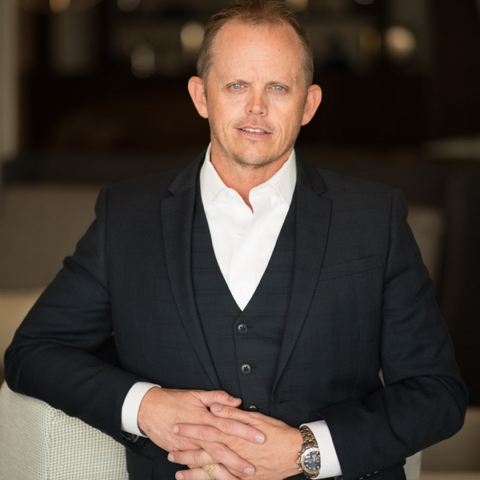
George Wright III
George Wright III is an entrepreneur, investor, and the host of The Authority Formula Podcast. Over more than two decades he has founded and scaled several multimillion-dollar companies and built a renowned seminar business that put some of the world's biggest names and brands on stage. With 25+ years across marketing, sales, and executive leadership, he has made a career of turning expertise into authority — and authority into lasting influence.
Today his mission is singular: help driven entrepreneurs and experts position themselves as the trusted authority in their field. Through The Authority Formula Podcast and Authority Media Network, George shares the strategies that turn knowledge into a platform, audience, and brand that compounds over time.
More about George →