Mitchell Levy on Building Credibility Through Clarity
George Wright III sat down with Mitchell Levy, a global credibility expert, two-time TEDx speaker, and author of more than 60 books, in a conversation that reframes what credibility actually means for entrepreneurs. Levy has spent decades in Silicon Valley, founding more than 20 companies and running book publishing operations that have released over 750 titles. Most recently, he interviewed 500 thought leaders on the subject of credibility to build the framework he teaches today, and the insights from that work form the backbone of this episode.
What Credibility Actually Means (It Is Not What You Think)
Most entrepreneurs define credibility as visibility: followers, press mentions, a steady posting schedule. Levy defines it differently.
Credibility is the quality in which you're trusted, known, and liked.
He deliberately inverts the common sequence of know, like, trust. Under "trusted" he places vulnerability, external integrity, authenticity, and coachability. Under "known" he draws a sharp distinction between people who know of you versus people who actually know you. The second category is where lasting business relationships form. Under "liked" he introduces two simple behaviors: spreading cred dust (sharing the ideas, thoughts, and values of others and giving them credit) and showing respect by coming early, coming prepared, and coming with your heart.
Why the Gap Between "Know Of" and "Know You" Costs You Business
This is the insight that makes Levy's model practically useful. You can spend years generating awareness, building an audience that knows of you, and still never close a high-value referral or retain a long-term client. The reason is that awareness without trust is fragile. When someone genuinely knows you, they feel your intentions. They pick up the gap, or the alignment, between what you say externally and how you actually operate.
Levy calls this the difference between external integrity and internal integrity. When those two are misaligned, people sense it even if they cannot articulate it. When they align, you produce the thing every entrepreneur actually wants: referrals, repeat clients, and word-of-mouth growth that compounds over time.
How Clarity Through CPOP Unlocks Your Credibility
Even people who are genuinely credible often fail to communicate it clearly. This is where Levy's CPOP framework enters the picture. CPOP stands for Customer Point of Possibilities, and it comes down to two questions: who do you serve, and what pain point do they need to overcome (or what pleasure point do they want to reach)?
Levy's own CPOP for his executive coaching work is four words: "CEOs flying like eagles." That short phrase does something specific. It names the audience precisely. It signals aspiration. And when followed by a single sentence explaining the actual problem (coaches and consultants who have created jobs rather than businesses), it triggers an emotional recognition in the right person. Prospects self-select. Referral partners know immediately who to send your way. Everyone else moves on, and that is perfectly fine.
When you specify your CPOP, it represents the playground you play in. I specifically want to use those words. It's what you love doing. It's the place you love to play.
The power of CPOP is not just in the articulation. It is in the practice of CPOPing as an ongoing verb. Levy notes that 90 percent of the people he works with drift away from their CPOP within two hours to two weeks because life and other people steer them off course. His recommendation: reflect each day on whether your activities actually served your defined audience in the way your CPOP describes.
The Lifetime Value of Credibility Goes Beyond Revenue
George and Mitchell land on the same conclusion from different angles: the return on credibility is not just more clients. It is legacy.
It's not just the lifetime value of your customers, but the lifetime value of your life.
If the person you are in business is operating from different values than the person you are at home, you are not credible in the full sense of the word. Levy's framework holds that real credibility is consistent across every role you play. The same standard of service, vulnerability, and integrity that earns you a client referral is the standard that earns you respect as a parent, a spouse, and a friend.
This is the shift that separates short-term brand building from enduring authority. In a world where thought leadership is increasingly commoditized (anyone with access to AI can produce expert-sounding content in minutes), the differentiator becomes who you actually are and how consistently you serve the people around you.
Why Thought Leadership Alone Is No Longer Enough
Levy has watched the publishing world go from gatekept to open, and he sees the same pattern playing out with content. When anyone can generate a polished article or video on any topic without deep expertise, the value of thought leadership as a signal collapses. What remains valuable is relational credibility: the sense that a specific person, with a specific track record, actually shows up and delivers for a specific audience.
This is exactly why CPOP matters. The clearer you are about who you serve and what you do for them, the more naturally credibility attaches to you in that space. You are not trying to convince everyone you are an expert. You are letting the right people recognize that you are exactly who they need.
Action Steps
- Define your CPOP in one to three words for who you serve, paired with the specific pain or pleasure point you address. Test it by saying it out loud and watching whether the right people get curious.
- Practice CPOPing daily. At the end of each day, review your activities and ask honestly whether they served the audience your CPOP describes or drifted toward something else.
- Audit the gap between your external and internal integrity. Where you say one thing and feel another, that is the credibility leak worth addressing first.
- Spread cred dust. Actively share credit with others, spotlight your team, and give public recognition to ideas and people that have helped you. This is one of the simplest credibility-building behaviors available to any entrepreneur.
- Think about credibility as a lifetime asset, not a marketing campaign. Ask whether the version of you in business is one that people in every part of your life would be proud to recommend.
The shift Mitchell Levy invites entrepreneurs to make is a simple but demanding one: stop trying to appear credible and start living credibly, in every conversation and every role. It is never too late to start living the life you were meant to live.
Mitchell Levy
Mitchell Levy: Global Credibility Expert Mitchell Levy is a 2x TEDx speaker, an international bestselling author of over 60 books, and an executive coach at Marshall Goldsmith’s 100 Coaches. After interviewing 500 thought leaders on credibility, he published a 7-country international bestselling book, delivered a powerful TEDx on humanity, created courses, and created the Credibility Nation membership community to help those live, learn and surround themselves with others on the credibility journey.
Read the full transcript
Welcome back to the Authority Is podcast, where we help you to grow your business, attract new opportunities, and outpace your competition. My name is George Wright III. I'm your host, and I've been partnering up with Valiant CEO Magazine to bring you the hottest entrepreneurs, thought leaders, and experts from around the world that are crushing it in business. Together, we're going to unpack strategies and tactics that they're using to become the authority in their field. And my goal is to help to inspire and motivate you to do the same. So let's get right into it. Okay, welcome back. George Wright III here. I am super excited today. I'm super excited to be able to have Mitchell Levy here with us. And I'm going to give you a really nice introduction because I got to be honest with you, your background is so credible as well as being impressive. I mean, guys, listen, we have a lot for you to unpack here on this episode, but I'm gonna tell you something. The guest we have here today is a credibility expert. He's a two times TEDx speaker. He's written over 60 books. He's an executive coach. He has all kinds of ways to help you to understand the importance of what you need to do to create credibility, but also to be able to connect and really grow your business. And that's the whole reason we do this. So Mitchell, welcome to the show, man. It's good to have you here. George, it's great to be here. And I loved our pre-interview and looking forward to the actual interview itself. Yeah, it's great when we take a few minutes and we realize how much we align with what our passions are and what we're doing. And as those of you guys that are listening, you know, you're looking for that daily dose that's gonna help you to create the best version of yourself, but the best life possible, the one you really wanna create. and I can think of no better topic than this idea of credibility, which we're going to dig into and unpack a little bit. But before I do that, Mitchell, can you give us kind of just a little bit of the, I mean, you've got some really good accolades, but give us a little bit of the backstory of what brought you into this whole topic and where you come from and just give us, lay the backstory for us just a little bit before we get going. Sure. Well, I've been living in Silicon Valley for 35 years. I've created 20-ish companies, happily married for 33, have one son versus many sons and grandkids that you have. One son who's 25. And I have always followed since leaving corporate, I followed doing the things I really love doing. And so during the dotcom days, I was that guy who would go around and help companies figure out that there was this new technology company that would allow us to drop ship our products directly to our clients that would allow us to interact directly with our customers. And George, I was actually physically walked out of the offices at two companies, one by the CEO, the other by the VP Ops, who said, hey, the internet's just a fat, right? Well, wow. So what I've done is always found something that was happening in the world, entrepreneur, that would be fun to do. So .com, I was I was e-commerce consultant for a while until that disappeared. I created courses. I created the first ever e-commerce management program. First first program in the world focused on teaching people how to use the Internet. I was hired by LinkedIn, directly by Reid Hoffman, Constantine Gerlich to write LinkedIn's first book. This is after I started the book publishing company on and and so four years ago, I, so we're fast forwarding through lots of, lots of things that have happened to life. And I've, I've lived a really fun and good life so far. And four years ago, I, I just, I woke up one day and I go, you know, the, I had four publishing companies. We had been somewhere around publishing 700, 725 books. We're now over 750. And, and I'm like, I need to start preparing for what's next. I'm not sure what's next. And I woke up the next day and I go, credibility. I've got to research credibility. And then I thought, huh, Napoleon Hill, 500 millionaires think and grow rich. If Mitchell Levy interviewed 500 thought leaders on credibility, I'd have my think and grow rich. And so it took me a year. By the way, imagine being part of my management 17, when I, when I go to the meeting, I say, listen, we're going to continue during our business as this. I don't think we need to hire anyone else. And by the way, over the next year, we're going to interview 500 people and create a podcast and publish all our stuff there. And my team, like, like, like, yeah, blown away. But what was nice is I said, listen, guys, don't worry. I'll, I'll work with you in the first 10, put the processes in place. And after that, it'll just be pretty straightforward. Yeah. Yeah. So that's kind to answer your question, I knew I needed to do something with credibility. What ended up happening, this was about 95% of the way through. So this is in, I finished in sort of August of 2020. So it was in July of 2020, I had this massive aha moment of what I was put on this earth to do. And I'm still working on that, right? And what I realized is I need to tip the scale between those in the world that are credible and those I call the opposite credible dudes. Now, this means talking to billions of people and I've been doing this now for three years. I haven't hit those goals yet, but that was what I thought I was gonna do. And I'm, by the way, still gonna do that. And I now have a new model. What happened is I started focusing on credibility and there are 10 values of credibility. You could always watch the 10X. It's called, we are losing our humanity and I'm tired of watching it happen. And what ends up happening is somebody does something successful. They make money. They then say, hey, I'm an expert at this. I'm going to teach you how to do this. Pay me money. And by the way, it's one size fits all works for everyone. And so we get taught all these dubious lessons. And sometimes these dubious lessons have negative consequences. But we do them because that's what we were taught. And somebody said it was okay. Right. So credibility is one of those very powerful things. And it's the quality in which you are trusted, the quality in which you're known, the quality in which you're liked. So as opposed to know, like, trust, it's trust, know, like. we could. Yeah. I, I, I gotta tell you, and I, I want to, because I'm going to dig deep into credibility here in a second, but I want to ask you a question because for me, it seems like you right away picked out this topic of credibility. And I think it makes a lot of sense. 2020, you know, people are hitting personal brands and things like this. Um, you, you tied in Napoleon Hill. I love that because I think that's a, a success leaves clues, right? That's a, that's a way you could do things. But I'm curious, you mentioned you picked credibility prior to doing this, and then you had an aha moment. So I wanted to just ask you, number one, was it specifically credibility? Did you just come up with that or did it evolve to credibility? And number two, I love that you mentioned the aha moment because I'm a big believer and I tell people all the time, you're not going to have the aha moment in advance. You're going to have the aha moment when you're taking action and doing what you need to do. And so it's interesting that you pick something you maybe thought or loved or wanted to do and you were moving. And it was during that process, you have the aha moments. I just wanted you to speak to that. And then also the idea that was it the chicken or the egg? Was it credibility or was it interviews in what order? Right. And why credibility? You know I tried to answer that question after the fact Okay I just went with my gut and it just felt like the right thing so after the fact what i what i realized and by the way of the 10 values of credibility two of them are integrity now you're gonna say mitchell why is that it's the only one that's listed twice yeah and what may have happened is that i knew there was a you know sometimes you meet somebody and they they've got a deal and it's too good to be true and you shake their hand you're like yeah you like get get this icky feeling. Yeah, yeah, yeah. That is a disconnect between what they're saying. So their external integrity and how they're feeling, their internal integrity. Yeah. Right. Well, so let's, let's do that though. You know, dig deep for me in a second here for the, the actual credibility piece. Like what most people think of credibility as everybody knows me online, right? That's clearly not how you define credibility. So let's define it for people. What is, you know, you talked about 10 aspects. I don't know if you want to go through some of those or all those, but at a high level, I know you don't believe credibility is as simple as your branding online. So what is credibility in your mind? Let's define that. So credibility is the quality in which you're trusted, known, and liked. So under being trusted, it's vulnerability, it's external integrity, it's authenticity. And the fourth component, coachability, right? Are you ready to to learn and grow from other people. And I, I didn't know that until to somebody who was a, a big, you know, $35,000 speaking gig type of guy was part of the interviews and, and he wasn't coachable. I'm like, Oh wait, you're not credible. I didn't say that way, but yeah, probably should have, but I just, I thought I'd keep it polite under, under being known. This is what's really interesting. It's not that I know of you. It's that I actually know you. So do you have the intent and commitment to do the right thing. Most important, are you a servant leader? And then the integrity the second time, what is your internal integrity? So in the past, we've figured out as humans that, hey, we know what to say, that's external integrity, but inside, we don't have to always do what we say, right? By the way, this is not what I recommend. And when there's a disconnect between external and internal integrity, people are feeling that inauthenticity. Right. So those are now eight, you know, that's being trusted, being dark, being light. It's I'm going to give you the simple formula for being light. It is so amazingly simple. By the way, you're you're doing both of those right now. um one is spreading cred dust so it's spreading the ideas thoughts and values of others got it and giving credit right like so we've been taught that like as a manager if one of somebody my team does something I should take credit for it not give it to my team that's that's the wrong way of being taught the better thing you could do is showcase your people showcase that you're bringing out the best of your organization yeah yeah and and the other piece is showing respect. And showing respect is really simple. It is, to me, one of the most simplest things, coming early, coming prepared and coming with your heart. And you could feel it. If somebody just comes on and they're like, just they're them. And you're like, oh, I like this person. I want to hang around this person. I want to recommend this person to others. As an entrepreneur, the most important thing to think about is, do you have an asset? Do you have a product, product or service that your audience really wants. They really want because it's either a pain point they have or a pleasure point they want to reach. And do they believe that you're the person who could deliver it? And if you don't, you're going to figure out how to fix it. I love that because most people, and then even if you're a successful business owner or entrepreneur, number one, you don't realize the impact credibility has on the lifetime value of a relationship you have with people. You think, you know, a lot of them think, look, if I'm credible online, I'm going to get leads. If people are either going to see me, they're going to know me. I really like, by the way, I'm going to put a big emphasis on the words you use, and I've never heard this before, so I love this. Do they know of you or do they know you? There's a big difference between knowing of you and knowing you. And so the idea that credibility breaks into like 10 different parts, and that ultimately, I think it's important for people to recognize that credibility is not just something you do for branding. It's something that will carry through the lifetime value of your client, meaning it might get you attention. It might get you more sales or more revenue or more clients or more community, but it's also going to get you more lifetime value, more lifetime, you know, raving fans and everything else. And so I love that when you shift that little bit of credibility. And I know that you use the term clarity, that that's something that's going to affect someone's business long-term. And I think very few people think about that. Just like I think even though most people may be integritous, they don't think about how they can include integrity in what they do in business. So I love that you brought that up. What do you think that, I mean, I'm assuming you agree with me on the lifetime value of what credibility does, but ultimately, credibility gets you more business. It gets you more clients. It gets you more goodwill, right? I mean, that's the whole point of it. I was going to say, it's not just the lifetime value of your customers, but the lifetime value of your life. Oh, I love that. Yes. Your legacy. It's everything. If your kids are not proud to talk about you because you're making a large amount of money, but you're not doing the right thing by your people, what type of life are you living? What type of examples are you setting? If on the other hand, the person who are you as a dad, the person who are you as a friend, the person who are you as a husband or a wife, the person who you are as a business owner, as someone who's a service provider, a servant leader, helping other people, helping your clients be successful is all the same. That's credibility. And what that means, the most important thing we need to be thinking about is those people who are referring us to the next set of people. It's that it's, it goes back to the old days of that word of mouth marketing. When we live in a world, which we do today, where, where thought leadership is ubiquitous. Anyone who wants to go to chat GPT, ask the right question can get an answer. There's well beyond their years. So thought leadership is ubiquitous. So you're not going to sell a thought leadership. You're going to sell, you're going to succeed, and you're going to live a better life. If you're actually just, you know, who you serve and you serve them in a way that they recognize it and share it with their friends and their loved ones. Wow, that's huge. I think ultimately, and this is a conversation I don't generally have out of the shoots with a lot of people that I work with, whether it's clients, businesses, partners, is I tell people, you know, all the things you want in life are really just all related to values and emotions you want to experience. That's the end of the day. We're really just chasing and emotions and values. Just like all the success in the world you wanna create is really ultimately in the end, as most people will tell you, is all about your legacy. And to have a concept like credibility, I've never thought of it. This is huge. I appreciate you being here because people are gonna be listening to this going like, man, you think George is getting more than anybody else? It is because I've never thought of character traits, which is kind of how I defined it before is credibility as something that was more living long-term legacy through every part of your business I a very strategic tactical guy so I always think of what the ROI right But my gosh there no better ROI than legacy If you can have that but have all the other stuff along the way it huge So tell me what you not like you've worked with lots of people, you've done the TEDx talks, you've written the book. I know you have frameworks and systems for helping people to expand their credibility, identify. I don't know if you generally ask people to do kind of like a quick double check on what their identity looks like, isn't like, where would somebody start? and help us dig into a little bit of some strategy or tactics we can help people, whether CPOP or whatever, with building credibility for themselves and their business. And do you distinguish between your business and you, or is the whole point of it to merge the two together? That's a great question. I don't know if I have a pat answer to that. I, I, let me give you a different answer. And, and that is, you ever hear the question, what do you do when you retire? Yeah. Yeah. Right. And, and the thing is, if you have an answer that's other than I'm going to continue to serve my clients, you're not doing what you love doing. And you're probably not happy. Yeah. And you're probably, thank you for filling in the blank and you're probably not happy so what if you're an entrepreneur and you could construct a place a playground to play in that you love to play in that playground and be of service to others and by the way make money so that it doesn't feel like a job it's just an ongoing business and you continue to have fun doing it yeah that is guys listen to me like i asked a stupid question and he turned it into a really cool question so let's just clarify it You know, there is no separation between personal and business because in reality, if you want to be happy and you want to have a fulfilled life and feel prosperous and be driven by passion and purpose, your credibility, your focus will be lifelong. And you're lifelong. And it hits so many other things, Mitchell, because it's like if you do what you love, you won't work a day of your life, right? But if you do, you're not just thinking about your business. You're thinking about your life, your credibility of your life. That freaking is a million dollar idea right there, man. I'm telling you, that is, guys, if you haven't written that down, you're crazy. That's, okay. Anyway, I'll let you keep going, but that's huge. One of my friends at one point in time said, Mitchell, you have too many IPMs. I go, huh? He goes, ideas per minute. That's you and me. Yeah. You see me writing notes, it's because I don't want to forget, you know? No, I appreciate that. And then what happens, he goes, Mitchell, what often happens is you go, and you're faster than anyone I've ever met. You go from one to five so fast that when you start explaining it to people, you sometimes jump to five and you forget that you have to talk about each of the steps on the board, right? So I did that. And I know people are thinking, I know people are like, wait, he said he did 10 parts of credibility. I don't even remember what the 10 are. Don't worry, guys. I'm going to give you contact. And in the show notes, you'll be able to drill into all this. But the point is, listen to what we're saying. Listen to what we're saying. Yeah, I documented that. You can watch the TEDx and it has the 10 values and all that. Right. Got it. I list it everywhere. What I started doing for the last three years is I focus on the word credibility because people don't really focus on that and deploying credibility. And what happens is many people feel they already have it. Whether or not they have it or not, they feel they already have it. And what they really always wanted is they wanted clarity. So what I've started doing and focusing on now and evergreen, this will be an amazingly huge program. And that is focusing on clarity. And I define clarity with four letters, CPOP. It stands for customer point of possibilities. And I'll tell you exactly what the formula is. We do have a one hour course and I'm putting a, a, I'm right in the middle of, of creating a clarity certification program. And it comes with a business in a box component. So those people who become priority specialists will also be doing six figure businesses. Right. So let's step back. CPOP, customer pointed possibilities. If you are a credible person, you are a servant leader, whether it's a servant leader or your service sellers. If you are a service to others, there are two questions you have to ask. Who do you serve and what? So it's the who and the what. Who do you serve and what either pain point, not plain point, sorry, what pain point do they think they have? What pleasure point do they want to reach? Most of the time you're going to do the who and the pain point, but pleasure point, it depends on the situation. Sometimes pleasure points make sense. And I've done this now over a thousand times. And so your CPOP is very much focused on the who and the what. So for me, in the executive coaching realm, and the overarching one for me is four words. CEOs flying like eagles. When I go to then explain it, what I'm going to say in today's world, okay, there are many people where CEOs who are running really good businesses. The problem with coaches and consultants is they've created jobs and not businesses. They don't have good lead gen systems in place. They say they close 80% of the business, but they don't have good nurturing on the back end. They would rather actually do the work of being a consultant, of being a coach, and not do the business of all the minutiae needs to make it happen. And they get lost and not getting the recommendations they need. They're not happy. We have a solution that solves that. Right. I like how you actually said something very specific that opened the door and was clear clarity. And then you explained the depth of it. I think most people start to, like you said, they, they, people are like, well, what do you do? Like, and they just vomit like all over somebody for like 10 minutes. They're like, I do this and that and everything. And I'm great. And every that you're like, Whoa, bro. Like, I don't even know what you just said. You know, when you can say something simple, then that is the way that you can ultimately then backfill it later, right? Oh, well, that's the thing. So let me, I gave you an example, but let me tell you what I did. When you specify your CPOP, people are not going to say what's your CPOP. And so there are techniques to do that. But when you specify your CPOP, it represents the playground you play in. I specifically want to use those words. It's what you love doing. It's the place you love to play. And the person who's listening on the other ends can be one of three people. They could be a referral partner. That's what you're looking for. If it's a referral partner or potentially a prospect, by the way, I always think of it as a referral partner. They're going to say, tell me more. The third type of person could be someone who just, they just don't care. Some of them don't care about you. They just don't care about the playground. Think about how much time and effort you could spend if somebody doesn't care about the playground you play. We focus on other things. They're just not a referral partner or a prospect, Right. So what happens is when you can clearly articulate the playground in less than 10 words, the person is going, wow, I expected a half minute or I expected five minutes of verbal diarrhea. And you gave me something in my, you know, CEOs flying like eagles. You got to be curious about that. If you're not curious, that's OK. That's fine. Yeah, for sure. For sure. But if you're curious, I'm going to follow through. And the next, I did a double CPOP because the next thing I mentioned was coaches who've created a job and not a business. Right? Because that going to hit your emotional wait a second Am I loving what I do I love coaching but I don like doing all this leads and stuff and the money I spending and all that It really interesting I hit an emotional string by having a double because I want to make you a CEO that flying like an eagle That's what I'm going to do for you. Yeah. I think a lot of people are so busy trying to instill credibility that just the whole concept, the way we're now reframing our perspective on credibility helps people to realize that the job that you have is not to make people feel you're credible. It's to help them to understand who you are, what you do, why you do it, and create some simplicity. And so I like how you create the simplicity. And also I think there's a big part of, and that TED Talk probably goes through some of this, is the idea of creating credibility is allowing people to feel your integrity and feel your passion behind what you do rather than trying to sell them on it, right? Sell them on it. So clarity is a little bit of a mind shift for people because building credibility, there's so many people out there trying to create brands and whatever. What they don't realize is that's a very short-term perspective. And so I love that example you gave for CEOs and CPOP being that way to seriously identify the clarity for the credibility. So let me ask you this, because I know we're going to be short on time here and we're going to give some really good links and resources for people. But if people are feeling like, I want to really go down this road and create more clarity around my credibility, how to do it and things like that. What do you recommend? Not just specifically, we'll put some things in the show notes, but what do you recommend is the place to start? Where do you start people with trying to really build their credibility? really what's the what's the place for them to start that's interesting um I'm gonna give you an answer I never gave before because I I feel like I needed to get this out so I I love the concept of the word CPOP let me tell you about the concept of the verb CPOPing so what's really interesting is if you can identify so if you're thinking about this if hearing this right now, ask yourself, who do you serve? And I don't want a string of 10 words, one, two, or three words. That'd be CES, right? It could be anything. For yourself, it's entrepreneurs, right? Or whatever that word is for you. And then the next question is, either what pain point do they have to get over and what pleasure point? That's your CPOP. When you've identified your CPOP, and I have a one-hour course, you can take the one hour, person. So when you have your CPOP, I'm going to say reflect on the day's activity, either before in terms of what you're doing or afterwards and ask yourself, have I been CPOPing? Now, I'm going to tell you what happens. I've done this over a thousand times. When I work with somebody and they get their CPOP, it's the frequency of the words, which are them. And 90% of the time they forget their CPOP somewhere between two hours and two weeks. and they forget it because they felt really good when they had it but then life gets in the way and other people are are sort of steering in the direction of changing who they are and they've let themselves get off path so it's to answer your question directly if you can identify your cpop are you actually actively CPOPing all day long? I like that verb idea because I think, look, here's the thing, I really, really am a big advocate on our show. And that is if you wanna change where you're at, you've gotta change how you think. And I really want people to get out of the box when it comes to credibility. And I think you've been able to help us really do a good job of helping to just change some perspectives. And RUC popping, that's a good one, man. I really like that a lot. And it's funny because I'm scribbling down notes and doing all this. And so I really feel like there's so much more to unpack. And I think I told you before we got started, I really highly respect the time of our listeners. We try to keep it tight on our timelines. But look, guys, I think we're probably going to have to have Mitchell back to do a deeper dive. Now, if you're part of the academy, you're probably going to get that anyway. But I still need to circle back with you on some things like aha moments and things like that. So maybe let's do this before we just take off. Where is the best place for people to connect with you? What's the best place for them to go to connect? I think they could engage with your newsletter and a couple of other things. Give us where you're at on social media and where they can connect with you, and then we'll go from there? You know, it's so funny. I always recommend that people don't, once again, verbal diary, this answer. So I'll, I'll give you two, if you want to, uh, always the easiest is just mitchelllevy.com. And so at mitchelllevy.com, it points to everything else. And, and depending on when you go, it'll point it, a point to different things. Um, I do actively, uh, am involved with LinkedIn. So that's a, that's not a bad place to, that's the social media I engage with most. But if you want to pay attention to how I'm thinking and a little bit of, oh, by the way, MitchellLevy.com, book time on my calendar if it's important. If you want to get away in terms of how I'm actively thinking, my newsletter, which will be in the notes, it's on Substack. And it's called Staying Relevant with Mitchell Levy. I love that. And I keep asking the question myself, how do I stay relevant? I mean, obviously, it's something I want to do. and and it's changing um so I'll leave you this last thought if if thought leadership is ubiquitous now by the way as a book publisher I've watched book publishing become ubiquitous and anyone who wants to can publish a book the same is true anyone who wants to write an article on any topic just goes to chat GPT particularly at 4.0 and then at 5.0 not only can you do the the article but you do the video and you just ask a simple question you don't have to be a thought leader produce really good content. So how do you stay relevant in that world? And it's the old rules we had, isn't the value. That's probably what I'd recommend. No, I love it. Listen, guys, I'm going to put all of this contact stuff in the show notes. You're going to have a couple of links. He's got some goodies for you. I think that will help you that are very practical and tactical. And so I want to be able to dig in again. We're probably going to have to have you back because I want to dig into your experience as a publisher, 700 plus books, as well as some of the stuff that you have upcoming. So I really appreciate you being here. This has been so helpful. It's definitely been eye-opening for me as well. And I wish we had tons more time. I'm going to have to buy ourselves some more windows of time here between you and I, but thank you so much for being here. And we're going to have you do it again. Guys, listen, if you're listening to this show for the first time, subscribe, follow us, but share the show. The topics that Mitchell's talking about our topics, I think will help a lot of people. So do us a favor and put it out there. And once again, it's never too late to start living the life you're meant to live. Your content is great. So the word I use is cred dust. So spread some cred dust. Be credible. Yeah. Spreading your ideas, the ideas, thoughts, and actions. This newsletter, great episode. Spread some cred dust, guys. I love it. That is so awesome. Thanks, Mitchell Levy, George Wright. We've been here with you. We'll talk to you guys soon. Thank you.
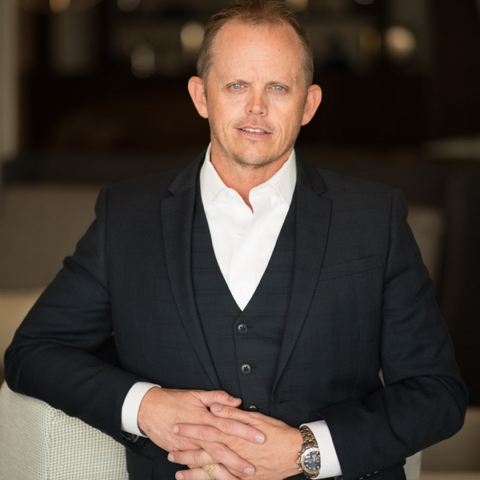
George Wright III
George Wright III is an entrepreneur, investor, and the host of The Authority Formula Podcast. Over more than two decades he has founded and scaled several multimillion-dollar companies and built a renowned seminar business that put some of the world's biggest names and brands on stage. With 25+ years across marketing, sales, and executive leadership, he has made a career of turning expertise into authority — and authority into lasting influence.
Today his mission is singular: help driven entrepreneurs and experts position themselves as the trusted authority in their field. Through The Authority Formula Podcast and Authority Media Network, George shares the strategies that turn knowledge into a platform, audience, and brand that compounds over time.
More about George →