Regina Martin on Daring to Dream and Building Your Future
George Wright III sits down with Regina Martin, an educator, speaker, author, and coach whose life took a sharp and purposeful turn when she traded a government career for a calling in education. On The Authority Formula Podcast, produced in partnership with Valiant CEO Magazine, Regina unpacks the mindset shifts, practical frameworks, and relationship strategies that help students and professionals at every stage stop drifting and start designing the life they actually want.
Regina is the founder of Dare to Dream Motivational Speaking and Coaching LLC and the author of You Belong Here: Transitioning to Success, High School to College Edition. Her DREAM Method has guided high school students, first-year college attendees, and seasoned professionals through the same core challenge: getting clear on what you want and then doing the work to get there.
How Regina Martin Turned a Career Pivot Into a Purpose
Regina spent years as a government employee before her daughter's involvement in a college program opened a new door. She went back to school, earned a master's in education, and built a career around working with students in the classroom. But the pivot was not accidental.
"I was determined for the next chapter of my professional life to be something I was passionate about," she explains. Some people punch the clock and collect a paycheck. Regina wanted her work to make a difference, and she committed to finding the role where that was possible. That story of conscious reinvention is exactly what she now helps others write for themselves.
Why Most People Forget to Dream
One of the central ideas Regina returns to throughout her work is that most people have stopped dreaming. Not because they lack imagination, but because society has convinced them to stay inside a prescribed lane.
The nine-to-five, she argues, is not a final destination. It is a comma, not a period. "Your nine-to-five is not your final destination and it's not the period at the end of your sentence," she told George. When you continue the journey of figuring out what your dream life looks like, you put a comma there to indicate continuation.
The problem is that many people allow the conversations in their own heads to become self-fulfilling limits. Until you clear out that mental noise, clarity is impossible. Regina's work begins precisely there: helping people hear themselves more honestly.
What the DREAM Method Actually Does
The DREAM Method is Regina's structured approach to turning vague aspiration into a working roadmap. Each letter in the word DREAM maps to a step in a process that moves a person from identifying what they want to building the habits and connections that make it real.
The method pushes back against what Regina calls the "microwavable society" mindset, where people expect results to appear instantly. When things do not materialize on that timeline, they quit. The DREAM Method asks you to slow down, work each step, and appreciate what the end result is going to require.
You're the architect of your dreams.
That framing matters. An architect does not wait for a building to appear. They design it deliberately, adjust the plans when conditions change, and stay focused on the finished structure even when the foundation is still being poured.
How to Step Out of Your Comfort Zone Without Losing Everything
For most people, the fear of leaving a stable paycheck is the single biggest obstacle to building something of their own. Regina does not minimize that fear. She acknowledges the comfort zone for what it is: a place where the bills are paid and everything feels manageable. But she is clear about what staying there costs.
The people you work for are building their legacy every day, she points out. If you have no ownership stake in what you are building, you have no skin in the game. And the loyalty that once came with long tenure has largely disappeared. You can spend decades in a role and still end up with a box on your desk and a farewell.
Her friend's advice cuts to the heart of what it takes to move anyway:
Sometimes you just have to do it scared.
That does not mean reckless. Regina is direct about the need to legitimize a business properly. If you skip the foundational steps, entrepreneurship becomes, as she puts it, "a very expensive hobby." The real question to ask yourself is: when are you ready to turn your W-2 into a W-9?
Why Relationships Are the Real Currency of Business Growth
Once you have decided to build something, the next mistake most entrepreneurs make is trying to know everything before they start. Regina calls this out as the imposter syndrome trap. You do not need to know everything. You need to know the right people.
Relationships are the new currency.
A mentor told Regina this years ago, and she has held onto it ever since. When someone comes to her wanting to write their first book, she does not have to be the expert on book publishing. She knows who is. She puts that person on the roadmap. That is leverage. That is how you move faster than your solo effort ever could.
Networking, in her framing, is not about collecting contacts. It is about building a web of people who can fill the gaps in your knowledge and open doors you did not know existed. A single conversation can reshape your thinking and accelerate your platform in ways that months of self-study cannot.
Guiding the Next Generation: You Belong Here
Regina's book You Belong Here: Transitioning to Success, High School to College Edition grew directly out of what she sees in her classroom as a first-year professor. Students arrive having done everything right in high school and are still unprepared for what college actually demands: showing up without a parent to wake them, navigating a grading system with no extra credit, and taking full ownership of their choices.
The book is a self-help strategy guide. It covers time management, college terminology, and the emotional reality of the transition for both students and parents. Regina also penned letters from both a professor's perspective and a parent's perspective, because the transition does not belong only to the student.
The You Belong Here series is planned to expand into adult learners, student athletes, and students with learning disabilities. Each group belongs in the college space, Regina insists, even if they need a different kind of support to get there.
Action Steps
- Identify your it factor. Ask yourself honestly: what is the thing you are both passionate about and good at? That overlap is where your next chapter starts.
- Put a comma, not a period. Your current role or season of life is not your final destination. Treat it as a stage and keep planning for what comes next.
- Work the DREAM Method step by step. Resist the urge to rush. Map out each stage of your goal and appreciate the process rather than demanding instant results.
- Do it scared. Fear of stepping out is normal. Act anyway. Legitimize your effort, get the right structures in place, and move forward before you feel ready.
- Invest in relationships as your primary resource. Find people who are already doing what you want to do. One honest conversation can be worth more than months of solo research.
Regina Martin's message is deceptively simple: stop letting other people define what you are capable of, get clear on your dream, and take deliberate action toward it. As George says at the close of every episode, it's never too late to start living the life you were meant to live.
Regina Martin
The Motivated Educator is the founder of Scholars with a Purpose, LLC. As a higher education professional, she works with students to help them discover student success through the college journey and has been an Adjunct Professor for First Year Experience for seven years. Regina also has a passion to empower individuals to Dare to Dream. She became a Certified Motivational Speaker through the AB Fire Speakers Academy and Angela Brand Her Fire Speaker Academy. She is the founder of Dare to Dream Motivational Speaking and Coaching LLC, and her passion is to work with others to discover their dreams and potential.
Read the full transcript
Welcome back to the Authority Is podcast, where we help you to grow your business, attract new opportunities, and outpace your competition. My name is George Wright III. I'm your host, and I've been partnering up with Valiant CEO Magazine to bring you the hottest entrepreneurs, thought leaders, and experts from around the world that are crushing it in business. Together, we're going to unpack strategies and tactics that they're using to become the authority in their field. And my goal is to help to inspire and motivate you to do the same. So let's get right into it. All right. Welcome back to George Wright III here. And I'm excited to be able to feature today a guest, Regina Martin. And she is, we're going to get into a lot of cool stuff, but she's an educator, speaker, author, coach. I'm really excited to have you here, Regina. Thanks for joining us. Thank you for having me, George. I'm glad to be here. Yeah, this is going to be good. And I want to, before we get going, I just want to kind of give a little bit of a background because you've got a pretty diverse proven background and education and some of the things you're working on, but you've got a decade in higher education and you inspire audiences basically to dare to dream. So as an educator, Regina has been able to take her expertise from the classroom to stages, to her book. I mean, she's co-author of a collaborative a book called The Fire Girl Code of Conduct, but she also has a book that we're going to talk a little bit about today called You Belong Here, Transitioning to Success, High School to College Edition. And so as we get started, Regina, I want you to just kind of lay the foundation, give us a little bit of the background of what brought you to this area that you've decided to kind of really pivot into and been successful with. Give us your background, your backstory a little bit. So my backstory is that I decided that going into education was the second chapter of my life. I started out as a government employee and I worked there for many years. And then my daughter got involved in a college program and it really piqued my interest because of the fact that it put me in a different space with different audience people. And as a result of that, what ended up happening is I ended up going back to school and gave me my master's in education. And the rest is history. I just stayed in the education space. I substitute taught. I put myself in a position where I was working with students and around students. I really enjoyed that space. And I really found that it was something that I was passionate about. One thing that I will say about how I got into this space is that I was determined for the next chapter of my professional life was to be something I was passionate. There was passion behind it. Some of us go to work every day, punch the clock, catch a check. But for me, it was all about identifying what that it factor was for me and how I could be impactful and make a difference. And that is how I became an educator. So, yeah, I'm curious because I was going to ask you, sometimes people, you know, unintentionally come across what their passion and their focus and purpose seems to be. But it seemed like you were kind of looking for that and you learned. And I know that's what you help people to do as well. But you really were looking for that. So there was a moment where you chose education, going from working from the government to education as the area to focus on. But then you also, correct me if I'm wrong, but your primary focus is young women in high school to college students all the way up through professional channels. So what kind of made you decide to do that? Is it because it was the way you bridged the education passion you had with helping people leverage and bridge into life and into careers? Yes. And they're all connected. You are absolutely right. But in the high school space, they're getting ready to begin the next journey of their life, whether it be college, employment or military. So they have to be able to know if that's the perfect fit for them. I talk to my students all the time in the classroom. And the first question that I ask them, they come to me for their first day of class is, why are you here? and you know the general question that I I mean sorry the general response that I get from these students is that well well miss you're on my schedule so that's why I'm here but I think that it's her that I'm looking for and I bring it back to them and I said listen did you have a conversation with mom and dad and it was decided or it was discussed that this was the next chapter for you or was it a case where you were determined to come to school and you didn't have anybody to decide for you or are you still trying to figure it out? So once I presented it to them that way, it helped them to understand, oh, so that's what she meant. So am I here because I want to be here or am I here because I have to be here or I made a conscious choice to be here? And when it comes to connecting the next chapter with the college student, when they graduate from college, they're going into the world thinking that they've got a degree in accounting and they're going to work for the accounting firm that is going to pay them six figures and everything is going to be as bright as rain. I went to business school long ago and far away and my goal was to work as an executive secretary and have a corner office. Well, I did have a corner job but it was working at a corner bank so I did not work in the corner office but I worked as a teller. So that was my bridge from being in a structured higher education situation to aspiring to be something, but it didn't work out that way. So as college students, we may aspire to go in one direction, but then your direction may change and you may have to pivot. And working with young professionals and women who are seasoned professionals, you have gone and you've got the education, you got the job, you've worked up the ladder. And then what happens is, okay, I've done everything. I've checked all the boxes. Everything is great. But then there's something else that you want to do, but you are so busy rolling out your nine to five and doing what you have to do there that you not really focused on what that next thing is So when I told you before about being in education being the second chapter of my life I speaking from experience because our lives are in chapters It's either you are still trying to figure it out. I know what I'm doing or this is the next chapter and I'm going to make it on my own terms, in my own way, in my own time. I love it. I love it because what's interesting about how you explain those three different types of markets where there's high school kids, there's, you know, children, you know, transitioning to college, and then there's, you know, young and older professionals. It seems like, and I know you're really good at this because you asked the right questions. Most of the people in life just don't have direction and they don't ask themselves these questions. so they don't have clarity. And I think you're really super good at helping people to find the clarity about why they're even doing things. But it leads me to a question I was gonna ask you because you've talked many times about the fact that you feel one of the biggest problems people have is that they forget to dream, which in my mind is always clarity on your future. Whether you're a high school student, a college student, or a professional, are you getting clarity? And so there's this level of clarity, but then there's this level of dream building and vision. Talk to me a little bit about that, because you say a lot that that's the problem that most people have. What do you mean by that? We have allowed ourselves to be dictated by what society says that we should and can do. Instead of, you know, ripping the bandaid off and realizing, no, I'm not just an executive executive secretary i'm not just an educator but i have much more in me to offer and give and share and pour into um i think for me i think it's important for people to understand that your your your uh nine to five is not your final destination and it's not the period at the end of your sentence when you continue the journey of determining what your dream life is going to look like, instead of there being a period there, you could put a comma to indicate continuation. Turn the page. I love that. So you're mentioning a couple of things that I think for some people are very difficult. One is, you know, a little bit of a leap of faith to say, I do believe that I can be more. And then another one is, well, I don't know how I'm going to do that anyway. So I don't know where we want to kind of start to unpack that. But you told me a story kind of before we got going, which was a really empowering story because I think you're right. I think a lot of people are stuck in a nine to five. Maybe they're not even thinking that they're worth more or that there's more available. And there's other people that are in it, but man, they just, they just, they're not happy. They want to move forward. But either way, it takes some pretty, you know, empowering steps. Sometimes you can't do that on your own, but some empowering steps to kind of step into the unknown. So what do people do? Like, how do you, how do you typically help individuals to start to identify what they do if they're not happy where they're at? They have to do, um, they have to realize that the people that they're working for, they're building their legacy each and every day. You have no skin in the game. Used to be when the person retired from a job they would get a gold watch and a cake and stuff like that now you don't even get an atta girl atta boy they just have the box waiting on your desk and have a great life and whatever and the thing is you have to take control of your destiny and if you allow other people to define what that is then you're going to continue to be on this vicious cycle and you're like mentioned, people are just not happy where they're at. You have the power to change that. But see, you said something very crucial. People are scared to step out. We are in a comfort zone. As long as the bills are paid and as long as everything is going according to plan, everything is right as rain. But as soon as trouble is shook up, you know, a lot of people don't know what to do with that. A good friend of mine gave me a great piece of advice. She said, sometimes you just have to do it scared. And sometimes it means that you just have to just throw caution to the wind and just see what happens. I tell people that you have to stay focused and you have to be intentional about what it is that you want to do. Because the thing is, when you become an entrepreneur, you have to go through the steps to legitimize your business. Because if you don't, it's just going to be a very expensive hobby. And the question that you then need to ask yourself is, when are you ready to turn your W-2 into a W-9? Yeah, no, you're right. You're right. And that, man, if it's one lesson I've learned after, I got eight kids and five grandkids now. I'm at the point where it's like, you know that you have to make yourself uncomfortable in order to get your life moving forward. and that your greatest life, your greatness always lies outside your comfort zone. And so I think people do have to be willing to do that. But, you know, I think it does help individuals when there are, you know, ways and strategies and plans to do it. One of the things I liked about what you had is you've got this dream method. And, you know, we talked about one of the reasons we wanted to have you on the show is because one of your big objectives is you help people to build confidence, clarity and live their best life. And so this dream method, and I would love for you to maybe just speak to that for a minute, the dream method and what it is and why it helps people to explore and create and implement goals that will help them to create their dream life. What process do you take people through with that dream method? Well, for the dream method, what has to be at the forefront of everything is that you have to identify what that is. You have to understand, okay, what is it that you want to do? What is it that you've always aspired to do and you're good at doing? You could be someone who has a gift to encourage people. Okay. So let's say you want to be a speaker where you provide encouragement to those who are not, no longer know how to encourage themselves. That's a gift that you can monetize. And incorporating the dream method in that is because you have to be able to identify what that thing is And then you take every factor of the dream method and you incorporate it into what that roadmap looks like. And a lot of people get stuck. When things get too tough and if things are not happening and materializing the way that they want to, people don't want to really work hard at what they really want sometimes because everybody is in this microwavable society where they want things to instantaneously happen. And unfortunately, incorporating the dream method helps people to kind of zone in and identify, okay, where do I see myself in the D in dream, R in dream, E and A and M? Taking them through those steps to incorporate it as it relates to them and what they're trying to pursue or what they're trying to go through is that it helps them to really embrace and appreciate what the end result is going to be. And I tell clients this too, you're the architect of your dreams. And I don't, I'm not talking about a dream that you go to sleep and then, you know, you have this dream and you wake up. There has to be a call of action and there has to be action behind what it is that you want, because it's not going to be given to you. You have to put in the work and you have to surround yourself with people that are going to help you get there. I always speak to people about the power of networking and collaboration. Being able to connect with people that can help you to get to the next point. And you don't have to reimagine or try to replicate what somebody else is doing. If I have a chance to sit with someone, like I'm sitting with you today, we're having this conversation today, you have something that is going to help me to propel where I need to go as far as my product, as far as my dream, as far as my vision. I don't know what you know, but you and I having the conversation is helping me to enhance my thought process and my focus to build on my platform so that I can take my platform to the next level. We make the mistake of feeling like we have to know everything. And that was something that I personally got stuck in. I felt like, okay, I have to know this. I have to know this. I have to know this. No, I don't. It's all about leveraging and being around people that are already doing the things that you want to do. Like if somebody calls you up and says, I really want to write my first book. I don't know how to go about that. I got a person for you. They don't necessarily have to go through me to write the book, but I can put them on the roadmap to help them to get connected to the person that can help them to write their first book. And I think that entrepreneurs in general, we sometimes feel like if we don't know everything, then we're, we've got that imposter syndrome going on, but you don't have to know everything. You don't have to know everything. And relationships are the new currency. And that is something that I was told by a mentor of mine a long time ago, and I have held on to that. it's true once you connect with people and they have something that can help you to propel to the next level that's that's priceless you can't put a price tag on that yeah there's so many powerful things you said there and and i think you're right i mean people have heard the the age-old saying a journey of a thousand miles starts with a single step and sometimes the first step is the toughest but getting clarity on your dream you know establishing a plan collaborating with others Those are all things, you know, they're sometimes tough to do on your own. Obviously, it helps to have a coach or a mentor or someone to help you. But they're all steps that are not really in the end. They're not rocket science. They're not a magic pill. They're simply steps that you have to take out of your comfort zone. And I really love that, you know, that you wrap it around this idea of your dream, because at the end of the day, you know, sometimes people have used that whole phrase dream and dream building too much. but I don't think they have. I mean, you could obviously say clarity on your vision of what you want in your life and lifestyle and things. But I think if you dare to dream, that's something that actually gives you a vision that can pull you into your direction. And sometimes the more you have that vision and that dream in front of you, because most people are held back from the past or overwhelmed with the present. But when you have a compelling, clear vision of your future it can pull you in that direction do you find that that clarity is something that helps people when you're working with them absolutely and the one thing that i know about people and i know about myself is that the the the conversations that are storing up in your head about your capabilities, that's all they are, are conversations. Those conversations only come to fruition if you put action behind them. If you say that you don't have the ability to do X, you get, you allow your, that subconscious part of you to say, well, you know, I really can't do this. I really can't. You know, when I was doing a speaking engagement last year in Detroit, um, I did a rehearsal and the part that coached me saw a different version of me once I hit that stage. And the reason why is because I had to get out of my head. And I think that that is the biggest problem that for people, you can't get clarity if you got all this junk in your head telling you what you can and cannot do. and you have to be able to say, you know what? It's going to take me a little time to get here, but if I have a clear and precise way of which of what I want to do, and this is something that I tell people all the time too. You have to trust the process. That's a cliche term, but it's really, really true. Just because Susie here on the corner is killing it in her industry, you're not Susie. You are you and you have to pace yourself according to what your vision is and what you want to achieve. Because when you do things too quickly, you fizzle out, you burn out and you don't become, you're not as relevant as you once were because you rushed it. You went through things too quickly. And that's why I've made a point to tell people, take your time about your vision and what it is that you want Don rush it just because somebody else is doing it faster than you That none of your business Don worry about what they doing over there Yeah patience is a hard thing for entrepreneurs for sure But well one more thing I wanted to ask you about because we don't have a lot of time left, but this was something that I really saw that you were doing. And so I really wanted to make sure we had at least a minute on this is, you know, you've got this passion for high school, college students, things like this. You've got a book, You Belong Here, Transitioning to Success, you know, High School to College Edition. Tell me just real quick about why you chose to write a book about high school to college transition and maybe a couple of points about your book, because I really wanted to kind of point that out. I think that's a great, we're building and discovering and teaching the future leaders of tomorrow. And so I wanted to make sure we mentioned that. What made you choose to write that book? And give me a quick highlight of it. So the book, You Belong Here, Transitioning to College, the high school to college edition, was based off of the fact that that's my population that I work with. I work with students who have matribulated into my university and they took college courses while they're in high school. And then they graduate from high school and And then they come to us and they continue their college journey. But what happens is a lot of students come into the college space and they're not prepared. And because of the fact that I'm a first year professor, which means that I teach first year classes, I see it more often than not. I see students who are coming into the college space and they're not ready. they think they're ready you know they've done all the things that they needed to do in high school they were on the honor roll they were part of the honor society college in high school they're totally different areas and i think what happens is that once they that once that shop wears off and they realize a mom is not going to call you and wake you up for you to go to your first class because you're responsible for doing that no you're not going to get extra credit because extra credit in some cases does not exist in the college space depending on the course you're taking and last but not least you have to learn about the importance of accountability and how to move in this new environment and the reason that i wrote this book is because it's just a self-help strategy situation i write things i read about things about time management i talk about the terms that they need to become familiar with i penned a letter from the desk of professor regina martin and i also penned a letter from the parents because what students don't understand is the transition doesn't just start with them, but the parents, when they drop you off at school, when they drop you off at school and you're in your dorm room and learning, and they have to learn how to navigate the roommate experience too, the story is like a tail on that. But the long story short is with parents, that's the longest car ride home ever. When you drop your kid off to college for their first year, you're like, oh, my goodness, you're going to go on the ring and there's not going to be a body in there watching Netflix. There's going to be a person that's actually on campus. So the You Belong Here book is actually going to be part of the series. I'm going to be talking about different facets of the college experience. I'm going to be talking about adult learners because I do work with online adult learners coming back to school. I'm also going to be doing a series on student athletes, but I'm also going to be talking about students who have learning disabilities because they belong there just like everyone else. It's just that they may have a deficit that somebody else doesn't have, but that doesn't mean that they don't belong in the college space. Well, I'll tell you what I love about you starting with that book is obviously in the circles that I'm in and the people that I'm working with, I come across a lot of professional high-end coaches and professional CEO mentors and things like this. And obviously most people get to a point in their life where they're trying to figure out how to define their dream and their journey. And it's rare that I find. And that's why I was really drawn to have you on the show. Someone who starts where we should have started, which is, and that's why, you know, you belong here, helping you to define your journey early on makes such an impact on the rest of your life. And so I really would encourage anyone listening to kind of check it out. Regina, we're out of time, but I wanted to ask, what's the best way for people to connect with you? I want them to kind of connect with you and check out what you're doing. And I would assume your website, but where's the best place for them to connect with you? Well, I would say, I will definitely say they can connect with me on my website, IamReginaMartin.com. There's information on there about a lot of the things that we discussed today. You can also reach out to me on my Facebook page at regina.martin.106. And it has information about the journey that I have been on as an entrepreneur, different highlights of different features of things that I have been doing. And also people can reach out to me. Like I said, I would say that my email, but I'm not going to say that. You know what I'll do? Yeah. Yeah, I was going to say, you'll definitely get blown up. But in the show notes, you know, so if you're listening to this, check the show notes. I'll put her website and her links to her social media handles and some other ways, because I would highly recommend you check this out. I think that there's a powerful message, a lot of passion around, you know, not only daring to dream, but just the fact of realizing. And it's like I say in this podcast all the time, listen, it's never too late to start living the life you were meant to live, but you've got to take action. And so Regina, I appreciate you being here on the show today. It's been a pleasure to have you here. Thank you so much for having me. I enjoyed sharing my story and I hope that I inspired others as well. Yeah, well, I'm sure you have. I'm sure you have. Well, listen, everybody, we appreciate you listening and tuning in today. Make sure you share this show. And if you have any feedback, go ahead and hit us up on The Daily Mastermind or over at Valiant CEO Magazine. And we'll look forward to talking with you again more tomorrow. Have an amazing day.
George Wright III
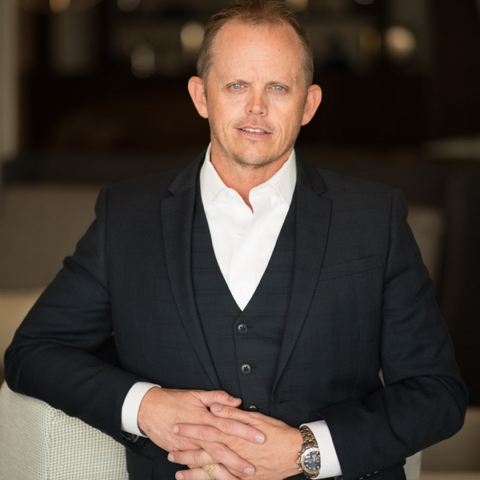
George Wright III is an entrepreneur, investor, and the host of The Authority Formula Podcast. Over more than two decades he has founded and scaled several multimillion-dollar companies and built a renowned seminar business that put some of the world's biggest names and brands on stage. With 25+ years across marketing, sales, and executive leadership, he has made a career of turning expertise into authority — and authority into lasting influence.
Today his mission is singular: help driven entrepreneurs and experts position themselves as the trusted authority in their field. Through The Authority Formula Podcast and Authority Media Network, George shares the strategies that turn knowledge into a platform, audience, and brand that compounds over time.
More about George →