Simon Severino on Mastering Sales Psychology and Accelerating Revenue
George Wright III sat down with Simon Severino, CEO of Strategy Sprints, for a conversation that cuts through the noise around sales training and gets to the root of what actually closes deals: buyer psychology. Simon has generated over $2 billion in additional sales for clients across 21 years, and his approach starts with a question most salespeople never ask: what does the buyer actually experience?
The episode is part of The Authority Formula Podcast, produced in partnership with Valiant CEO Magazine, where George brings on operators and experts who are producing real results in business. Simon's background as a strategy advisor who had to land his own clients shaped everything he now teaches, and this conversation delivers some of his most actionable frameworks.
Why Sales Is Really a Psychology Problem
Simon's entry into sales was accidental. As a strategy advisor, he was always bringing in his own clients without thinking of it as selling. When he went out on his own as an entrepreneur, he began to see that the core of sales is not technique. It is psychology.
The more you are immersed into their world, the more the rest will be easy.
Understanding the buyer means understanding their language, their frustrations, and the decisions they are already wrestling with. When a salesperson demonstrates that level of intimacy with a prospect's situation, credibility follows automatically. You do not have to sell it; you earn it by showing up fully informed.
How Much You Talk Determines Whether You Win
Simon's team reviews six to eight recorded sales calls every day from clients. The data is consistent and striking.
Talking time below 30% has a 70% win rate.
If you are talking less than 30% of the time on a sales call, you are winning seven out of ten deals. The implication is not just to talk less. It is to ask better questions and then listen with full attention. Simon coaches clients to develop a sales script built around eight stages of closing, with three powerful questions per stage. The questions are designed to demonstrate deep expertise while drawing the buyer out and giving them space to think.
What Shortening the Path to Wow Actually Means
One of the most useful frameworks Simon shares is reverse-engineering the transformation your product delivers. If a client working with you for six months will experience a specific change in their business, your job in a 40-minute sales conversation is to let them feel a sample of that change right now.
The tool for doing that is not a slide deck or a product demo. It is a question. If you sell a CRM, you ask how they currently follow up with leads and what happens when they forget. The moment they say "I frequently forget," they have already experienced the problem your product solves. You have made the future outcome real without needing to pitch it.
This approach, which Simon calls shortening the path to wow, collapses the gap between where the buyer is now and where they want to be, and it happens entirely through conversation.
The Three Levers That Can Double Revenue in 90 Days
Simon's Strategy Sprints method focuses on moving three numbers by 25% each. When you do, you do not get a 75% revenue increase. You get roughly 99%.
- Increase price by 25%: Done through better positioning, not changing the offer.
- Increase win rate by 25%: Done by implementing the eight-stage playbook, reducing talk time to 28%, recording and reviewing calls, and practicing like an athlete.
- Reduce sales cycle time by 25%: Done either through a relationship-building sequence (video and voice messages in a specific cadence during the first 12 days) or, for complex B2B situations, through expansion selling: upselling, cross-selling, and improving customer retention.
The compounding effect of modest improvements across all three is what makes the math surprising. Most business owners are focused on a single lever. Working all three simultaneously is where the outsized gains come from.
How to Price with Confidence and When to Stay Silent
Most people underprice, and the ones who price correctly often undermine themselves by how they deliver the number. Simon is direct about two common mistakes: saying the price too early in the conversation (step one or two instead of step six), and immediately justifying it after stating it.
You have to say your price with confidence and then shut up for the next 20 seconds.
Simon calls this Obama-style silence. When you state a price and then start adding qualifiers, you are telegraphing that you do not believe the price yourself. When you say it and hold the silence, you are communicating ownership. You know the value; you are simply giving the other person time to catch up.
Building Customer Intimacy as a Daily Practice
Simon runs a weekly group called the Sales Booster where entrepreneurs bring their live pipeline questions. In both that group and one-on-one coaching, the focus keeps coming back to a single principle: become genuinely immersed in your customer's world.
Knowing their language, their daily frustrations, and the exact shape of the problem they are trying to solve means you will never ask a question they already know the answer to. You will not waste their time. And when they sense that level of understanding, credibility comes automatically, without any effort to manufacture it.
George put it plainly: most salespeople are so busy trying to demonstrate their own credibility that they miss the simpler path. Get intimate with the customer, and the credibility builds itself.
Action Steps
- Track your talk time on your next five sales calls. Aim to stay below 30% and notice what changes.
- Map the eight stages of your own sales process and write three questions for each stage that demonstrate your expertise and draw the buyer out.
- Reverse-engineer the six-month transformation your product delivers, then identify one question that lets a prospect feel a sample of that outcome in the first 40 minutes.
- Audit your pricing delivery: are you stating price at the right moment in the conversation, and are you holding silence after you say it?
- Download Simon's daily flow tool at strategysprints.com to identify what tasks you can delegate so you focus your time on the highest-value work.
Sales mastery is not about having more techniques. It is about caring more about the buyer's world than your own pitch. Simon Severino has built a $2 billion track record on that principle, and it is available to any entrepreneur willing to do the work. It is never too late to start living the life you were meant to live.
Simon Severino
Simon Severino has created +2B in additional sales for his clients over the last 21 years. As an advisor who became CEO, he had to learn the importance of working ON the business more than IN it. Now, he shares his proven templates with high-ticket entrepreneurs. They reclaim 14 hours per week using the Strategy Sprints™ Method and enjoy sales that soar. Author of "Strategy Sprints", Podcast Host Ranking Top 2,5%, TEDx speaker, Forbes contributor, Triathlete. Has appeared on over 1300 podcasts. When he is not supercharging sales, you'll find him swimming, biking, running and tricking his 3 kids into outdoor activities so they can't escape his annoying shrinky questions.
Read the full transcript
Welcome back to the Authority Is podcast, where we help you to grow your business, attract new opportunities, and outpace your competition. My name is George Wright III. I'm your host, and I've been partnering up with Valiant CEO Magazine to bring you the hottest entrepreneurs, thought leaders, and experts from around the world that are crushing it in business. Together, we're going to unpack strategies and tactics that they're using to become the authority in their field. And my goal is to help to inspire and motivate you to do the same. So let's get right into it. Welcome back, George Wright III. And we are joined today by an expert in sales strategies, Simon Severino. Welcome to the show, Simon. Hey, George. Thanks for having me. Hello, everyone. I don't do a lot of interviews, but I try to find individuals that I know will really bring some phenomenal value for the business owners and CEOs and high achievers that are in our show here. So I'm going to give a little bit of background. Simon's the CEO of Strategy Sprints. He's done $2 billion in sales for his clients over the last 21 years. But he has an amazing list of templates that people can use in business in order to grow and expand their business. He's an individual that has a top-ranked podcast. He's the author of Strategy Sprints, which I love the word and the term in general. TEDx speaker, Forbes contributor, triathlete. He's just an all-around very successful guy. So do me a favor, give everybody an idea of what took you into sales. Like, why is that the area that's your genius? What brought you into that originally? Yeah, it's funny because it was never a goal of mine. When I started working, I was strategy advisor and in a big firm. And when you're a strategy advisor, you have to lend your own clients. So I was always lending my own clients. And I didn't even know that is sales. I was just having clients. I was having work. And I had to solve big problems of how to enter the market, stay in the market, and stay and keep market position. So I was so passionate about doing that, that the next project came and the next project came and the next project came. When I went on my own and became an entrepreneur, I realized so many moving parts. but actually it's marketing, sales, and operations. And inside of sales, I realized that it's mostly psychology. It's really understanding the other side, asking really good questions, becoming a masterful listener and interviewer. And that's my passion. I love becoming better at buyer psychology and understanding why people buy what they buy, what's the best buying experience, and designing businesses accordingly, according to that buying experience. And so I'm really passionate about because there is so much to learn about why buyers and how buyers buy. And second, there is not so much about it. There is a lot about selling, but there is not so much about buying. And yeah, I did fall in love with the buying question and I'm still obsessed with that. I love that. Obviously, like most people that eventually find the area that they're amazing at, they do it in life. They just go through business. And I love the way you put that phrase of the buyer psychology because I do think a lot of people don't understand how significant the sales process is. Even if you're not the one selling and you're running a business, you've got to understand the significance of that. and the perspective that it's not just about having techniques and strategies to close deals. It's about having an understanding of the psychology of the buyer, of the other person. And a lot of people don't put effort into that. So I like that you say that. And I know you also have a lot of amazing strategies, but where does someone start to understand the psychology of the buyer? Where do you recommend people start to begin to understand what the mindset is of their ideal client? I'll give you a practical example. We get every day six, seven, eight sales recordings from our clients so that we can give them feedback and increase the win rate. Now, what do you think makes the biggest difference in a high win rate in the 70% versus a very low win rate in the 10%? Man, it's talking time. Talking time below 30% has a 70% win rate. So if you are talking 28%, 28 and a half percent of the time, you are winning the deal 70% of the time. So what are you doing when you not talking You listening Yeah It turns out the biggest impact is being a good listener But listening is not enough You have to ask the right question and then listen I love that because we always hear in sales, don't talk so much. And so many people with sales presentations, they're just trying to sell clothes and they don't stop to listen. But I never thought of tracking the metric of being aware of how much you are talking. So I like that a lot. But at what point, how do you become effective at asking the right questions? How do you become effective at really becoming strategic with your talk time? So with all our clients, we help them develop their own sales script, which means for the eight stages of closing the deal, there are eight very specific stages for closing big deals. In each stage, they have three powerful questions that are relevant to their buyers and that they feel good asking because they show their expertise. So for example, if they say, yeah, but it's not the right time. Now, you might have different ways of answering that. But if you ask the right question right now, they will see, oh my God, he's really intimately into my world. He knows exactly where I am and why it's not the right time. And you ask the question in a way that has them thinking deeper around that and you give them enough time. Now you have established a stronger relationship. They feel that you're an expert, that you have intimacy with their world, and the space is a valuable space. And you don't have anything else. You don't have the product during the conversation. So you have only the conversation itself. So this is where you have to land value to move forward. I actually really like how you put that being strategic with your questions as well. You want to ask questions that are relevant to the buyer, but also that showcase your expertise, that allow you to be able to lead the buyer. You talk about shortening the path to wow. That topic caught me when I was going through a lot of your content. Help me understand what you mean by that. How do you shorten the path? Because I think a lot of people in sales try to think of how do I shorten the path to get a deal? How do you shorten the path? What is the way to do that? We have to backwards engineer. engineer. So if you think somebody works with you for six months, what is the transformation? What changes in their life, in their business? Now we go back to the first week of working with you. How can we have them experience a small sample of that in the first seven days, in the first four hours. And now we go into the sales conversation in the first 40 minutes, because you have only that conversation. Otherwise, they will not move forward. So you have to have a sample of that. And the best way to sample that is not presentations, is by asking the right questions. So you will have some samples of your right question. For example, if your product is a CRM, you will ask around how they follow up with leads right now. Yeah. And you will say, okay, and what do you do if you forget to follow up? And they'll go, oh my God, how do you know that? I frequently forget to follow up. And by doing that, you are creating that moment, which will happen three months later when you use a CRM that you don't forget to follow up. But you will experience a sample of that right now. You will see a broken flow, the right flow, and you will experience the difference. I love it. I love it. I think one of the things that in the area of sales that people really is, and your book is just packed with, as I was looking through the book, it's just packed with templates and strategies, but I think people are looking for roadmaps and paths to do this. So asking better questions, understanding the psychology of your client, and ultimately all people really want to do is they want to accelerate their sales. So this whole idea behind your book, I wanted you to maybe take a minute and if you wouldn't mind with strategy sprints, dig in a little bit to these 12 ways to accelerate growth because that's what people want. They wanna accelerate growth and you have so many different things. I'm gonna highly recommend that people are on the show here, check out the book because a lot of the strategies and tactics you're gonna get in there. But what are some accelerated growth ways you could recommend that fit most businesses? at this point from your book? So in the book, the three levers for doubling revenue in 90 days, that's the Strategist Friends method, are increasing by 25% three things. And that what we do with all clients Okay First thing to increase by 25 is the price that you can charge for the same offer without losing clients You do that by improving positioning The second part is improving the win rate by 25%. That you improve the win rate by creating the eight steps playbook and reducing your talk time to 28%. Practicing that. Recording, practicing, watching your tape, getting better like an athlete. And now you increase the win rate by 25%. The third bit is reducing the sales time by 25%, which increases your sales velocity by 25%. Now, this is a bit tricky, and we have two chances to tackle that. The first one, reducing the time from awareness to closing by using videos and voice messages in a specific cadence in a very high frequency in the first 12 days. We call it the relationship building sequence. You can create 12 times value in the first seven days. Then you can shorten the sales path by at least 25%. sometimes it doesn't work because it's a very complex b2b situation where they have to involve multiple stakeholders across multiple countries and there are different departments then we go to the other side of the funnel so people came for something can you keep them longer retaining them longer expansion selling upsell cross sell they came for a solution they stay for the community So there are many ways if we can't do it with the RBS at the beginning, then we can do it with expansion selling and retaining customers' language. So working on retention, upsell, cross-sell. I love that. When you increase those three things by 25%, you have effectively increased revenue by 99%. Wow. I love the simplicity of that because there's so many levers you can usually pull in sales and whatnot. But truly, those three are the primary. I mean, increasing your pricing, increasing your win rate, and shortening your time to sale, right? Lifetime value is going to fall into that and everything. Do you feel like people struggle with the first one where they struggle to increase their price? because I've found a lot of people, a lot of businesses are underpricing their product. Obviously you have to create more value and more positioning, but do people struggle with that overall with the clients that you work with? Yes, most people undercharge. They say the price in the wrong moment of the sales conversation. You say the price in step six, and most people say it in step two, three, four, even one at the very beginning of the conversation. Yeah, that's a no-go. then the second thing is they say the price and then they start. So for example, hey, Simon, what's the price of a sprint? Oh, it's $27,000, but so you get something on top. Versus, hey, Simon, what's the price of a sprint? $27,000. And then 16 seconds, Obama-style silence. You have to say your price with confidence and then shut up for the next 20 seconds. I like that. And what's the purpose of that? What happens when that happens? Why do you stop for 16 seconds? Because you have to own it. You know what the worth of it is, what the impact is, what the value of it is, and you own it. You're right. I think a lot of people just try to excuse it, right? They say it, but then they got to add a whole bunch of things to justify it. That's a good point. Exactly. And now you're telling me that you don't believe it yourself. I really think that's strong. Let me ask you another question because we don't have a lot of time and you have so many strategies in the book. We're going to have people go that direction. One of the things I've found over time working with a lot of business owners and salespeople is that I think you hit it 100%. It's the psychology of the buyer you really have to put some time into, talk less. But it takes a certain psychology of a salesperson, like you said, to be confident and own your pricing and be diligent in learning. What do you think are some of the most important things a sales person or someone who is selling needs to keep in mind for themselves? And maybe this bridges to these CEO habits or habits of salespeople. What are some really productive habits people can establish to become better at sales? So we have a group every Monday that's called the Sales Booster, where entrepreneurs bring their current pipeline questions. We look at their pipeline. We help them move forward. And we have one-on-one work. In both of those we focus on really one thing Customer intimacy become really good at understanding where they are and what happening with them The more you are immersed into their world, the more the rest will be easy. You will use their words. You will know how it feels. You will know how hard it is. You will not ask bullshit questions that they know the answer to already. And you will not waste their time, which is also important. And by doing that, they will automatically give you credibility because credibility happens when you have intimacy with their world. Oh, he knows exactly where I am. He knows what I'm going through. That creates credibility. And credibility is what you need in the discovery call to get a demo call. And then in a demo call, it's about closing the deal. Yeah, I think you hit it 100% on. Most people are so busy trying to create their own credibility, their own confidence, that they don't realize they're working too hard. If they would just get intimate with the customer, they would gain credibility by default. And I love that. I think that's a golden nugget, guys, if you're listening. That's something you've got to realize. You can't just, it's not as simple as just listening more. you've got to become immersed in your prospect, in your customer, your target audience, the people that you want to work with. So let me ask you this, Simon, we wanted to have you on the show because I wanted to be able to get these resources. I'm going to include a bunch of resources in the show notes, but what is a great place for someone to start both to connect with you and also let's say someone saying, look, I want to get better at the sales process, the sales game. Where do I start? Do I start with me? Do I start with learning? What's the first step for them to truly acknowledge the levers they need to do to move forward and increase revenue? Depending on your learning style, if you are somebody who learns by doing or by reading, if you learn by reading, you can go to Amazon and buy the book Strategies Prints. It's literally our clients and how they had to solve the pricing problem and their go-to-market problems and how they solved it, including the checklist and the tools that they used. If you are somebody who learns by doing, then go directly to our website, strategiesprints.com, and download the tools themselves. We have a lot of tactical tools, open source for everybody to use. So you go to strategiesprints.com, you click tools, and you immediately start applying them to your business. And if you want to go even deeper and say, hey, I want to explore having a sprint coach and how that accelerates my sales, then you go to strategiesprints.com, you hop on our calendar and we can talk. Yeah, I was blown away. I'll be honest with you. I've been around a lot of individuals that do trainings, education, business growth, and you guys have an amazing amount of resources and free tools and templates and things that are available. So guys, if you're listening to this, one of the reasons I wanted to highlight this topic on one of our episodes is whether you're a salesperson, sales professional or not, if you are in a business, you're trying to grow your business, you're a CEO, you're a business owner, whatever it is, you've got to learn and understand that revenue moves with sales. Revenue is going to grow with sales. And the more you learn and understand, the more you are going to be able to grow your business. And you can teach those principles and strategies and have it be culturally ingrained in your business. So I'm going to put some links in the show notes here. I wanted to just expose you to some amazing stuff, things that I felt were very valuable. Simon, before we take off, is there anything, any recommendations or things you'd like to leave us with for individuals that are looking to grow their business quickly? Any last thoughts that you have? I would start with a daily flow because when you want to grow quickly, you have to learn to delegate the small stuff so that you can tackle the big stuff. And how do you know which one to delegate next? I use the daily flow where I write down my time and it helps me find out what to delegate next. And people can grab it at strategistprints.com. It's called the daily flow. And this is where I would start. Write down how you are allocating your time and what to delegate next. Yeah, that's great. The more intentional and observational you are of your time, especially in sales, guys, you've got to be able to track and allocate where you're spending your time because that's your most valuable asset when you're in that arena. So Simon, thank you so much for being here. We appreciate you and your time. I know it's been tough. It's a couple of guys trying to get our schedules together. So I appreciate you being here. And if you're listening to the show, share the show. Help us to be able to grow this show, share the message. People need this topic and these contents. I appreciate you doing that. And remember, it's never too late to start living the life that you're meant to live. And so I appreciate you being with us here today. And we'll talk with you more tomorrow.
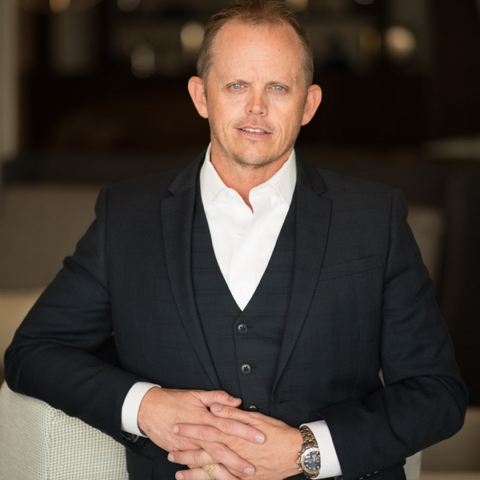
George Wright III
George Wright III is an entrepreneur, investor, and the host of The Authority Formula Podcast. Over more than two decades he has founded and scaled several multimillion-dollar companies and built a renowned seminar business that put some of the world's biggest names and brands on stage. With 25+ years across marketing, sales, and executive leadership, he has made a career of turning expertise into authority — and authority into lasting influence.
Today his mission is singular: help driven entrepreneurs and experts position themselves as the trusted authority in their field. Through The Authority Formula Podcast and Authority Media Network, George shares the strategies that turn knowledge into a platform, audience, and brand that compounds over time.
More about George →