Jeanne Omlor on Building a Legacy: Purpose, Profit, and the Catalyst Mindset
George Wright III sits down with Jeanne Omlor, a certified business strategist and online business coach who scaled her coaching practice from deep debt to seven figures in just 17 months without spending a dollar on paid ads. On The Authority Formula Podcast, produced in partnership with Valiant CEO Magazine, Jeanne unpacks the mindset shifts, frameworks, and hard-won lessons that took her from solo parent struggling to pay bills to working with coaches, consultants, CEOs, and ultra-high-net-worth founders around the world.
What Is the Genius Zone and How Do You Find Yours?
Jeanne is clear that she did not coin the term "Genius Zone," but she made it central to how she coaches. The idea is not about only doing what already comes easily. She was not a natural business person; she describes herself as a former "starving artist type" who did not care about money. But she knew she could learn, and once she did, certain skills clicked into flow.
So, you know, genius zones, nothing new, right? It's not like, let's be real. I didn't coin it, but I did realize along the way when we are in flow, things just work.
The Genius Zone is not a fixed identity; it is discovered by doing. You may not be good at something yet. That word "yet" matters. Jeanne encourages entrepreneurs to resist the easy exit of "I'm just not good at that" and instead ask whether they have genuinely tried, or whether the skill was never a priority until now.
How Jeanne Went from Actress and Fashion Blogger to Multi-Million-Dollar Coach
Jeanne's path was anything but linear. She worked as a fashion designer, an actress, and a top executive recruiter on Wall Street before finding herself in New York City with two young children, no job, and no income. Her solution: start a kids' fashion blog. It gained traction fast, connected her with brands, and built her confidence as a writer and content creator. But it did not pay the bills.
She turned to coaching because it was the one viable option that let her stay home with her kids, who she was homeschooling. She got certified at night while they slept. Word of mouth led to clients. Those clients kept making money, and her own coach pointed out the obvious: she was not a life coach; she was a business coach. She had a gift for helping people earn.
That same resilience repeated at 54. After another life crisis drained her savings, she moved her practice online and hit seven figures in 17 months, without paid ads, as a solo parent.
The Secret to Fast-Forwarding Self-Doubt
One of the most practical tools Jeanne shares is what she calls fast-forwarding. Most people who hit a setback spend days or even weeks in self-doubt before they recover. Jeanne realized she could not afford that. Instead of avoiding the emotional reaction, she compressed it.
I figured out a system where I would pretend, I would remember the old VHS, like, you know, fast forward. I would fast forward my self-doubt in a few seconds.
This is not about suppressing feelings. It is about recognizing that the wallowing has a time cost, and that cost is real. When you need to support kids and build a business, a week of doubt is a week of lost ground. Jeanne also discovered, later in life, that her daily anxiety was not the universal human condition she had assumed. That realization gave her agency: she now works on it every day and wins.
What It Means to Be a Catalyst, Not Just a Consultant
George presses Jeanne on a word she uses to describe herself: catalyst. She draws a sharp distinction between a catalyst and a conduit.
A conduit is just a line. A catalyst creates explosions. So if you look at what catalyst means, it can be like a fuse for an explosion. I look at myself as the fuse that explodes things in a good way.
A consultant delivers information. A catalyst ignites the thinking that is already inside the client. Jeanne says her job is not to know more about a CEO's technology company than the CEO. Her job is to spot gaps, ask the question that unlocks a cascade of ideas, and create a compound effect. Most businesses do not need more information; they need someone to shake loose what they already know.
How to Balance Profit with Purpose and Legacy
When Jeanne works with ultra-high-net-worth clients, she travels to meet them and spends extended time together because the real conversation takes a while to surface. The first answer to "what do you want?" is rarely the true one.
She references Maslow's hierarchy to frame it: once all your material needs are covered, the emptiness that sets in is a signal. People who fill that space only with new thrills are often running from an unanswered question. That question is how you want to be as a human being, not just what you want to do or have.
Her framework for high-end clients and first-time coaches alike is the same. Get clear on the emotions you actually want to feel. Then build toward those, not toward the surface-level desire. Purpose, she argues, is also practical protection: when you lose money, which can happen overnight, purpose is what keeps you standing.
Action Steps
- Identify your Genius Zone by noticing where you enter flow, even in skills you had to develop. "Not yet" is more honest than "not capable."
- Practice fast-forwarding self-doubt: acknowledge the emotion, compress the recovery time, and return to the work. Time spent wallowing cannot be recovered.
- Ask what you truly want, then ask again. The first answer is usually a proxy for a deeper desire about how you want to feel and who you want to be.
- Separate your identity from your net worth. Build relationships, purpose, and impact alongside revenue so that a financial setback does not take everything with it.
- Stop waiting for the right conditions. The economy and the news cycle will always offer a reason to pause. Decide to move anyway.
It is never too late to start living the life you were meant to live. Jeanne Omlor built a multi-million-dollar business from scratch at 54, as a solo parent, without paid ads, and without waiting for perfect circumstances. The only thing that changed was that she decided to begin.
Jeanne Omlor
Jeanne Omlor is a Business Strategist, multi 7-Figure Online Business Coach, and Certified Servant Leadership Executive Coach. At 54 years old she was a solo parent in deep debt and got herself online and to $1M in 17 months, without ads, and has since scaled to multi-millions in 5 years. Her company has helped almost 600 businesses to thrive online. She is emotionally connected to helping others prosper, as she lived in lack for years and overcame that mindset. She is now helping as many people as she can to maximize profits and reach their full potential while being the visionary they're destined to be.
Read the full transcript
Welcome back to the Authority Formula Podcast, where we help you grow your business, attract new opportunities, and outpace your competition. My name is George Wright III. I'm your host, and I've partnered up with Valiant CEO Magazine to bring you the hottest entrepreneurs, thought leaders, and experts from around the world that are crushing it in business. Together, we're going to unpack strategies and tactics that they're using to become the authority in their field. And my goal is to help inspire and motivate you to do the same. So let's get right into it. George Wright III with your daily dose of inspiration, motivation, and education. We've got a real transformation story for you today. It's someone that went from being deep in debt and overwhelmed to building a multi-million dollar coaching business. And we're not talking about fluff and any of that kind of stuff. Jean is a certified business strategist and online business coach who focuses on helping coaches and consultants, basically high achievers, to be able to create more clarity, profit, and purpose. But recently, I got a chance to be on her podcast, and I really got really overwhelmed with the idea that she has now where she really also works with ultra-high net worth individuals, CEOs, and founders, and helps them to maximize impact, purpose, and legacy. She's built her success around a powerful concept called the Genius Zone, which we'll talk about. But what's unique about her, she scaled fast, hitting seven figures in 17 months without relying on paid ads. And so she has an amazing background. And John Amlur, I appreciate you being here today with us. I'm excited to be talking with you. Well, George Wright III, I feel honored. Well, I appreciate that. But listen, I know and I've been around a lot of big names over the years, grown global brands, but you have this unique gift. It's why I think a lot of people bring you into their practices, their businesses and things to help them because you not only relate, you've got this relatability, but you get results. And so I want you to just start right out of the shoots with some real big value. I just want you to share with our audience this idea you have that you use called the genius zone. Can you define for our listeners what that means and how somebody discovers their genius zone? Okay. So, you know, genius zones, nothing new, right? It's not like, let's be real. I didn't coin it, but I did realize along the way when we are in flow, things just work, you know, and what is being in flow? Being in flow is not doing something that you're really not good at, or I mean, you can get good at something. I was not good at business, but I knew I could become good and I got in flow with it. I was not a good business person at all. I was a starving artist type person and I didn't care about money. So I'm not saying, I don't believe that people should say, oh, I'm not good at that. No, you're not good at that yet. Or you're not good at that because you never tried to be good at it. Or you're not good at that because it wasn't something important to you. So, you know, there's this thing of, I'm not saying, oh, just only do what is so easy for you because that's giving up. because a lot of what I'm doing, I was not good at, but I knew that I could learn it. And once I learned it, I got into a groove. I thought, wow, actually, some of this is my genius zone. And what I realized is before I was a business person, I have a gift and that is helping people make money that I hadn't identified. That's a great gift to have. People love that. I think so. So people around me literally say, I made more money this month just because I know you. one of my colleagues i'm curious why because that's not just strategy which you have amazing strategy tactics why do you think they felt that why do you think they feel that and how important is that it's proximity to people and we were talking about this with a colleague today he said jean most people are not like you and i said really what do you mean he said like you are they are not upbeat they are not like on people's sides they're not cheering people for people they are a pessimist he said coming in contact with you and he's like this as well and he said and me too because we are like two peas in a pod he said yeah we are an anomaly positive pessimistic just everything he said positivity is infectious and i thought yeah that's true that's not like i was always like this you know i was pretty negative in some ways when i was an actress and it was like i wasn't working and i'm not saying i was born this way you know and and a lot Well, no, and you've been through a lot, like your journey, and not just going from 2000 a month to 30 to 50 to 100 to scale into multi-millions, but you've also had a lot of shifts, right? In your mindset, your habits, your decisions. Talk about a little bit of that. Talk maybe through your journey of what you went through. Yeah, and I think that's important. I think it's important that you don't just say, oh, you know, Jean, you were like that. No, I wasn't. I was negative. I was down and out. I was like, oh my gosh, I was scared to death, full of anxiety. I struggle with anxiety. Being me is not easy. I have to work on that every single day. I'm winning. But it's not like I wake up and I'm just like, oh, I have an anxiety thing. I'm not a disorder, but I struggle and it's a challenge. And I'm finding that fight every day. And I know what to do now. And many people fight that, right? Many people are dealing with that. For sure. Absolutely. And it's when you realize, one day I woke up and I thought, oh, you mean everybody doesn't live like this? I literally did not know that. I went through my whole life till about five years ago and it dawned on me. Oh, you mean people don't wake up the way I do every day? Oh, I thought that was just human life. It's crazy. It took me that long to figure it out. I just thought that was the way people were. And I thought, oh, wait, ah, I have a thing going on here. It was so strange. It took me so long. I just thought that was the human condition to wake up with anxiety every day, literally. What brought you to the point where you realized that was the case? And like, what was the pivot, the change for you? I was observing a family member and I thought, oh, wait, this family member has an issue with anxiety. So do I. Ah, we both have a thing. And I said to this family member and he went, oh yeah, I know. He said, it took you a long night long to figure it out because you're just going along your life thinking that everybody thinks this way. But the point is, I think it's very important because I am not here to make people feel bad about themselves because you know how bad that feels when you listen to successful people and they have it all together and you like oh yeah they them I me And they don understand me I do understand you because it was not rosy. And I worked very hard to neutralize emotions, understand a lot about mindset and understand that people have such great value. And it's just sometimes their personality. And if you don't have a great personality, you can work on that. you don't have charisma you can work on that you can work on all of this there are exercises because i was an actress to actually develop charisma so this thing this cop out of oh you were born like that yes some people are born like that i mean i was born with a sunny personality i was but then life happened and i was not so sunny okay because yeah well let's be clear for our listeners you weren't originally this high-powered business strategist you were a fashion designer acting recruiting you had all of these other types of things so you you pivoted into this and i guess it was like at 54 you decided you made a decision to go all in and so what did that at 54 i'd already been coaching eight years by the way let's be real people go oh my goodness you got online and not true you know the overnight success is never an overnight success right i have been coaching for eight years doing a lot of things and i was a good coach and i could get to a certain level, but it was so not sustainable and about networking and more networking and being out there in the world. And I have kids and I'm a single mom, solo parent. And I thought, I need to fix this because I'd then been through another life crisis and all my money was vacuumed out of my life. And I was again in deep debt. And I thought, whoa, okay, this is not working offline. I need to get online. And that was the moment that changed it all. I got online and I figured out how to do business in a more sustainable way. And that is- Okay, so I want to ask you something because you've just made a point that I have some clarity for now. You did two kind of really transitional pivots. You went from this career you had into coaching and I'm curious what took you into that besides the fact you realized that was one of your genius zones. And then there was this pivot that you had where you leveled up your coaching business because I know there's a lot of coaches and consultants that are doing this and they love it. They want to create impact, but they're not making any money. So what got you into that industry initially? Well, let's be really transparent here. I had no choice. So I thought the first time I found myself like, you know, with two kids, one year old and one four year old in New York City with no job and really no income at all. I had the bright idea to start a kid's fashion blog. And guess what? Everybody in the world knew about the kid's fashion blog in three months. They loved it. I was great at like spreading the word. I thought, wow. And it got me writing content every single day. I said, I am showed it. And every day there was a blog post and I was a fashion designer. So I would attract to the brands and they'd send me a bunch of free loot. My kids were the best dressed poor kids in New York City. That's awesome. That's awesome. Goatier dresses, all sorts of stuff being sent to us. And I thought, this is great, but we can't eat this. So we got a lot of loot and I got a little bit of advertising and it got me out there. And I was invited to nice parties and I was kind of a mini celebrity in the kids' blogging world. People were like, wow, I love your blog. And it felt great. It felt amazing to have recognition at that point. But then I thought, well, it's not really making a lot of money and a little bit of advertising, but that's okay. It got me out there. It got me some confidence. I'm writing and people kind of knew that was good. But then I thought, I really need to create a business that's going to make money. What do I do? And I wrote down everything that was possible where I could still stay at home, take care of my kids and not farm them out because I won't do that. And I thought, really, the only thing I can do is coaching. Literally, the only thing I can do. I can't sell houses because I'm not going to be out there showing houses. It's not sustainable. I can't get a J-O-B. I thought, the only thing that I can do that I'm good at, that I would be good at, because I'm already good at coaching, because I used to coach actors, and I'm good at coaching. I thought, this is a fit. This is what I'm going to do. So then I got certified at night online in my pajamas when my kids were sleeping to be a life coach. And I started getting clients and it was, you know, really just word of mouth. And, you know, that's the first way, but you can't just keep doing that. So then I thought, okay. And immediately I started helping people make money because as I said, I have a gift. And then my coach said, she goes, you're actually a business coach. She said, all of your clients have businesses and you're helping them make money and you're figuring out how to market, even though you're not a marketer, but somehow you know how to do that. And I said, okay. So then it was all about business coaching and life's always in there anyway. Okay. and then I was just I started speaking gigs and being out there but it's all about being out there and that's exhausting when you're taking care of two young kids and you're I was homeschooling and I was taking them to all their events and it was a lot it was a lot I hardly ever slept and then you know I started getting clients and you know I was just grateful that it was working at all you know and that was great but then but you were at that point you had to have been acting as a future version of yourself because it didn't sound like you had a lot of confidence and things initially at least, but as you did more, you gained more and more traction, more momentum, more success, more results. And so, you know, it's interesting that you say that because I know a lot of people, they know what they want to do, but they struggle with doing it because they have that imposter syndrome. They don't feel like they know what they're doing. And it's interesting to me how you, from the fashion industry, leaned into blogging, something you knew, it leaned into the next thing, which was coaching because you had to, and then you've just built from there. So it's so much mindset too, right? Do you want to hear the secret? yeah this is the secret i realized that i had no time to fail and i realized that if i let myself wallow and be that because i'm very sensitive and it was like really hard because there's so much rejection and everything but i'd already been through all the rejection of being an actress so i was already primed so that's good but the point is i realized at one point whenever i doubt I'm losing time and I'm not putting food on the table and I can't do that. I love how you said that there was no time to fail, but you accepted failure as just a stepping point. So it wasn't stopping you. It wasn't creating doubt. It wasn't doing that. You were pushing through it anyway. I love that. I think that is so huge. What I mean by fail is of course I'm failing and I didn't get everything. But what I meant was I remember these days and it just felt icky because I wasn there yet I was out there But I had confidence because people were respond very well to me And I already been a top executive recruiter on Wall Street so I had confidence that I could deal with people I already had that I was not doubting that because I had evidence of that. However, I'd been through a lot of bad stuff and I just thought, I'm just gonna go out and tell people what I do. And so I was confident when I met people. But what I mean is this, when I had some sort of setback, usually I would like wallow and self-doubt and then, you know, we talk ourselves off the ledge. Okay. And I thought, now let's just look at this logically because I'm big on logic. Okay. So when I have to talk myself off a ledge, what's happening here? Let me think. Ah, okay. There's a time I have to doubt myself, feel bad about myself. And I put myself through the ringer and I said to myself, how long do I usually take to do that? Good question. Let me see. Could be a week where I'm feeling. Yeah, a while. Most people, most people sit. I don't have a week or two weeks. That's wasting time. So what I have to do is I have to learn how to process this in a minute. So you know what I did? I figured out a system where I would pretend I would remember the old VHS, like, you know, fast forward. I would fast forward my self-doubt in a few seconds. So I would do this. I'd go, okay, boom, done. That is how long it took. I love that because you're not saying I avoided it. You're saying I pushed through it faster. That's awesome. You know what I love about that secret and that trick to fast forwarding is, and you said a couple of things. I think success leaves clues. At the end of the day, you're an emotional person. A lot of people are emotional people, but you turned it into a logical path that allowed you to push through it faster because you do have to push through it faster. You don't have time. None of us have time, really. And so I love how you said that because I think sometimes we don't realize the time we're spending is the problem in pushing forward. And I was going to mention to you, you like to refer to yourself as a catalyst. And I think that's a great example of that. But I was going to ask you what you mean when you say you go into a business as a catalyst. Because being a catalyst is you're helping other people have realizations that are just compounding everything. It's not about me saying, hey, go do that. It's about, hey, did you think of that? Well, actually, no, we didn't. And that creates this other flow of ideas. Or did you look into that? No. How do you think? So it's not always a question. It's like, hey, why don't we? Oh, wow. We didn't even look at that. We didn't even notice that. Great. So it's not about everything. I think that's a very static way of looking at things like I'm just a vat and there's info and that's all you get. I think that working with people, it's a synergy of you're creating a compound effect. And a catalyst is that a catalyst is you're throwing something somewhere and it just creates all this stuff happening. Right. So I do see myself as a catalyst and a conduit, but a conduit is different from a catalyst. Conduit is just a line. A catalyst creates, you know, explosions. Right. So if you look at what catalyst means, it can be like a fuse for an explosion. That would be a catalyst. Right. So I look at myself as the fuse that explodes things in a good way because I'm not God and it's not all coming from me. I'm just a person. And it's about the inspiration of getting people to think and figuring stuff out. And then they're bringing their value in because people that I'm coaching, they know more about what they're doing than I do because they're the expert. I'm just helping them fix stuff around that. I'm not helping them be, yeah, they could be a better leader, but if I'm working with a company and he's the CEO of a tech company. I don't know as much as he does about his tech, right? I'm just looking for gaps, like what's going on and why isn't this working? And personal life stuff sometimes as well. For the coaches and consultants, clearly, I have a client who's one of the world's top innovations consultant. He knows way more about me than I do, but I'm helping him build his business. Yeah. And one of the reasons I really liked that catalyst comment is from two perspectives. One perspective is from a coach or a consultant or anything in life, a lot of times people feel like they have to have all the answers when the true benefit is being a catalyst for answers that people have inside them. But the other perspective is most businesses, what they really need more than an expert and a consultant is a catalyst. They need someone to come in and shake it up in a real positive way. And one of the things I wanted to ask you, because I know we're kind of limited on time. And I wanted to make sure I asked you this question is, you work with, as I mentioned earlier, high net worth individuals, CEOs, and founders, but it's to, and you like to say, help them maximize their impact, their purpose, and their legacy. And I think that's a piece that even if you're not to that level, you want to feel like you have impact. And so I'm wondering how you advise or help individuals to balance profitability in your business with impact and purpose. Okay. So the first thing is, it's really important. And you know, things are not as complex as people like to make them. And I think somebody's told me, he said, you're a genius at getting stuff that would be complex and confusing and making it so simple that anybody can understand it. Because I'm not that smart. And I can't activate unless it's something I can understand. And just what do I do? Like, you know, people tell me all this stuff. And I say, great. Okay. what's the first step? Silence. If you can't figure out a first step, you can't just do stuff, right? So, and I always say, well, okay, what do I do first? What's the first thing I can do? And they can't tell me. I said, well, I need to know how I start. I can't just vaguely do a bunch of stuff all at once, but people aren't good at breaking things down. So I'm good at breaking things down. And the first thing we need to figure out is what we deeply desire. What do we want? What do we really want? Not what we think we want because it makes us feel good because, well, let's put it this way. Let's say you say, well, I really want to just go buy another sports car, Sean. Well, maybe that's true. You want to buy the sports car. Sure. But what do you really want? Well, maybe you just are a sports car. That's possible, right? Because you love cars. Possible. Or it might be what you really want is you want people to look at you a certain way. You want people to think, gee, that's an important guy. He must have a lot of money. Why? Oh, because of blah, blah, blah. When you really look at why we do stuff, the question of what do you want Usually it not the first answer Right And sometimes you don know right off the bat either So if somebody has to pull it out of you Exactly That what I do with that That a long conversation. And actually with those high end people, I fly anywhere in the world and I spend days with them because it's not going to be in one conference and not every single day, all day, but we'll maybe spend a day, take some time off meat again during, and it's cooking. And there's a lot of realization that happens when you get very deep about what do you really want oh i thought i wanted do you really want to make more money really because at a certain point people make a lot of money and they don't really need to make more it's just sports that's when you're going up you know the mass loss hierarchy is when you get to a point where all your needs are taken care of you can do whatever you want you can travel wherever you want you can go to any restaurant you can buy any clothes You couldn't do that's where the emptiness really starts to set in because what do we do now? And that's when people start getting into bad behaviors because they need more of a thrill. Does that make sense? People that always need a new thrill, they're empty inside. If just thrill upon thrill, that's when you have to really think about what is my purpose here? How do I actually and create impact? I don't really like that word, but there's no other word for it. But make a difference. Well, a bad difference or a good difference. A lot of bad people made a big difference. So I also hate that. I just want to make a difference. I always say to myself, a bad or good one. So it's a lot of platitudes and cliches. But that aside, we need to figure out how do I want to be? Not what do I want to do. How do I want to be as a human being? And then what do I do? So how do I want to feel about myself? Do I want to feel I wake up and it's just I just made money and made people miserable and I didn't help people. And most people want to feel like they've helped other people if they are normal human beings. True, true. And those emotions are what we're really looking for. We're just trying to get the profits and everything else to be able to help us to get those. But you don't need to have those to get them. And I love what you're saying because I think at a high, high level, that is a challenge. I think a lot of founders, CEOs, and super ultra high net worth struggle with. But I think if you, even at a lower level, begin to ask yourself those questions. why and what is it you're really trying to create? What do you want your life to be like? I think that those will navigate you down a path that might be slightly different than what you're going down, but do it and be able to do both. I think that's a big key. Well, for sure. Because the fact is, if we lose our money, which we can overnight, and that's your whole life, that means you have no life. Right. Because money can be lost. So you really want to make sure that you're developing all this other stuff. So, oh, I lost the money, but that's okay because I'm a good person. I'm a good parent and I have friends and I help people. So, okay, not good. And it's upsetting, but then you're not committing suicide like a lot of people did when they lost their money because that was their whole life, right? True. Yeah. With purpose, don't commit suicide when they lose their money. Yeah. I also want to leave really a couple of key messages around what you just said, because I think not only do you need to determine what it is, why you want to do it, but I think it's never too late to start creating the life that you want to live or it's never too late to start aligning your impact and your purpose with your fulfillment and your business, right? So I really like that. Well, I wish we had a ton of time. I'm going to actually ask you to come back and speak to our academy. But before I do, I want to just ask you two final questions. One is, what would be your advice in the current market, just in general for people that are trying to level up? Is there anything in particular that just comes to mind for you for any way that you would like to leave our listeners with? And then how can they get ahold of you? Like, how can they get in touch with you? Yes, for sure. Okay, so let's talk about like the coaches and consultants because that's actually my bread and butter. Don't wait. Stop listening to the news. Stop listening to everybody. Stop making excuses. Stop using the excuses as an excuse that, oh, the economy and this president or that president, because I hear that every single time there's any president in, quite frankly. Right, right. Just do it because every moment that you are waiting, you're wasting precious time and you're never going to get that back. As I said, you can lose your money and can make it back again. A hundred million fold. You can't get time back. So stop the excuses, whether they're conscious or really get clear on are the excuses. Because everybody has a million excuses of why they don't do stuff. I never used excuses ever. I didn't even know what was going on with politics most of the time because I had my head down. I was just focused on I need to support my kids and I need to make this work and that's it I didn't go oh my gosh I read the news and I can't do that today because of this that's a gift when you are blind to what's going on sometimes because you just function so figure out what do you want if you want to make money helping other people as a coach or consultant or a business person or whatever just do it I think somebody else said that yes for sure for sure no I love it it's great advice. I think it's one that everyone needs to stop listening to and do it, right? Just literally stop hearing it and actually take action on it. So what's the best place for them to get ahold of you? What's the best place for someone to be able to connect with you? My website, which is jeanomelor.com, J-E-A-N-N-E-O-M-L-O-R.com or LinkedIn. Yeah. And actually, I'll put those in the show notes. So if you're listening to this, I'd really recommend and encourage you to kind of connect and reach out. I think that there's some very unique. I think using the term catalyst was really a great idea. There might be something that just takes you to the next level, pushes you to the next. And I really appreciate you being here with us. I think there's so much more. I wish we had more time because there's so much more that we could share and you have such a depth of experience. So I appreciate you being with us here on the podcast today. You're so welcome. This is actually fun. Well, listen, if you're listening to this, do me a favor, share the show. And remember, it's never too late to start creating the life you're meant to live, but you got to take action. You got to move forward. So I appreciate you being here with us and I'll talk with you soon. Outro Music
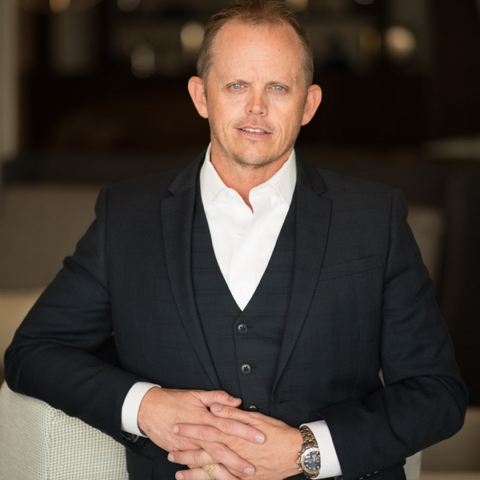
George Wright III
George Wright III is an entrepreneur, investor, and the host of The Authority Formula Podcast. Over more than two decades he has founded and scaled several multimillion-dollar companies and built a renowned seminar business that put some of the world's biggest names and brands on stage. With 25+ years across marketing, sales, and executive leadership, he has made a career of turning expertise into authority — and authority into lasting influence.
Today his mission is singular: help driven entrepreneurs and experts position themselves as the trusted authority in their field. Through The Authority Formula Podcast and Authority Media Network, George shares the strategies that turn knowledge into a platform, audience, and brand that compounds over time.
More about George →