Bronson Kaufusi: From NFL Injury to Mindset Coach and Investor
When a 120-day-old NFL career ends with a spiral fracture and a dislocated ankle, most people would consider that a catastrophe. For Bronson Kaufusi, it became a proving ground. On The Authority Formula Podcast, host George Wright III sat down with Kaufusi, a former NFL tight end and defensive end who played for the Baltimore Ravens, New York Jets, and Green Bay Packers, to unpack what it really takes to build mental resilience, spot hidden opportunities, and transition an athletic identity into a thriving business life.
Kaufusi's story is equal parts sports biography and business blueprint. The principles he developed on the field translate directly to the challenges entrepreneurs face every day: handling setbacks, staying present, playing to your strengths, and staying open to doors you did not know existed.
How Pre-Conditioning Your Mindset Changes Everything
Kaufusi does not credit luck or innate toughness for getting through one of the lowest moments of his life. He credits preparation. While at BYU, Kaufusi worked with mindset training coach Craig Manning. Manning's approach was practical: track what is working, every day, without exception. Kaufusi wrote down three things that went well each day, and he kept doing it until it became automatic.
When his ankle shattered in a Ravens scrimmage, the habit kicked in before the despair could take hold.
"The pain that I felt physically wasn't near the pain that I felt mentally and emotionally, because that hole was so dark, where you're just trying to find whatever light you can to pull you out of it."
What saved him was not willpower in the moment. It was a subconscious trained, over years, to pull toward the positive. As an analytics major, Kaufusi framed it simply: if you want to change your finances, you track spending. If you want to change your eating, you track food. If you want to change your mindset, you track that too. The data accumulates whether you are paying attention or not. He chose to pay attention.
Why Being Present Is the Real Competitive Edge
Once Kaufusi got through draft night and into his injury, he found himself at the intersection of two time traps: dwelling on a career he had just started and worrying about one he might never return to. His answer was to collapse the timeline.
One day at a time. Then the next.
"Every day I unpack my mind into my journal. And so it brings me right there to the then and now."
This is not a metaphor. Kaufusi describes journaling as unpacking your mental load into a container that forces you back into the present moment. When you are genuinely present, your decision-making improves, your attitude shifts, and you start thinking about other people rather than spiraling on yourself. He even pointed out a practical consequence most people overlook: when you are injured and not training, managing your diet becomes its own daily decision. Being present is the only way to make that call correctly, every day, rather than getting overwhelmed by the weeks ahead.
He had also practiced this once before. In his senior year of high school, he tore his ACL in the second game of the season. That earlier setback taught him the same lesson he leaned on in Baltimore: it is a day-by-day thing, and the only moment you can actually control is this one.
What Noticing Your Teammates Can Teach You About Opportunity
When Kaufusi was with the Jets, he noticed a teammate, Brandon Copeland, constantly on his earbuds coming in and out of the facility. Rather than ignore it, Kaufusi asked what was going on. Copeland was running multiple businesses, including a home-flipping operation, while still on the active roster.
That conversation cracked open an invisible ceiling Kaufusi had not realized was there. He had been so focused on football that the idea of building something else in parallel had never occurred to him. Once the question was asked, the whole framework shifted. His first thought was not doubt. It was curiosity: is that possible? Is he really doing it? And then he kept asking questions until the answer was obvious.
He did not immediately jump in. He found a real estate partner and met with him eight times, asking questions at every meeting, before they closed a deal together. He told the partner upfront that he would be learning through the process. The partner welcomed it.
Most successful people, Kaufusi notes, love to share what they know. The problem is that most people are too afraid or too proud to ask. Kaufusi was neither.
How Playing to Your Strengths Gets You Through the Hard Parts
Kaufusi does not claim to be an expert in everything he pursues. What he knows is that he is good at building relationships, and he has stayed anchored to that strength through every transition. When he moved into real estate investing, he led with relationships. When he started mindset coaching work, he led with relationships. When imposter syndrome showed up (and it did, he was nervous on his first real estate deal), he returned to what he knew: getting in the right rooms, asking the right questions, and listening more than he talked.
This applies well beyond sports. Many entrepreneurs fail not because they lack skills, but because they try to compete in areas where they have no edge. Kaufusi is a case study in identifying your core strength and using it as the through-line across every new arena you enter. Humility and coachability are not weaknesses. They are the mechanism that keeps doors open.
What Bronson Kaufusi Is Building Next with Young Athlete Society
Kaufusi is launching the Young Athlete Society, a platform designed to give young athletes the mindset training and ecosystem support he had to piece together on his own. The program is built for high school athletes and younger, with resources for parents and coaches as well.
The premise is straightforward: most athletes stop competing well before college, but the lessons learned in sports (presence, resilience, daily discipline, coachability) transfer to every other domain of life. Kaufusi wants to deliver those lessons at the high school level, when they can have the greatest impact and when access to professional athletes and coaches is hardest to find.
He came to this focus because he was that kid. Even with a father who was an NFL coach and college recruiter, he wanted more access, more conversations, more perspective from people who had been through it. Young Athlete Society is his answer to the version of himself that needed it most.
Action Steps
- Start a daily journal and write down three things that went well each day. Do this before you need it, not after a crisis hits.
- When you face a setback, whether from an injury, a career shift, or a failed venture, commit to one present-moment decision at a time. Do not let your mind live in a future you cannot control yet.
- Pay attention to what the people around you are doing. Kaufusi discovered real estate investing because he asked a teammate a simple question. Your next opportunity may already be in the room.
- Identify your core strength and let it anchor you through new territory. Play to what you do well, especially when everything else feels uncertain.
- Approach mentors and successful peers with open curiosity, not performance. Ask questions directly and admit what you do not know. People are far more willing to help than most assume.
Bronson Kaufusi did not get to where he is by avoiding hard things. He got there by training his mind before the hard things arrived, staying present long enough to see what came next, and asking questions without shame. It is never too late to start living the life you were meant to live.
Bronson Kaufusi
Bronson Kaufusi || 🏈 NFL Player | Helping Pro athletes & Family Offices w/ Real Estate Dual sport athlete at BYU in football and basketball. Graduated in Statistics-Analytics. Drafted to the Ravens in 2016. Played in the NFL until 2022. Played both tight end and defensive end and was also with the Packers & Jets. Currently advising multiple pro athletes in the NBA/NFL/MLB with all things outside of their sport in business, real estate, proper family office structure and venture. Helping Harris Investment Group grow through meaningful relationships with a focus on multi family value add real estate & gas stations/truck stops. Helping others succeed is what life is all about.
Read the full transcript
Welcome back to the Authority Is podcast, where we help you to grow your business, attract new opportunities, and outpace your competition. My name is George Wright III. I'm your host, and I've been partnering up with Valiant CEO Magazine to bring you the hottest entrepreneurs, thought leaders, and experts from around the world that are crushing it in business. Together, we're going to unpack strategies and tactics that they're using to become the authority in their field. And my goal is to help to inspire and motivate you to do the same. So let's get right into it. Welcome back. George Wright III here. I'm your host and I'm joined today by a really special guest, Bronson Kafusi. How you doing, bud? I'm doing great. Thanks for having me. Yeah, no, I'm really glad. I mean, we met through some mutual friends and I tell you, I'm excited to get into some really cool stuff because just for those of you that don't know Bronson, he's an NFL player, mindset coach, investor. He was an All-American high school athlete, went to BYU, drafted into the NFL. It was back in 2016, right? Yeah. And went to play for the Ravens, on with the Jets and Packers. And now he's a free agent and transitioning into a pretty successful investing and business career. So we have a lot of stuff to unpack in a very short period of time. So thanks for being here, man. I'm really excited to be able to talk with you about stuff. Oh, no, thanks. I'm excited. I'm excited to share my story and some cool experiences. You know, people, let's maybe start by going back a little bit because people love that, you know, American dream story, right? It's like, you know, growing up, high school, your dream and goal of going to the NFL. And so let's kind of go back and could you give us a little bit of a backdrop on your journey to that? And then we can kind of unpack the rest. But give us some of your background and help people to understand kind of who you were growing up. Yeah, sure. So I would say the first thing to note is my dad moved here from Tonga when he was nine years old. And he, you know, played rugby growing up. And high school coaches saw him playing rugby with all his brothers. He had six brothers. And you should come play football. So he's jumped in and started playing football and he kicked off the whole football world for my legacy. Yeah. Like, yeah, everyone like from him on, I mean, we've had over 20 plus first cousins, uncles and aunties play college football. And so, um, he set the tone and, um, for me, I mean, he played in college, played in the NFL and then became a coach. And so I grew up around the game. it was inspired by the all his players they're always nice to me always had me around as a little boy you know running around and and i just you know i didn't really realize that football could turn into you know a really lucrative career and um paper school and things but about in high school that's when it hit me that oh my gosh you can play this sport and go you know get your school paid all of that and that's all i thought of it you know each level kind of changed i get to college and it hits me oh my gosh i can get drafted into the nfl you know and so so did you have i mean if you're and so if he was a coach and and a player like did you have a real discipline structure growing up or like what was your what was your what did you have to do to really kind of um because i don't want to make it sound like you know the people are listening they're like oh man They had like 20, 20 people in the family all go to the NFL. I mean, I'm sure it's a little bit more difficult than that, but what was your structure growing up? Like, how did that, was it just daily discipline type of stuff with, with the fam or what? Yeah, I would say there's some principle, like really core principles that, you know, were instilled in me when I was younger. And, you know, a lot of people, this is kind of crazy, all of that family history and things. I was recruited as a tight end and my dad was a defensive line coach and my dad, you know, didn't offer me a scholarship. because, you know, he's, he's very, you know, he wanted me to earn everything and he actually became my coach in college. Wow. Because of that, it was harder. I had to go harder every day. I had to do extra. I had to, there's no favoritism. When we watch film and I make good plays, he wouldn't really say good job. He was just kind of quiet. And so for me, I took that as, you know, a compliment because I know, you know, you had to adjust. Yeah. Yeah. So, but you're probably harder on you when you weren't making the good plays. So exactly, exactly. No, no benefits there at all. Yeah. Yeah. So, but you know what, for me, it works for me because, um, I, I enjoyed the challenge. I think that's one thing that, you know, separated me was I enjoyed the challenge of, you know, waking up every day and getting the most out of every day and, and pushing myself every day. And so whether, And it was in everything. And so I think that was one thing that kind of separated me as I was going through high school and college. I just, I loved all of that. And it was awesome to be able to experience all that at every level. Well, and a lot of times, you're in such a routine. I found this with a lot of really successful people that I know or have interviewed or done business with, is that you're just, your mind is so conditioned to success principles and daily rituals. We talk about that kind of stuff here, that it's almost just automatic for you, but people don't recognize and realize the structure and discipline that really goes into play because it's people that are structured and disciplined make it look easy to a certain degree, right? So, and obviously, obviously it wasn't, which kind of leads me to a really important question I was going to ask you. So you get drafted into the NFL and your rookie year, you break your ankle. And I would love to know. So you go from this high of being, you know, drafted and reaching kind of a pitiful of what someone would say is a dream come true. And then you break your ankle. I mean, walk us through that. Like what happened in your mindset? What did you do? You know, because that to me would be like a devastating thing when you just hit your dream. What happened there? You're absolutely right. draft night it's the high of highs you get a call on the phone hey this is the baltimore ravens we're drafting you right now and everyone's ecstatic your family you just can't believe it it's like surreal and then to go to you know fast forward like 100 days later 120 days later and i'm on the ground my ankles dislocated and my leg is spiral fractured all the way up and when did this how this happen was this at a practice or a game or yeah i was during a scrimmage where i lost i was locked up on the end and then the linebacker came behind me and got went airborne and flew right into my legs while i was planted and so i just heard everything go and in that moment i i knew exactly right when it happened that my season was done and i just and i remember i was the pain that i felt like physically it wasn't near the pain that i felt mentally emotionally because that that hole was so dark where you know you're just trying to find whatever light you can to pull you out of it and you know for me fortunately i've always been in college i had a mindset training coach um craig manning and because of that training i had conditioned my subconscious to pull into to positivity all the time. And so what happened was no matter the situation I always found the positive in it So and it weird And I it kind of hit me just literally a few months ago when I was thinking about it I'm like, why, why am I like that? And it's because I had put the work in actually where every day I write down, you know, three things that went well that day. And so because of that data, I'm an analytics major. So I know how data works, you know, and I know how to, I know how to like change, you your finances, you need to know where you're at. You got to track it. If I want to change my eating, I got to track it. Well, if I want to drive mindset, I got to track it. And so for me, it's- Well, and I want to pause you there for a second, because I got to ask you, because you hit on something that was huge for a lot of people. And that is, there's a lot of people right now that are struggling and they have circumstances in their life, right? It might be physical, might be mental, might be a job loss. It might be family, you know, there's suicide, depression rates off the charts. But the hardest part for most of them is how they have to deal with it and the mindset. So when you said that, that rang true because it's like you were physically broken, but the mindset was the hardest thing. And you made a point that I really want to emphasize for people. And that is you preconditioned your mind before you needed to. So you obviously were investing your time in personal development and mindset, you know, I said back in college, and how much do you think that really helped you? Because you said that that made a big difference, but had you not been doing that before you needed to do it, do you feel like it would have been just even, you know, a hundred times more of a struggle? Oh, it would have been detrimental had I not been training my mindset and training, you know, how to find, you know, the good things each day, how to get the most out of each day because I just didn't, to me, when that happened, And like I said, it was really tough, but literally the next day I'm like, okay, what do I need to do to get better? So I just didn't want to waste time. And I think that's one thing that you gain when you get that mindset, you gain time because you missed most of it. And so I think that without it, like you said, the preconditioning of it was key, seriously. Well, so what were you doing? You tend to write down what happened well during the day. What other types of things were you doing at the time to really just kind of overcome the challenge? Were there other mindset things? Were you around mentors or reading books or like, what was your daily rituals you were doing? Yeah. So I was always, you know, right. I had a journal and I'd write in my journal and I'd write down things I wanted to work on, the things that I did well. And, um, man, that, that helped so much because with my mindset, I was one of those guys where I was very, very analytical and very, um, I wanted everything to be perfect. Yeah. I had to realize, you know, I'm not going to be perfect. You know, it's not. But see, most people that are like that, I'm very much like that, like perfectionist, they're harder on themselves. And, and so what happens is you end up being negative on yourself sometimes versus positive. But if you're conditioning your mind for positive, that's what I really love. What you just said, you're training your mind to be positive. and see the positive. Because when you're writing in your journal, the things you love each day or what you did right or whatever, it's different than how am I screwing up? How am I making mistakes? And so training your mind is a huge thing. And I think you made a great point. So take us back there again. So was this a long road, a struggle? Like you're out the season. Like that's not, you might've the next day been looking for positive, but that had to have been a little bit tough to keep yourself going. Yeah, and it's a lengthy road, honestly. And, you know, for me, I just, but I know I was kind of, again, preconditioned in a way because in high school, my senior year, I tore my ACL in the second game. And so when this had happened, you know, I learned that it's just a day by day thing. And you have to be very present because it's so easy to have your mind slide to the future. and it's easy to have it, you know, dwell in the past. And that's where, you know, regret is. And so being able to really be able to have my mind focused every day in the present, it was such a game changer, honestly. And I just kept going one day at a time, one day at a time. And eventually, you know, the season's over and I'm back running. Man, I'm telling you, that is, it's so, you do make it sound really easy. And so I, you know, I get, I'm going to unpack it for a few people because, you know, you're saying things that look sick, guys, if you're listening to this podcast episode, success leaves clues, right? He's constantly, I can't tell how many times you've said daily, right? Being present, because I think you're right. I think the reason it's a struggle is people are thinking in the future, they're not going to get back. Or now I did all this hard work. It's not going to make sense. But you were day to day to day. And then eventually the season was back, right? So I love that you said daily and I love that you said be present. What do you do to, I mean, is your journal the way you help yourself to stay present? Like, how do you stay present? Because that's a hard one, man. People are always, you know, regretting the past, worried about the future, right? Yeah, no, for sure. I think like when you said the word unpack, it made me think about every day I unpack my mind into my journal. And so it brings me right there to the then and now. and like what am I doing now to get better because you make so many decisions every day that affect you over time even though you can't see it and so being able to be in the right state of mind to make the right decisions like when like one thing that no one ever thinks about like when you get hurt is um man gaining weight as an athlete because you're not running as much so I have to make the right decisions of what I'm putting into my mouth and just you know all of that like that's hard to do at the very moment because you can't like you can't affect like the whole week the whole month you can only do it right now right yeah exactly and so it's just like without having mindset focused on right there now it's it's really hard right and and i mean it helps too because when you start focusing in the present your attitude changes and you're bringing every day to rehab every day to work every day to your business it it changes because you're way more present and you think about other people, helping other people. It's just a game changer. Yeah. Well, I'll tell you, I love that you said that. And I think you also made a really interesting point that kind of takes us to another section of what I wanted to talk about with you. And that is you're training your mind and you're training your mind to be present. And so you're able to overcome these obstacles. But I think in a sense, you were also, from when we were talking before, you were training your mind to be aware and open to possibilities and to opportunities because take take us a little forward now so like you're you're playing in the nfl uh you've you've been you know moved over and you sign a contract with the green bay packers and and then you sort of uh tell tell them a story about how you kind of stumble across your teammate and and start to identify other opportunities because that to me is is pretty interesting too because most people wouldn't see that opportunity happen they wouldn't even notice it yeah i was so this was right before the packers i was at the jets and i had a teammate brandon copeland and he was always coming in on his earbuds talking and i was like what is he doing and i just went up to him and i'm like hey what are you talking about every day when you come into the uh you know the building and when you're leaving the building he's just talking just on his phone like on his phone yeah no idea what going on and he said oh i i you know running my my businesses i have a you know home flipping business and i have a you know some businesses and i was like no way and then and all of a sudden it hit me like i could do that like i can do more and and because that ceiling is just invisible right i had gone to the ceiling thinking this is all i can do but really it's like no there's more time in the day, there's more time, especially in the off season, you know, where you can't train for 24 hours, right? Like you got to rest and you got to, those are good opportunities to take advantage of, you know, learning about investing, financial literacy, you know, how to build. So before, before you make that sound as easy as it is, I feel like there's people that they go their whole lives and they're so myopically focused on their dream, right? Because there's this challenge now you like, okay, focus on your dream and accomplish your goals. But then how do you stay open-minded to other things? Because see, people get, and I'm sure with athletes as well, I've talked to many that have said, I'm here and now this is all I am. This is what I am. And how do you keep yourself, and I think being present is part of it and training your mind, but how did you keep yourself open to opportunities and to feel like I'm more than just an athlete? I can be an investor. I can be a mindset coach. I could be one of these things. Were you always that way? Or do you think it's back to the conditioning of the fact that you were so open to your mindset and training yourself in a personal growth way that you were open to it? Were you wired that way? Or was it just like, because most people wouldn't have noticed their buddy on the phone, they would have been like, ah, you know, what are you doing? You know, for me, one thing that I feel like I, you know, is one of them, like I've been wired to see and do is build relationships. And so when I see people, I'm very aware of, you know, people and what they're doing around me and just building, you know, relationships. My favorite thing to do is build relationships. And so when I saw him, uh, you know, walking in and I just asked him, cause that was, that was very common for me just to be like, Hey, what are you doing? And just strike up a conversation. Like, because of that, it opened my mind to, oh my gosh, there's a whole new world out there that I hadn't really been a part of, but it kind of rang true to me in the sense of, oh, I can, I can do this. I was inspired. So did you think that right off the battery? Like, man, I don't know if I could ever be do that. Like, did you just feel like, ah, no, I could do anything or what, what was your initial reaction? My, I think for me, the reaction was, is that possible? Is he really doing it? Is that real? And it was. And then I immediately just kept asking questions, asking him more, asking him more. I love it. No, I love that because our thoughts obviously completely create our life. We talk about that a lot on this podcast, but people are like, well, but how do you change your thoughts? What's the questions you're asking, right? Because if you're asking, is that possible? What is he doing? Why is it going on? And so I love that you said that because like I've said over and over guys, like, listen, success leaves clues. I mean, he's asking questions, opportunities present themselves. So did you, like, was he just like, dude, stop giving me a hard time. Like, were you just asking all kinds of questions trying to find out and that just took you down this other path? Talk to us a little bit about was there a transition period that you started thinking, you know what, I want to be in business and follow my passions versus being an athlete? Or was that decision made for you in the sense that like, you know, injuries are like, well, how did that transition happen? Because there's a lot of people that are, I think in their life, they've gone their whole life trying to work towards something. And there may be at that point where they're like, I maybe either need to do something else or they're saying something inside me is like, I can have more. I can do something more. Maybe they have confidence issues, but they want to do more. And that was the point you were at where you were either needing to do something or you wanted to do something. So walk us through that a little bit. Yeah. I think, you know, for me, I just, that, man, once I started asking those questions, then my thought process started to go to, let's apply this. Let's take it and turn it into action and see what comes of it. That's that leap of faith. I think a lot of people freeze at the edge of the cliff, but it's like, no, just jump. You can learn on the way. I just was like, okay, well, let's start investing in real estate. That's where it all started. I started to get into- Did you ever question your ability? Like a lot of people have this like imposter syndrome. They don't know, they're confident or whatever. Do you find you have times where you just kind of question your confidence or your abilities to do things, but you just push yourself anyway? Or what do you do with times like that? I think a lot of it comes down to like knowing yourself. And for me, I knew I was good at building relationships. I was good with people. And so I knew if I was gonna go out and invest and do all this stuff, I'm going to still pull to my strength. And so for me, I just kept to that, my strengths, which was people. And, you know, I got in the right rooms, talk to the right people, continue to ask questions until I felt like, like my first real estate deal, I was, you know, so nervous, you know, you're still nervous because it's something new, it's fresh. But I was, you know, I had thought it through thoroughly. I talked a lot to different people, people that know more than me, like, because I know there's a lot of people that know more than me. I just wasn't afraid to ask those questions. The people I think get stuck a lot of the time. Well, but I think you made another great point is when you play to your strength, you can get through those stuck times. It's when you try to, so many people try to be something they're not or overcome a challenge that they will never have as a strength. But if you play to your strength and you love people and you love to build relationships, that carried you through a lot because you were just associating with the right people, right? Yeah. Yeah. And I was able to find the right people and then make that jump, make that investment. And then from there, what was cool is, you know, I've always been big on, you know, really always being a learner, but I don't care what situation, what field I'm going to learn something. And so when it came to that field of real estate investing, I told my partner that I invested with, Hey, I'm going to be asking you questions now. Cause I want to, I want to learn how this works. he said great that was a really good sign for me where oh he's like so you were open with him and said look man i i don't i don't know everything i'm gonna be asking a lot of questions but that's just the way it is that's just and for me that's kind of how it has to be because i want to learn and yeah so he was like great let me teach you you know all this stuff and through my own experience and and that's really what kicked it off honestly to you know having a good experience How did you meet your partner? Like what was it a relationship you knew for a while, you were friends for a while, or someone knew that you met that you structured a partnership with? Yeah, it was someone new that I met who had been doing these, you know, real estate deals, you know, one-off deals with different people. And for me, I just, that was the thing. I met with them quite a bit, honestly, just asking questions. I met them probably eight times. How, even before you were partners? Even before we were partners. Oh, wow. Oh, okay. just to talk because I wanted to get to know him. Right. Like that like it funny you know people don realize a lot of successful people they love to share They love they love when people ask him questions So many people are afraid to ask questions but like how are you going to get the answers But so many successful people want to share what they've learned, right? Oh, yeah. And once you realize that, the floodgates open and you can, I just, I really love sitting down and asking questions to people that just are incredibly, you know, they're just so successful. And okay, this is, what you do is awesome. I'm just interested to learn from you. Well, and that's a success principle of being teachable. So many people now try to go out into the marketplace and put up this front of, you know, I'm a big baller. I know everything. And I'm the expert. When humility, you know, being humble, being teachable, being coachable, goes a long way. People think it's a weakness. But at the end of the day, you would be surprised. And I think you would agree with that. I think people would be surprised how much that humility actually will come into play. And people are more willing to help you than if you're a know-it-all and you think you know everything, but you want to find out what they know. You know what I mean? That's that, no, you hit it around the head. That's exactly right. Like people, people, people are a lot more open when you're more open. Yeah. Yeah. You ask those right questions. So I love it. I love it. So, so now we don't have a lot of time, but you're transitioning into some things that you're pretty passionate about. So let's talk about that. What are you going to be launching soon here? What's coming up on the agenda for Bronson? You know what? I'm going to be launching my Young Athlete Society. And I'm launching it with the hopes to help young athletes with their mindset training, but also build their entire ecosystem where you have a place for parents to learn how to be an asset within that ecosystem. You know, young coaches about teaching, you know, because for me, I just, I've been through, you know, high school, college, NFL, and there are cultures and teams that are way more elite when it comes to coaching, when it comes to mindset training. And so it's all these things I want to be able to provide for, you know, high school kids and younger, you know, their parents. Did you have a particular reason that you went that direction or was it just, you felt like you had the strengths to be able to help kids or was there a particular reason you went that direction versus just training, for example, or helping NFL players transition into business or whatever? What made you decide to go the route of kids and young athletes? You know, for me, I wanted to go that route because I look back at myself when I was, you know, a young kid and high school athlete, and I was just open to learning. You know, I looked up to, you know, college athletes so much, professional athletes. I wanted to listen to them, but I could never get access. And I, and I had a little bit more access because my dad was a football coach, but I wanted more even, and I wanted to have the conversations with them and hear their thoughts and, and what they do, you know? And so I just, in my mind, I'm thinking, okay, I want to help these, these young athletes. Let's focus on them where, you know, the lessons that they learn because there's more athletes that play sports at the high school level and as you go up it gets right a little tighter right right so it's like let's take the lessons that you have learned and if you're done playing sports in high school well when you go on to college you're picking this huge you know amount of you know life training mindset and let's help you transition it because sports just teaches you so many lessons that you can take you know other other careers. Well, you, you obviously have a great background going up through all those levels, but then also sports and business and now investing and whatnot. So I think those are great lessons. And I agree with you. I think at the end of the day, you know, you got to follow something that you can be passionate about. You can be excited about, and you know, you're doing that exact thing. You're taking sports that you love, you know, training and mindset that you love business and putting it all together. And I know it's not out there yet. What we'll do is we'll probably, you know, link some people to this young athlete society and we'll push them back your way. But I tell you what I love about that is that you are going to help kids start to train and condition their mind before they need it like you did. And so that's a great, that's a great cause, man. That's a great thing to focus on. And that gives you some passion. And you're, look, you've been married nine years, have a couple of kids. And so it doesn't make you feel like you're giving back, but also still being able to take advantage of opportunities in the marketplace. Is that just a pretty exciting thing for you? Yeah. It's just, I mean, I grew up my whole life being in that space going to, my dad was recruiting high school kids for years. I used to go with them as a little boy and I've just been in this sector for so long and I just want to be able to continue to be, and, you know, I don't know if my son will play sports. I mean, maybe he does. And I don't know if my daughter will or not, they can do whatever they want, but it's just nice to be in that, in that area, helping out. Your kids are how old right now? They're, they're little, they're okay. So they're young one, but he's starting to play sports. He's still on the soccer field. He's like getting a football and his, uh, for first birthday and everything. Yeah. That's funny. Um, well, listen, um, I know there's a lot of things like on the edge, there's things you probably can't even talk about. You know, you're doing a lot of stuff with your real estate, your investing, and also, uh, even blockchain, which we don't have time to get into, but, I'd love to be able to have people kind of follow you. So where's the best place for them to follow you? Yeah, you can follow me on my Instagram account, BeKafusi90, and on my Twitter as well, it's BeKafusi90. So- We'll put that in the show notes as well. Yeah, so guys, go listen, go follow. This guy's a class to act, and you're gonna learn a lot as well. And I appreciate you sharing those lessons, because like I said, I think you have done a phenomenal job of making those transitions. I think if we had more time, we could dig deeper into a lot of the struggle. But I think that what I love about what you said is because everybody's got the stories of struggle and overcoming, you know, and triumphing over their obstacles. But I love that nugget. I don't know if I've heard people talk about conditioning yourself before you need it, even though that's an obvious principle. I really love that. And I think that it not only conditioned you before you needed it, but then it set you up and opened you up to how you view things, opening opportunities and playing to your strengths and, you know, and your passion as well. So those are all great messages. What else, before we go here, is there anything else you'd like to share kind of with the listeners or anything else you have going on? Anything else you'd like to add? I mean, really, I just, you know, grateful for everyone that's listening. And I just, I hope everyone just never gives up because I feel like times get tough. That's where you got to put fuel on the fire. And so I think that's something I just want to leave with everyone to remember that. Yeah, well, and being present is a great way to do that. I think you hit it right on the head. So anyway, listen, everybody, we appreciate you listening. Hit that like and subscribe and hit me up on the Daily Mastermind on Facebook or Instagram. Let us know what you're struggling with. Let us know what you're working on. We're here to help. I'll always respond to messages, as most of you know, because I get a lot of them. But we look forward to talking with you more later in the week. Again, make sure you stay tuned in because we got, we'll be dropping some messages from David Goggins. We've got a couple of lifestyle deals, but once again, Bronson, Kafusi, appreciate you being on. And everybody, we look forward to it. Just remember, it's never too late to start creating the life that you're meant to live. Let's do what we can to practice on a daily basis. So George Wright III, we'll talk with you soon.
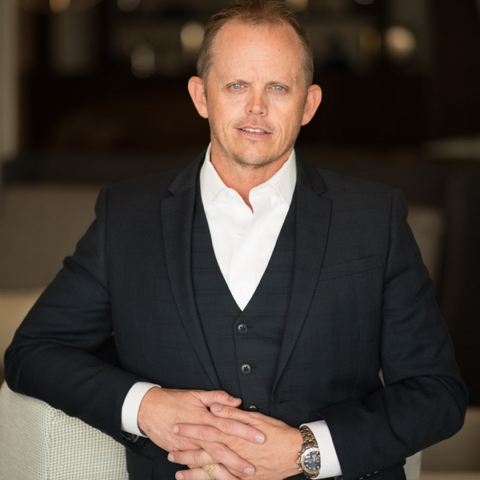
George Wright III
George Wright III is an entrepreneur, investor, and the host of The Authority Formula Podcast. Over more than two decades he has founded and scaled several multimillion-dollar companies and built a renowned seminar business that put some of the world's biggest names and brands on stage. With 25+ years across marketing, sales, and executive leadership, he has made a career of turning expertise into authority — and authority into lasting influence.
Today his mission is singular: help driven entrepreneurs and experts position themselves as the trusted authority in their field. Through The Authority Formula Podcast and Authority Media Network, George shares the strategies that turn knowledge into a platform, audience, and brand that compounds over time.
More about George →