Kent Richeson on Reinventing the Investor Pitch
Most founders spend months rehearsing a pitch deck that an investor could have read in five minutes. Kent Richeson, entrepreneur, investor, and founder of Shit Pitch, has built an entire event format around exposing exactly that problem. George Wright III sat down with Richeson on The Authority Formula Podcast, produced in partnership with Valiant CEO Magazine, to unpack how Shit Pitch is changing the way founders and investors connect.
What Is Shit Pitch and Why Does It Work?
Shit Pitch is a live investor pitch event with a twist: before founders present their real business, they have to pitch a completely ridiculous, made-up idea they receive moments before going on stage. Topics have ranged from pigeon-based encrypted messaging to inflatable muscle arms for the swimming pool. Nobody invests in the fake idea. That is not the point.
"Shit Pitch is showing the human behind the startup, showing off more of the jockey than just the horse."
By putting founders through an improvised scenario first, Richeson and his investor panel get to see how a person communicates under pressure, how they adapt, and how they work through a problem they did not see coming. When that same founder steps up moments later to pitch their real company, investors watch with new eyes, noticing the moments that align or diverge from what they just witnessed.
How Investors Actually Evaluate Founders
The pitch deck matters, but experienced investors know that the numbers on a slide do not tell the whole story. A founder who can deliver a polished deck in a rehearsed setting is not the same as a founder who can navigate ambiguity, pivot under pressure, and communicate honestly when they do not have all the answers.
Richeson describes watching investors approach founders after Shit Pitch events with offers of a different kind: not just funding, but guidance on whether they were operating in the right role. He has seen investors suggest to founders operating as CEOs that they might actually be built for a COO function. That kind of insight does not surface in a traditional pitch meeting.
"My philosophy is most early stage founders should not be looking for direct investment."
Richeson is direct: jumping to fundraising before you have revenue, letters of intent, or real customer validation is a mistake that drains equity and energy. The exception is life science or med tech, where longer timelines before revenue are standard. For most companies, the time to seek investment is when you have something revenue-generating and a clear story around what the capital will do.
What Makes a Pitch Actually Work for Investors
Whether you are pitching at a Shit Pitch event or in a private meeting, Richeson says a few fundamentals separate the founders who convert from those who do not.
Story comes first. If there is no compelling reason behind what you are building, investors have no reason to lean in. Beyond story, you need clarity on your team: who is on it, who you need, and why those people matter. Investors watch closely for whether a founder knows what they are missing.
Finally, you must know exactly what you will do with the money. Investors need to understand what exits their wallets, how it gets deployed, and how they eventually get it back. You do not have to have every detail pinned down, but you cannot be vague about intent.
Why Authenticity Is the Competitive Edge in Fundraising
In an era of AI-polished decks and over-rehearsed pitches, Richeson argues that the founders who stand out are the ones willing to show up as themselves. Shit Pitch creates a context where that is not optional.
Extroverts who expected to dominate the room have frozen. Introverts who seemed unlikely to hold the audience's attention have brought investors to tears. Richeson describes one CNBC filming where a founder received a comedic topic, asked to take it seriously because a family member was deaf, and pitched a silent karaoke solution with enough emotional resonance to move the room. It worked because it was real.
Fail Fast With the Right People
"Fail it fast so you can decide if it's something that works, meaning a chat with those that you think are actually involved in the space, not friends and family."
Friends and family tend to discourage ambitious ideas because those ideas feel far outside their own experience. They are also the wrong sample. Richeson urges founders to seek out people already operating in the space they want to enter, test their assumptions with people who know the terrain, and iterate quickly based on what they learn. He applied this to Shit Pitch itself: the first iteration gave four of five founders two weeks to prepare their fake pitch, then used the fifth as a live experiment with no prep. That one data point changed the whole format.
Action Steps
- Before pursuing investment, confirm you have revenue traction, letters of intent, or strong proof of concept. Equity given too early is expensive.
- Craft a pitch that leads with story and purpose. If you cannot explain why your company needs to exist, investors will not feel the urgency to back it.
- Know your team gaps and say so directly. Investors respect founders who understand what they are missing and have a plan to fill it.
- Be clear on how you will use the capital and how investors will see a return. Vagueness on this point is a signal that derails deals.
- Test your ideas with operators and experts in your target space, not with people who love you. Fast feedback from the right people shortens the road to product-market fit.
The ability to show up as a real person, adapt on the fly, and communicate honestly about where your company is and where it is going is not a soft skill. According to Kent Richeson, it is the skill. It is never too late to start living the life you were meant to live, and for founders ready to step into their next chapter, showing up authentically in front of investors may be the move that changes everything.
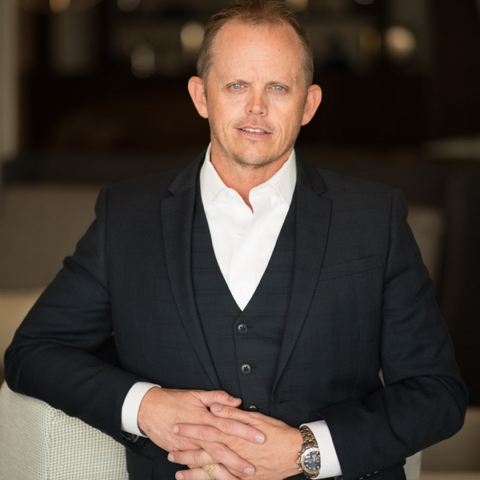
Kent Richeson
Kent Richeson is an innovative entrepreneur, investor, and founder of ShitPitch, a unique pitch event that emphasizes the human element behind business ideas. Through ShitPitch, he offers a platform where founders present both their actual business concepts and spontaneously crafted, humorous pitches, allowing investors to assess their adaptability and communication skills. Richeson has hosted pitch events nationwide, including one featured on CNBC, and is expanding ShitPitch globally, with events planned in countries like India, Australia, the UK, Canada, and Mexico. His approach is reshaping how founders and investors connect, focusing on authenticity and creativity in the entrepreneurial journey.
Read the full transcript
Welcome back to the Authority Is podcast, where we help you to grow your business, attract new opportunities, and outpace your competition. My name is George Wright III. I'm your host, and I've been partnering up with Valiant CEO Magazine to bring you the hottest entrepreneurs, thought leaders, and experts from around the world that are crushing it in business. Together, we're going to unpack strategies and tactics that they're using to become the authority in their field. And my goal is to help to inspire and motivate you to do the same. So let's get right into it. All right. Welcome back to George Wright III. I'm joined by what is sure to be an amazingly fun interview with Ken Richardson. How are you doing, brother? Doing great. I'm excited to be here. Well, listen, man, I'm glad. I'm glad our calendar's finally synced up because you're a man on a mission and you've got a lot of travel on your schedule. Let me give you a quick introduction for those of you that don't know, for those of listeners that do not know you. Kent's an entrepreneur, investor, connector. He's the founder and host of Shit Pitch, as seen on CNBC, which is an investor-focused live pitch event. We'll get into that in a little bit here, but definitely a man of many talents, tons of skills. I've been really getting to know him and his company a little bit here recently. So with that said, Kent, why don't you give us a little bit of an idea of where you come from? Because we got some cool stuff to cover here today for entrepreneurs and business owners. What's your background, man? Give us a little bit of the leading up to behind the scenes of how you grew up. I mean, gosh, I like long walks on the beach and how far back do you want me to go? I mean, I was dealing and wheeling back in grade school. I was the reason we had Pokemon even revoked from the whole school front. So how far back do you want me to play this game? Bro, you know what's interesting is I usually start with a question like, were you always an entrepreneur? But I know that back to like when you were old enough to talk, you probably were. So just go back and give me an idea of like what's been your career background and were you always an entrepreneur or did that kind of evolve through just things you were doing growing up? it's definitely evolved i'm just like anybody else jumped into the to the job space and most of it though has been circled around fractional work a lot of fractional it companies fractional cfo fractional administration with fund uh administration and spv creation so a lot of it has stirred around that mantra renewal entrepreneurial mindset of okay let's figure out what is going to work best for you and your needs, as opposed to, you know, the check-in, check-out kind of behavior. A lot of it is circled around that mentality of discovery and understanding. So fractional, because fractional is a really big thing right now, but were you into a certain niche of business? Was it primarily IT, fractional IT work, or what other things? Because you're, I mean, look, you're a sales, a marketer, entrepreneur overall, but what area, I'm curious of fractional, were you kind of in heavily before you started to get out on your own? Sales. So I was running sales and then jumped into the director of sales, strategic partnership roles, et cetera. But my whole MO with the fractional world was truly business strategy and understanding what's going to work best. And that could been within the CTO space, CIO space into the CFO world as I jumped in between different fractional teams to really understand the lay of the land. Yeah. It's interesting as a lot of business owners, when they have that kind of diverse background like yourself, I find that they're a little bit more successful because they understand all the elements of everything, especially if it's sales versus individuals that come from just IT or engineering or something like that, that makes it hard to jump into that. Was it then not very difficult for you to jump into the entrepreneurial market as a business owner of your own? It definitely happened on the fluke side of things. However, way back when, so I worked for my father who owned a gun shop years back, opened in 69 or 59, one of those dates, geez, a while back. And what spurred this whole motion of thought was you don't have to do the typical behavior. You can look outside of the box. You can always discover a new way of saying hello in a different language, right? That mind was always shifting and rolling with just conversations with my old pops, right? Where things really took a dynamic turn where I was at the fractional CTO firm and we ended up really crafting a new way of providing service which then had me stepping back going maybe there's something here that I could innovate or change the game show off that communication between IT departments and the c-suite individuals could actually communicate and say oh you're not a cost center something along those lines. So that's really where the journey began. I started a little startup and worked on that for a good chunk of time, which then stirred into the various connections with investors and other founders. Then the community would just kind of jumped into that world, not really knowing that was a world to begin with, but that was really the catalyst that spurred it all on. Yeah, it's interesting because I want to get real heavily into this new out-of-the-box idea you have with your funding and pitch company, but I think you laid the groundwork for it. In other words, you've been an out-of-the-box thinker for a while. Was it an aha moment when you started shit pitch? And I'm sure people are double-taking me saying, is he saying that right? So let's start by this. Let's answer the question, what is shit pitch? And then let's back up and help you to understand, did you aha moment into this or did it slowly transition into it? How did you lead yourself into this world of what you're currently doing? And then we'll break it down. Okay. I'll give you the summary, but the two second one of, of ship pitch. Ship pitch is showing the human behind the startup, showing off more of the jockey than just the horse. A lot of investors in the community and abroad look at not just the business pitch deck and what it can offer its valuation, its requirements etc they're looking at who's running it behind the scenes and that's really critical because those are the individuals that either make it or break it and so to to your second question of uh how did this stir up i i was working with a really cool group of angels and vcs alike here in utah and i just all of us were thinking the same thing we've got to change the page and the narrative of what pitch events for entrepreneurs is all about investors. Are we doing everybody a service or are we doing them a disservice with what we're currently doing? Because nine times out of 10, every investor could look at a pitch deck and compare it to the over-rehearsed business pitch deck that's given from the founder and say, great, I could have just read that on my own. So I got a group together. I said, let's throw out this wild, crazy idea, an experiment. Let's just have some fun. Let's be human for once and just see what happens. So they brought some founders. I brought some founders. We tossed them on stage and it was, it's different than what it is today. But the whole premise was let's make sure they have time for their real business, like a normal pitch event for entrepreneur. But let's also give them something that they're not prepared for. Something that we see more of that human. So we give them a really bad idea, completely impromptu. And it's really ridiculous ideas that shouldn't be in existence. So nobody's investing in them. Don't worry. But what we're doing is that we're putting these founders in a position to show off how do they communicate, how they work through a problem, how do they adapt Can we see a little bit of that behavior instead of just a lunch talking about again their own business how do we pull that energy out of them to see their creativeness their behavior and then there something else that was a product of of revolution and identification in its in its evolution we saw uh this way of of understanding how somebody lies and works through the problem and that's not a bad thing lying and the whole show isn't about how does somebody lie it's now understanding how do they communicate so as they work through this bad idea just before they pitch their real one we get to see some of their tells how do they work through these these situation of bs-ery right bs-ing them and then they jump into their real business pitch and as investors we get to see oh maybe there's some points there that i need to actually ask more questions on because there's some tells there that's giving me a little subconscious note of maybe they don't understand fully what they're talking about in this section, or they just haven't developed this area over here and that little pound of the chest, not bad things, things that we just need to understand and clarify and ask more questions on. So it's really brought to light a fun angle in curiosity and diving into the products that they are offering themselves. I love it. I love it. You know, what's so crazy. And I love that overview. And I didn't want, I had so many questions I was going to jump in. I'm sure. I want to get the full deal because now we can go back and kind of unpack it a little bit because I think it's brilliant. I think you're right. It's kind of morphed over time, but it starts with this premise that I've had, you know, in all the companies that I've done, I've raised funds and I've been part of funds and things like this. The idea that, you know, most true investors in the end, the numbers are the numbers. They're going to look at those. They're going to look at the pitch deck, but they're going to, they're going to invest in the people, not the product. as much, right? Like you could have an amazing product and a horrible founder and vice versa, right? So I think it's a really great point, number one, for listeners to understand that the person behind the business is as important, which is why with our authority marketing company, we realize you've got to get out there. You have to be out there as a founder. So I love that. And you were working with this. What made the transition from, because I love see the people and especially today with AI to see them in their true nature, not just around their pitch, but something totally different. What made you, what, what was the point that you decided, Ooh, let's throw their pitch out the window and do it. Was it a, just a fluke idea? Was it like, we got to just see these guys outside their rehearsed shark tank deal or what? I think it came down to just like the, all the people on your, on your board behind you, they've all gone through a systematic approach of of personal branding or personal awareness right and a lot of times early founders don't get that shot and so this was the thinking of how do we help these founders really show off them as human beings and through just creative conversation and idea spitting with different investors this really just kind of surfaces as an angle of of possibility. Again, I came to everybody saying, let's do an experiment. I don't know if this is going to work. Even to the founders, I was like, let's play a little game. But worst case scenario, all you've had is some more time in front of investors. And we've had a great time doing it and enjoyed this experience. Well, it's genius because not only do you get to know the skills, because now you have to adapt to this new idea, but you're going to see the human side. And like you said, at the same time, get some, some idiosyncrasies, right. Of their personality trade where, you know, and we'll, we'll break that down as well. But what, um, what do you think? I mean, you know, there's on the fly elevator pitch. You're going to see the skill. You're going to see the talent. You're going to see that. What made you think? I also want to see how they do it in a humor or lie or, um, audible type of scenario, almost like a, like an improv comedy kind of thing, right? What made you decide that that, because I do agree, I actually think the problem is even new founders that are branded or aren't branded, it's usually an orchestrated brand. So it's very polished for a lot of reasons. And so you're not only seeing it on the fly, like what's your true skill, but you're seeing how they adapt. And if they have a human side that is humorous, if it's rigid, if it's like, oh, they're easy to lie or not, what is that you know so that that right there um i've had extroverts get on stage that have been very serious i've had introverts get on stage that have been comedic and just insanely funny i i'm not insanely funny i leave the comedy to everybody else but um for those that want to pressure cooker is that why it's 100 and we're putting them into a comfortable spot i mean take this. Do you feel more comfortable as a human being being in a room watching someone be very serious, taking an impromptu idea that's a serious topic and trying to pitch it? Or do you have a more relaxed time when it's on a comedic tone? How do you how do you bridge the gap? Because the bottom line is you're doing that. And I thought this was brilliant before they do their pitch. Yes. So you get a little bit of an extra feel before. Do you feel that though they're kind of kind of like, all right, I got to, I got to maintain character a little because I'm going to be presenting my deal. Or do you really kind of, what do you do to put them at ease so that you can get them to open up knowing that they're going to be pitching afterwards? It's, it's so tricky because everybody is so different and I can't please them all. And I dictate prior to, I dictate saying, I can't dictate, I can't tell you exactly how to lay this out. What we want to see is you as an authentic behavior. So I'm going to give you this topic. I'm not going to tell you how we want it or what we want, other than we're going to give you the chance to tell us how you think this should be presented. And what that does is it enables the individual to either show off their skills or look to the person next to them and say, oh, I want to try and mimic that. Nine times out of 10, when they do that action, they actually flop on their face and we all see it and it's not a shit pitch is is is interesting on its name but it's not a comedy roast right we're not roasting individuals because we do want to see opportunity it shows us the human uh psyche and their processing behavior we've had investors actually go up to founders that have been worn the coo mindset which is great not a problem with this but are fulfilling the ceo role and have been offered the idea of, hey, consider keep going with this. But would you like to look at these other options that might be really intriguing to you as a personality trait more in a COO fashion? So again, we're looking at human beings, not so much just the business structure and what it is that they're doing. We're trying to understand how do we really make an effective economy and progress this behavior of progress, right? What made you decide, and I wanted you to kind of explain a little where you said where we can see them lie or make up an angle. What do you mean by that? Like, what do you actually, do you have them purposely say false things about something? Or what did you mean by that? And why did you choose that specific aspect? I'll give you an example. We had one founder get on stage who literally changed the dynamic. It was one of the CNBC filmings. he got up on stage and he goes guys I know my topic is funny it's a silent karaoke that should be funny right and he goes I'd like to take it a different route that feels more close to me and my personality I'd like to take it seriously because I actually have someone in the family that is deaf and I'd like to see if I can actually sell this solution to you and then he presented his solution and it delivered. It had me tearing up in a couple of points. And I looked over there was genuinely tears in the audience for the way in which he carried himself to the tone that he felt was best Now obviously there was lies to your question How the lying involved There was lies and thought of you know half truths or et cetera that he put in there in order to sell this fake solution. But it was all coming through on a sincere tone of how he communicates. How does he work through that, that decision or direction in order to really try and invoke emotion and storytelling through it? to try and pull in investors to look and see them. It's crazy because it's a skill and talent, adaptability, humor, human side. I love all that. What type of founder? Because look, you've got both sides of it and I want to get the investor side as well. But you've got all these founders that are participating in your events and things worldwide. What kind of makeup do you find? And have you seen any common skills for successful founders that are raising money. Is it generally entrepreneurial people? Because a lot of founders might be a designer, an inventor, a technician, an engineer trying to start a business and they just don't, they're not a CEO, right? Founders for you are defined as kind of anybody with an idea that's trying to get funding to start a business, right? And what have you found? What have you seen? I'd say there's diamonds in the rough. There are people out there that first time founders, I mean, they can come in the scene and really take ownership over an investor conversation and pull an investor through story and slash the project or product itself, right? There's that. But for most everyone else, there's a time and place. And my philosophy is most early stage founders should not be looking for direct investment. Not because you're a service provider or etc but because you do maybe have something that is fantastic but there's a period of vetting and validation that is so critical for a retaining your own equity and in its process and b jumping the gun too fast an investment opportunity can be really tricky where you're putting too much energy into something that isn't ready yet you don't have your LOIs you don't have customer base you don't have validation in its process, which really puts a pain on the company and potential and growth potential. Where I put individuals on stage are more in the seed and series A, so that we can say, okay, we have something that's revenue generating, unless it's life science or med tech, usually those take a little bit longer to generate revenue. But companies that are revenue generating that we can go, okay, we understand that this is at least working. We can look at the human being behind it now and focus on that. And then for everyone else, please take eye, take understanding, look at this as an example. We have as early as pre-seed come up so long as they have momentum and drive on their company itself. Again, we're showing off, you asked the question, what it was that was most common. It's all action driven, all of it. I've had founders that have been action driven, but maybe not to the fullest success as other founders, but we're not comparing necessarily shouldn't be on on most of those terms, because every company is very different. But the actions, if you can show that, hey, we've made this kind of traction, or we've done these kinds of experiences or experiments, then we can show off more of the potential of what X is. Those are the ones that nine times out of 10 make an investment opportunity real. Gotcha. So it's not always, I was gonna ask you, what have you found are the most common characteristics of people who should be at that point? And maybe some of them are pre-rev, maybe some of them aren't, but they're proof of concept. They got some type of action that they've done. So, okay, cool. What about, and this might be a great opportunity to explain just from your experience for founders or business owners, kind of what have you found is the real difference that they need to take into consideration when they're selling their product, building their company versus pitching an investor? because pitching an investor, you know, and where you're saying it is about the person versus these guys that maybe they just love their product. They can sell their product to anyone. They have, they have a vision for their company. Yeah. Pitching an investor is different. What are the key things that you think are more important for pitching an investor? On, on a personality level or business level? Just overall, like which pitch this, this is for a lot of people that think that I need to raise some money. I've got some revenue. I want to go out and get an investor, but you know you you can't just go sell your product like that's going to necessarily get investment in your business is there anything in particular you feel is critical for doing a ideal pitch to an investor specifically it's it's going to come down to some real easy fundamentals but you it's it's always coming back on how you'll tell that so story is key if there's not a leveraging story or purpose behind it, there's no reason to be doing it. Meaning there's no audience to give and take, right? Got to have a relationship. If there's nothing there, then move on. If you don't know what it is that you need on a team level or who you pulled in, that's a hiccup. You need to know, okay, these are the types of people we need on our team. these are the brands we need to be associated with us we've had um i've had companies even associated with competition brands in their portfolio stack saying hey we've got this founder or ex-founder from this brand over here or but the company's still running as a competitor and investors might look at that going okay are we creating something that is competitive are we working with them? Are we not? Like, does that really benefit us? So intent of who you're tethering to is really key team is everything people. And then following that is knowing exactly what you're going to be leveraging your cash for. As an investment model, investors ultimately have to know what it is that is going to be exiting out of their wallets and how they'll get it back. Yep. So you don't have to have everything perfect. But you do need to know the intent and the purpose behind that cash, whether in revenue or in investment requirements. That's a great insight because I think preparation is key. It's like you got to, you know, a lot of founders have a vision and they've got some, you know, some cool success of some kind. I try to pitch somebody, but to have stories, to know what you're lacking, what team or growth or things you need, and then how you're going to use your funds. Those are, Those are very important, which are not the typical things you need while you're growing your business. Say you talk to people, but to an investor, you do. I'm curious, what is maybe one of some of the craziest pitches that you've had happen? Do you have any kind of interesting stories that have happened on your stage? And I will note, you do a phenomenal job of entertainment slash balancing that with real value for startup founders and investors, which has got to be a difficult thing to do to have both. It's so tricky because you've got founders that are, after they're done with their fake one, they've got to switch the mind into the real. But I've had, it's been about a split. Some can do it really effectively and others struggle. The ones that do it really effectively are the ones coming to me saying, gosh, I never felt so relaxed to then give my real pitch because this was just weird and funky, right? Yeah. so but ultimately the uh the the funniest or most in i'd say the most entertaining was uh pigeon messaging i had somebody that um that and the inflatable arms that was good too i'll talk about both the pigeon messaging was good because the gentleman came to the table with uh this thought of secure information instead of just sending pigeon messages right messages on pigeons It was how do I encrypt or have more secure data transfer? And this was his solution to that topic. Again all we gave him was pigeon messaging Their decision is decide how do they you know convey a product or a solution to that topic that it i we literally don dictate anything else so he coming to the table giving us stats on how pigeons perform uh success rates on delivery reproduction behavior how fast they'll reproduce a pigeon and we can get them back up and running and the security of the messages and how they'll get from point A to point B, if something shot down, what that looks like. The guy just went through some fantastic processes. And after all of it was done, the Q&A portion, because we'll do Q&A after each, the bad and the real was fascinating. People were coming to the table with just great questions. And he was just having a blast. You could tell the engagement. Do you remember what his actual product was he then pitched after that? Like what was he? It's actually within the banking and financial world and dealing with encrypted information. So it was kind of interesting to see that correlation between his own product and this pigeon messaging. I love it. That's hilarious. What about the inflatable arms? Inflatable arms. I was expecting a little bit different. I never know what's going to happen with these topics because most of them come from the audience from that given area because I do these all over the world. um most i have everyone signing up saying hey here's here's a bad idea that they'd like to put into the ring right we'll take those bad ideas and we'll put them on the spinner and this one i was thinking it was going to go a completely different direction and he ended up having it being for insecure uh people with not as buff arms as you thought you had in the swim oh you get inflatable arms get inflatable muscle arms so when you're in the swimming pool you feel little bit more confident and comfortable. And it was just a really fun, entertaining way of showing off a topic. So yeah. Well, it's funny because I think you're right in the sense of you can say entertainment, humor, whatever, but I think people learn in those settings. I think you break the ice. It's like when you're, you know, whether you're hiring employees looking for funds or whatever, if you can get past the facade, you know, and this is why, you know, as entrepreneurs, business owners, we all need to know how to adapt. And especially with the AI days and everything, everything so perfect and polished and everything like that. It's brilliant. So tell us what's in our last few minutes here, what's on the docket right now? I know you guys have a real heavy event schedule. What is it that is your primary focus right now? And tell us what you've got on the page for 2025. So a precursor to that, last year was the first year we kicked it off with 11 events nationally went all over uh cnbc filmed one of them like you mentioned and then this year we're we're doubling down so we really understood now what investors are wanting to see and why they're wanting to see these individuals on stage so we're doing 20 national events um we kicked it off with new york just the other day and went great so we're excited to move on to the next cities coming up we'll end it with a grand finale in utah we're planning to have a very large event hosted here in utah probably a two or three day behavior where we'll see all the winners from all the locations get involved and we're even planning to have it filmed for a tv pilot episode so that won't be aired as it's going to be shipped off to to different studios and networks in order to see which one could fly but the the whole process is getting exposure getting involvement on on a national basis so we'll get everybody involved all the investor judges from all over the nation and uh we're really excited to to push that narrative so finding the the ask would be finding your local uh event coming up because we are doing these all over to to get involved pulling in angels and and vcs alike pe's yeah just to be clear what is the makeup of the the event. This is for attendees, but also founders and investors. Like give us the makeup of what typical event. Yeah. So this would be about a 60-40 split most of the time. We're looking at 60% investors, 40% founders. And the founders are made up of ideation all the way to series B. The ones that go on stage are typically seed in series A. I do a third individual that's pulled at random from the audience. So we get a real good flavor of the scene of local. and what could be produced out of that. So long as they're pre-seed, they've got to have minimum of something. Yeah. And then the 60% of investors are family office, angels, LPs, H&Is. I mean, you name it. We're all over the place. VCs, PEs come into play, all those acronyms. I love it. I love family office and everything. So obviously a great experience, a great learning education, but also, you know, time for you to, you know, get investor funds, pitch your opportunity. So what I'll do is I'll put some links in the show notes, but you can go to shitpitch.com or I'll link your social media profiles and your LinkedIn there as well. Is that the best place for them to go as your website to kind of see events and register? Yeah. The whole schedule's there, detail of what it is that you're getting into and what potentials are ensued for that. Yeah. I love it. I love it. Well, this is good. I know I wanted to dig a little bit more into your upbringing. I know you've learned a lot of entrepreneurial lessons, but we'll have to do that again. Maybe we'll bring that over to our authority podcast that's launching. But I appreciate you being here. Is there any last strategy, advice, recommendations you have for business owners or entrepreneurs in general or even looking to do funding? Anything you want to leave them with? uh the the biggest strategies that i've seen out there have been uh fail it fast so you can decide if it's something that that works meaning a chat with those that you think are actually involved in the space not friends and family friends and family will tell you that it's not going to work because it's too ambitious for where they're currently at right look to those individuals that are already in those spaces, that are developing, that are movers and shakers, and work with them to understand what would fail versus what would work in comparison to the ideas that you have. I love that because even though I think a lot of people have heard fail fast, I think they're ingrained and taught to never give up. And so they're just on this long road to forever figure out how to take their idea and make their baby happen. And I think that's a recipe for disaster because I think if anything else, if your goal is to fail quickly or to, you know, disprove what you're doing quickly, you learn a lot more faster that way. So I'll be, I'll be an example of that with shit pitch. Obviously I have my other failures in the past too, but with shit pitch, um, the, the very first iteration I had given four of the five founders that went on stage about two weeks preparation of the bad idea. And one of them, I said, I'm going to use my experiment card. I'm going to have you be in the moment pitching it and getting the idea. So again, all about iteration, understanding why does this work? Why does this not work? I love it. And I think you just hit a home run with the idea that most people, especially if you were going to do an event or something, they would put in the planning process, everything. And you just tweaked it by saying, hey, let's do an experiment. Let's go. And I think that's what causes success. And so I think that's absolutely a huge, huge, huge win. So I appreciate that recommendation. I think that's a great one to double down on. So listen, guys, if you're listening to this show, share it. Hit me up on the Daily Mastermind on Facebook, Instagram. Really looking forward to sharing some more ideas with you. I'm going to put a couple of things in here in the show notes so that you can connect with Ken. Highly recommend you check him out, see if you can learn some things, but also participate. There's a big journey happening throughout the whole year. So follow what's going on. And I think you will learn a lot. So once again, thanks for being here. And Kent, thanks for being on the show, man. I appreciate you big time. Of course. Let's do it again. All right, everybody. Have a great day.
George Wright III
George Wright III is an entrepreneur, investor, and the host of The Authority Formula Podcast. Over more than two decades he has founded and scaled several multimillion-dollar companies and built a renowned seminar business that put some of the world's biggest names and brands on stage. With 25+ years across marketing, sales, and executive leadership, he has made a career of turning expertise into authority — and authority into lasting influence.
Today his mission is singular: help driven entrepreneurs and experts position themselves as the trusted authority in their field. Through The Authority Formula Podcast and Authority Media Network, George shares the strategies that turn knowledge into a platform, audience, and brand that compounds over time.
More about George →