Jason Moss on Identity, Consciousness, and Scaling Your Business
Business coach Jason Moss has spent two decades at the intersection of online marketing, sales, and deep personal development. On The Authority Formula Podcast, host George Wright III sat down with Jason to unpack a deceptively simple idea: before your business can grow, you have to grow. Jason leads a community of more than 20,000 coaches and has scaled his own coaching business past $500,000 in annual sales. His perspective is grounded in hard-won experience, not theory.
The conversation covers why giving two entrepreneurs the same strategy produces two wildly different results, how identity functions as a ceiling on income, and what it actually looks like to shift from hustle to intuition as your primary mode of operating.
Why the Same Strategy Produces Different Results
Early in his coaching career, Jason handed identical business plans to different clients and watched one triple their revenue while another stayed stuck. That gap gnawed at him. The strategies were the same. The plans were the same. So what was different?
The answer, he discovered, was identity. The way each person saw themselves, their business, and what was possible for them filtered everything. A person operating with the self-concept of a six-figure coach will not even perceive the strategies available to a seven-figure coach. Their mind filters those possibilities out before they can act on them.
Jason sees business growth as an inside-out process: roughly 80% inner work and 20% strategy execution. Most entrepreneurs have that ratio exactly backwards.
How Identity Functions as a Revenue Ceiling
Jason describes a moment that shifted everything for him. After plateauing near $500,000 in revenue and feeling stuck in an optimization mindset, he made a decision:
I was actually praying. I was like, God, I'm available. I'm open. I'm ready. I am ready to become the seven-figure coach. I don't even know what that looks like, but I'm committing to the identity.
Within six months, his business changed dramatically. A launch that completed the week of the conversation was tracking toward $100,000. The strategic ideas did not arrive through more planning; they arrived because he had made a prior commitment to become a different kind of person.
The practical implication: if you are trying to grow from six to seven figures while still holding a six-figure identity, you will unconsciously reject the very strategies that could get you there.
The Role of Fear and Limiting Beliefs
George has spent 25 years around builders like T. Harv Ecker, Tony Robbins, and Dean Graziosi, and he sees the same pattern everywhere. Two people sit in the front row of an event. They hear the same content. One takes action; one does not. The difference is inner game.
Jason agrees, and names the core obstacle: fear in its many forms. On the surface, an entrepreneur says they want to earn ten times their current income. Underneath, a quieter voice asks what their family will think, whether old friendships will survive, whether a relationship built at a certain income level can hold at a much higher one. Those competing narratives create a push-pull dynamic that shows up as self-sabotage and stalled growth.
George cites Jim Rohn on this directly:
My favorite quote is Jim Rohn. It's success is not to be pursued, it's to be attracted by the person you become.
You can understand that idea intellectually and still never act on it. The shift happens when you do the inner work to dissolve the beliefs that are holding the ceiling in place.
The Four Pillars of a Scalable Business
Once the identity work is underway, Jason's external framework is deliberately simple: niche, offer, audience, and enrollment. He uses these four pillars with every client, from zero to roughly two million in annual revenue.
- Niche: Who exactly do you serve, and are you specific enough to be credible and findable?
- Offer: Does your product or service genuinely solve a problem people recognize and want solved?
- Audience: Are you building a community of people you nurture over time, or only chasing short-term transactions?
- Enrollment: Do you have a reliable, repeatable way to convert interested people into paying clients?
George's observation is pointed: most entrepreneurs say they know their niche and audience, but they have not gone deep enough to master either one. They dabble. The entrepreneurs who scale are the ones who commit to mastering each pillar, not just checking each box.
Three Levels of Consciousness and Finding Your Flow
One of the most practical frameworks Jason shares comes from his mentor Scott, who describes three levels at which entrepreneurs operate: willful, intellectual, and intuitive.
Willful is the grind: 17-hour days, 150 cold calls, brute-force effort. It can work, but it burns people out and has a hard ceiling.
Intellectual is the strategist level: data-driven, optimized, efficient. Most successful entrepreneurs live here. But Jason found that building a well-optimized business from the intellectual level left him feeling hollow. The business worked on paper. He did not care about it.
Intuitive is where flow lives. At this level, you are not primarily planning or grinding; you are listening to what you are genuinely pulled toward and acting from that place. Jason began writing his sales emails each morning based on what he actually wanted to share, with no pre-planned sequence. The result was more revenue, not less, because the content carried a different quality of energy.
The path is not to skip willful and intellectual. Systems and mastery matter. But the goal, for Jason, is to spend as much time as possible in intuitive, where work starts to feel like play.
Patterns as Mirrors
Jason's most actionable reframe: everything recurring in your business is showing you something about yourself.
He tells the story of a salesperson on his team who kept hitting the same objection: the price is too expensive. When they talked, the salesperson admitted he grew up without money and would not buy the product himself at that price. Of course that belief was showing up in every conversation. Prospects could feel it before he ever voiced it.
The beautiful thing about life is that life's always showing you yourself. It's just being mirrored back to you.
If a certain type of difficult client keeps appearing, that is information. If you keep hitting the same revenue ceiling, that is information. The habit of getting curious about patterns, rather than frustrated by them, is the entry point into the inner work that actually moves the needle.
Action Steps
- Audit your identity: Write down how you currently describe yourself as a business owner. Does that description match the level you want to reach, or the level you are at right now?
- Name the fear: Identify one recurring pattern in your business (a plateau, a common objection, a type of client you keep attracting) and ask honestly what belief about yourself might be producing it.
- Commit to the next-level identity before you know how: As Jason describes, the strategy follows the identity shift. Make the commitment first.
- Check your four pillars: Run an honest audit of niche, offer, audience, and enrollment. Pick the weakest one and go deeper on it rather than spreading effort across all four at once.
- Practice operating intuitively: Carve out one piece of content or one client interaction per week where you lead from what you are genuinely excited to share, not from a planned script.
Business growth, George and Jason agree, is ultimately about becoming someone capable of holding a larger life. As George put it, the business is the vehicle; the life is the point. It is never too late to start living the life you were meant to live.
Jason Moss
Jason Moss is a multi-six-figure business coach and leader of a global community of over 20,000 online business owners. In 2016, Jason launched his first “official” online business and made just $4,728 in his first year. Like many entrepreneurs, it took him years to figure out how to get clients consistently and build a thriving business.
Once Jason cracked the code and discovered what truly worked, everything changed. He scaled past $500,000 per year in sales, built a supportive and thriving online community with incredible clients, and turned his passion for helping others into a life-changing career.
What sets Jason apart is that none of this is magic—it’s the result of doing the right things, day after day, and following a system that works.
Today, Jason is dedicated to sharing everything he’s learned about building a successful online business so that others can experience the same growth and impact.
Read the full transcript
Welcome back to the Authority Is podcast, where we help you to grow your business, attract new opportunities, and outpace your competition. My name is George Wright III. I'm your host, and I've been partnering up with Valiant CEO Magazine to bring you the hottest entrepreneurs, thought leaders, and experts from around the world that are crushing it in business. Together, we're going to unpack strategies and tactics that they're using to become the authority in their field. And my goal is to help to inspire and motivate you to do the same. So let's get right into it. Welcome back to George Wright III. I'm really excited to have Jason Moss with us today on the podcast. This is a gentleman that has really evolved from running and building and growing multiple businesses to actually becoming a coach and a mentor to business owners and entrepreneurs. And so let me give you a quick introduction. He's a multiple six-figure business coach, leads a community online of 20,000 coaches right now. He's been featured in Entrepreneur Magazine, online business owner. He's had all kinds of featured articles, which we were just talking about the other day about being featured. But he's got a really unique approach to business growth, which integrates your identity and strategies that you got to use to grow your business. And that's why I wanted to bring him in, because even though he coaches business coaches, he really has some principles of success that, you know, having built businesses for over 20 years really is unique for the audience. So Jason, welcome to the podcast. Thanks so much, George. I'm glad to be here. You know, we got a chance to just kind of get to know each other. And I'll tell you, we share a lot of similar, similar things. And that's one of the reasons why I wanted to have you on here. So give me a quick background because you, you know, look, you made your first sale at 13 and you've been growing businesses ever since. So I had asked you before what brought you into the coaching business, but give everybody a little bit of a backdrop as to who you are, what drives you, what's your skill kind of natural talent is. And then we can kind of jump into some of these core principles. Yeah. Well, I've always had a passion for really two things. I've always been this like internet computer nerd. So I love the online world. I was like my first, you know, sell online when I was, I think like 13 years old, I built this software program that was really designed to help me play video games without putting the CDs in the computer. If anybody remembers that, it's like you had to like, whenever you wanted to play a game, you'd have to find the CD. So I built this program that basically made it so I could play my favorite video games without putting the CD in. And that was the first product that I ever sold online. But I've also had a really strong passion for communication. And so much of marketing, as I see it as really just, it's human connection, it's relationship, it's understanding people. And so really like my journey over the past 20 years has been merging those two things together and building platforms online, from that first business when I was 13, selling software to building a platform as a musician when I was in high school on MySpace, to getting to grow and help grow a multi seven figure business as a director of sales, to the work that I do today as a business coach. So it's been many different niches and many different roads, but I think the common thread through all of them has been this passion for connecting with people and also just using these amazing tools that we have today, this world of internet marketing and the amazing technology, the ways that we have to reach people to kind of reach out and connect with people all around the world and get to make an impact through the work that I do. Yeah, no, I tell you, It's you have a rare and kind of unique background. When I say that, I mean, a lot of people have various, you know, channels of knowledge that they've had, but having been sales, marketing, running a business, starting a business, programming, you know, all those things, you bring a great perspective, which is why I can see why you are now, you know, coaching and mentoring business owners. But one of the reasons I really wanted to have you here is I love the perspective you have on this idea that you've got to kind of grow from the inside out. And you talk about how to scale your business because everybody, you know, is looking at ways to brand, grow and scale their business. But I want to talk, I want you to talk to us about, you know, on one hand, I thought we could get into strategies and tactics, but really felt the best value we could bring is to talk about how businesses can scale using the identity of that next level of income. And so tell me what you mean by that and help our listeners to kind of understand what it takes to do that. Yeah, it's a great question. And it's probably one of the things that I'm most excited to talk about because it's like 90% of entrepreneurship as I understand it today. And to be honest, most of this was born from frustration for me because I started my career as a business coach really providing people primarily with like strategic business support. And so I would give people the marketing plans and help them dial in their social media strategy. And I still do a lot of that today. But what would drive me nuts is I would give the same plan, the same roadmap to two different, in this case, coaches, two different coaches, same exact thing. And one person would take that and they'd like triple their revenue in like six months. And one person would say, say exactly where they are. And for years, I was like, first, I was like, am I just a crappy coach? Like, what is the thing? And then on a deeper level, I was like, what does it actually take? Like if it's really about strategy, like if strategy is really the missing piece, then why is it that we, you know, most of us is like the strategies are out there. We all know, like, what is the thing that's really holding people back? And so as I started exploring this both in my own life, as well as these clients that I was working with, I started to understand on a deeper level, like we all have two sides. We get the inner and the outer is like our internal would be the identity. It's beliefs, the mindsets, the inner world, how you see yourself, your business. And then there's the external, which is the strategy and the business plan and, you know, growth hacks and all that stuff. And most people, when they think about growing a business, tend to spend 80 to 90% of their time, if not 100% of their time, exclusively focused on how do I, you know, figure out the right marketing strategy? How do I, you know, put together the right content plan? and they wonder, you know, why it doesn't work. Well, they want that thing. They want that strategy, that tactic, that thing, that silver bullet, whatever it is. And you're right. They don't realize it is the inner game. And like we sell it because it sells, you know, it's like people want to hear about those things. So I talk about them. But the thing is, it's like what I started to see with the clients that I was working with, as well as in my own life, you know, I mean, we went through a period like last year where we were, I mean, last year we did around like $500,000 in sales. and I was kind of at this level where like I had hit kind of like a plateau and I was really in this like incremental shift and change kind of place where it was like okay how do I do like a little bit more of what I'm doing right now how do I like optimize that kind of more optimization mindset which is fine it's okay like it's an important part of business but what I realized was I was operating it essentially I created this bottleneck because I had the identity of like I'm a multi-six-figure coach. I'm operating at this level, so the ideas, the thinking, the beliefs I had were all like a reflection of that. And even the strategy that was available to me from that mindset was a reflection of the identity itself. A lot of people don't think about this. They're like, well, I want to grow my business to seven figures or multiple seven figures. But it's like, well, if you think of yourself as a six-figure coach or a multi-six-figure business owner, you literally will not be available to the strategy that's gonna take you to that next level. It's like, you won't even see it. Your mind will filter it out It won process it So six months ago I made the commitment I was like one day I was laying in bed I was like you know what It time And I was actually praying I was like, God, I'm available. I'm open. I'm ready. I am ready to become the seven-figure coach. I don't even know what that looks like, but I'm committing to the identity. I'm committing to become the kind of person who can hold the level of success that I want. And over the last six months, everything's changed. Like our business, I mean, we were just walking out of a hundred, like was probably going to be a hundred thousand dollar launch this month, wrapping up tomorrow. Everything has changed. And what's fascinating is the strategy feels like it's fallen into my lap, but it wasn't like an intellectual thing. It wasn't like I thought my way through how to make it happen. It was like the first thing I did was I said, who do I need to become in order to hold this business that I'm not? And then suddenly it was like ideas became available. And it was like, oh, this way that I'm doing things doesn't really make sense anymore. And mentors, you know, like certain things like mentors said to me like years ago, suddenly it all comes back. It all came. Then I was like, wow, this whole thing is happening. And so what I've realized today is like, I really think of the journey of business growth has this inside out thing, which is my job as an entrepreneur is to focus primarily on expanding to become the kind of person I need to become in order to create the business externally. And so it's 80% there and 20% of the focus is on how do I implement and how do I do this strategy? And the more I focus on the inside, the more that the outside naturally aligns and reflects to match that inner state. it's, it's, yeah, it's funny. Yeah. It's funny because I, it is a very parallel path that we had. Right. And I think people, when they do progress enough in business come across this. So, you know, I've had that awesome opportunity over the last 25 years, um, with the companies I've either started or grown or scaled to do a billion dollars, but I've been around big names like T. Harv Ecker and Tony Robbins and Dean Graziosi and people like this in, and I had a similar situation where I was at an event once. We had like 3,000 people at the event. And I had mentioned to T. Harv Ecker behind stage, I was like, look at all these people. Two people sitting in the front row getting the exact same knowledge. And one of them is going to do something with it, one of them isn't. And that's when it really became that point where I realized that it is your inner game, it is your mindset that's going to be the difference maker. And I think people go through an evolution where, in fact, I tell people they go through three phases. First is an evolution where you start to realize that your thoughts create your life. Your mindset's going to create the outer game. And then you get to a point, it's so funny the terms you use, because my favorite quote is Jim Rohn. It's success is not to be pursued, it's to be attracted by the person you become. You can get that your mindset creates your results, but it's not until you really build and deal with limiting beliefs, visualization, things like that to do it, that everything else you need just comes your way. and those strategies and tactics are important. Don't get me wrong. I agree with you. Like you have to have them to move forward, but the difference maker, your internal thermometer, your internal blueprint, whatever it is, has to be worked on or else you will never get to the scalability that you want to get to. And so I think that that's huge. And what would you say, I was going to ask you, what would you say is one of the biggest obstacles people have? Because we came to that realization and you're trying to teach that realization. what's the biggest obstacle keeping people from really turning in to be able to really create the outer results what do you think is the biggest kind of obstacle you're finding well i i think the thing that stops people from doing this work in the first place is used as a culture as a society i think we're so fixated on the external um they almost discount this and you can talk about it and say oh mindset really matters but when you look at the reality of how most entrepreneurs spend their time and what they focus on is primarily like it's all external so there's a certain level of like i think the conditioning shift in belief yeah yeah it's a conditioning and then a shift in belief that at least for me like started to happen where it was like this isn't it or like why am i i feel like i'm on this this hamster wheel or i feel like i keep recreating the same scenario again and again again or why can't i break through this ceiling and it's it's like you kind of got to go down that road for a little while i think for most people at least for me it's like you know it's focusing on the external and realizing like that's not it and then to be able to shift inward and realize okay there's something else here that's available to me and then on a practical level like what what what are the what are the roadblocks internally and mostly it comes back to all the manifestations of fear there are all different forms of fear that that you know kind of keep keep us in this in this box that we've basically created around our current selves and so that could be fear of so many different things it's like people say on one level they want something but then when you have all these limiting beliefs that basically i describe it as like you you have one foot on the gas pedal one foot on the bridge it's like your your conscious mind might say oh i want to make you know 10 million a year or whatever the number is but then there's also this part of you that's like well what what is my mom gonna say or are my friends gonna accept me still or what's that going to mean for my relationship with my partner? You know, if we're at this very different income place, are we still going to be compatible? So there are all these narratives and these scripts and these stories that create this push-pull energy that on some level creates some level of self-sabotage. And so you can feel this feeling of like I'm moving forward, but I'm also, I feel like I take one step forward, two steps back. and to me that energy and that that pattern it's a it's a reflection of the fact that there's deeper limiting beliefs and stories that are that are just standing in the way that are really on the deepest level just you know they're they're it's fear it's it's there's some fear that there's well there's no question fear is it i mean i like that and you know what i think it's your beliefs right i mean at the end of the day we believe what we know and it's hard to to push past that. But I, you know, it's funny, Jim Carrey said that in one of his commencement speeches. Most of us say we want this, we want that, we want that. But if your actions don't reflect what you're saying, it's doubtful you believe that you can do it. And so, you know, and it might sound woo woo and all this and that, but I'm telling you, I've been around some of the biggest business minds in the world. And it's not until you do that inner work to be able to scale that you'll start to scale. You also say, you also have this four pillar concept. You talk about four pillars that you need to really apply in your business to optimize and to be able to scale. Talk to us a little bit about that because I thought that was pretty good stuff as well. Yeah, so if we look at the external, and this is where like strategy is so simple, it's like painfully simple. At least in the types of businesses that I help people build, which are personal brand driven, you know, service-based businesses for the most part. So these are coaches and people who are providing some level, whether it's coaching or some other service that they're typically offering online. And if you look at like, okay, if you're from zero to, you know, maybe 2 million a year, like what is the model? I have these four pillars that essentially, you know, these are like the four foundations of any business. And we look at niche, offer, audience, and enrollment. And so when I'm helping people build a business, really like all it takes on some level is optimizing for those four pillars. So niche being obviously who you serve and most of your listeners will probably know this but being able to get clear and specific about who those people are and also making sure that you not trying to speak to everyone at once Pretty obvious stuff I think for most people Offer you know making sure that you've got something that's really going to land and connect with those people, something that actually meets a need, something that's desirable, something that helps them get from where they are today to where they want to be. Audience, which is maybe something that some, you know, some people in your audience may not think about depending on what form of marketing they're practicing. I mean, they're kind of two schools of marketing you have like more than you know direct direct response type approach where it's it's more about like how do we how do we just put something in front of people uh we're not really interested in building a long-term relationship with those people so much as just like how do we just make sure we can cover the ads to pay for more ads to be able to run the cycle again run the numbers but to me the way that i i focus on building you know businesses is is is really more about audience which is yeah how do you build a community or platform people that you're nurturing and building relationships with over the long haul. And so, you know, making sure that we've got the pieces in place there. And then we've got the right conversion strategy in place to be able to tap into that audience and, you know, convert those people into clients and sales. And then enrollment, which is basically just being able to take those people who are interested and turning them into clients. And those four pillars are like, if something's not working in your business, you just go back to those four things and you can basically say like, what's not in place or what's, you know, what's a little shaky. And I still can, you know, come back to those pillars every, every, almost every day. And I'm always optimizing in one of those areas. Yeah. It's funny. You said exactly what I was going to say. I think people do, especially if you're in business at all, they do know that these are the kind of core areas. I think sometimes they get sidetracked with personal branding and this and that, but I think, you know, your niche offer, audience and enrollment is key. But I also think, and you've probably found this, that people don't go deep enough. In other words, they say, ah, you know, I kind of know my niche, but they've not really clarified it. They know their audience, but they don't speak to their audience. They know they've got to enroll and get people converted, but they don't really become good at. And I think the level of depth, you know, I use the term sometimes I think a lot of people just dabble in business. They don't go deep and they just dabble in business. You know, they, they, they kind of know who they're going after and they try to do things, but they don't really try to master those four pillars. I think those are great four pillars, by the way. And I think it's a good compliment to your inner game and your outer game, you know, getting all of you, what you need to be able to lead and grow and build, you know, by, by focusing on your identity. Identity is so key. And then moving to those four pillars to execute in your business. I wanted to ask you, because we try to keep our episodes somewhat short, but there's so much I want to be able to talk to you about. You said something in our previous conversations and information I looked at that really resonated with me, because you talked about how to increase your income with greater alignment or flow, right? So most people think I got to work harder and longer to make more money. And you use the term flow, which is what really caught my attention. What do you mean by that? What do you talk to your business owners about when you talk about that? And help me understand and dispel this whole myth of you got to work harder and longer and more to ever make more money. Yeah, that's a great, great, great question. So the first thing I'll share, this is a very helpful framework that I discovered. I have a mentor. His name is Scott for it. He's a great, great business mentor. And he has this framework. He talks about the three levels of consciousness. And when you think about running and operating your business, you find that people generally exist in one of these three levels. So there's willful, intellectual, and intuitive. So the willful consciousness is like, it's all about the grind and the hustle. It's the like, someone's signed up to work with me a couple of weeks ago, and he was like, Jason, I'll work like 17 hour days. I'll do whatever it takes. like that's it's wealthful energy and there's nothing wrong by the way with any of these levels right it starts there right it starts with wealth for most people it does and you know that's the it's not so much the energy of strategy and planning it's more just like i'm just gonna hustle my way to you know i'll do the 150 cold calls a day i'll do whatever it takes so so that's that's one level that you can operate at and the idea is you know all these these these levels are, we all kind of cycle through them on a given day, but you might find that you spend more time in one versus the other. So we've got willful, then we've got an intellectual, which is, you could maybe say one rung up from that. And that's the level of like the strategist. It's the person who's going to sit down and optimize and look at the data and say like, how can we be more effective or efficient? Or how can I look at what I'm doing and optimize and get more out of my time and create more productivity and get more on what I'm doing. And so that's a level of business too. And generally, you find that the people who are operating at that level are more successful than the people who are operating solely at Willful. You can get to six figures at Willful, but you're going to burn it out really quickly if that's where you're operating on a daily basis. So you've got an intellectual. And so this is for me, at least primarily where I you know, spent most of my time up until relatively recently. The thing about intellectual consciousness, it's like, you know, you can build a very successful business from this place. But generally, a lot of people find that, you know, if you spend a lot of time here, you tend to feel like, okay, maybe I've got a business that works on paper, but I feel kind of dead inside. At least that was my experience. You know, I was like, last year, I built this business. It's like, everything was perfect on paper. But I was like, this doesn't, Now what? Yeah. I was like, no, I don't care. So then you move on to the intellectual consciousness and you've got more of the realm of like the, it's more of the like feeling, you know, energy. It's like, I, I, I go from intuition, you know, I, I'm not so much in my head. I'm more in my heart. I listened to like what, what I'm feeling called to and pulled to, even if it maybe doesn't make sense for, for me rationally, like I might not have an, as strong of like an intellectual plan around everything. Is it more purpose and passion based kind of more of that? Got it. Yeah. Yeah. You could say that for sure. And, and so this is also like a, a, a way of running a business. And, and so like, as an example, like my, my business as it looks today is, is very different than it looked like a year ago. I mean, a year ago we had everything, we have all sorts of funnels and everything was like optimized. And today it's more like I've got, you know, systems in place to grow my audience. And I don't really have a big long-term plan, but I just kind of ask myself like on a given week or a given month, like what am I excited about sharing? So I might, you know, launch a program or I might do a, you know, workshop or I might like, we did this launch that we're finishing up this week. Like I didn't pre-plan really any of the emails. I just, I've been waking up every day and writing these emails out based on, you know, what I want to share with people in the moment. It's much more of this kind of like fluid thing. And at least what I find is it's for me and i won't say this for everyone but for me it's it's a i didn't even know that level of business was available number one well you don't you wouldn't intuitively think you could make money at that level right yeah there's a belief of like oh if i let go of like my mind and the control and the planning yes it's all going to fall apart but actually what i'm finding is I'm making a lot more money because I feel a lot better and because everything I create and share has a different energy to it It like I a business coach Like I sell on some level I people find like freedom you know this is like the big thing that people actually want entrepreneurs to talk about Like and so it like but you know for so long it was like, I was so drained in my business because I was so caught in my head all the time that I would create all this content and record, you know, these videos and I'd be talking, I'd be using the words talking about freedom, but you could see on the videos is like, I was a slave to my business. So it's like on some level, you're kind of pushing people away at the same time as you're pulling them in. Yeah. And would you say that's kind of where you ultimately tap into that? I mean, I get hard work. Everybody starts there. You get some intention and strategy. You move to intuition. That's where you really, is that the area you feel you really find your flow? Is that where you really feel aligned? I think so personally. And it's to your point, I think it's great to go through. And it's not that I don't, you know, plan and don't use my mind and don't, you know, have moments where I'm just like, I got to get something done. And I'm, you know, in willful, but I spend more time than ever and intuitive. And, um, at, at the same time, I think to a certain extent, like going through those stages and also really having a mastery around the tools and the strategies has allowed me to hold all of those things with a lot more fluidity where it becomes more of this like play and less of this like really heavily intellectualized systematized type of thing and that's a possibility that i think is available for for for everyone you know it is something that anyone can step into and i think i think you're right and you said something um i'll double down on here and that is you know you have systems in place right now i mean i think when you're working hard in the beginning you can kind of create those systems and sops and things that can help you to do it and and most people don't realize that you have to in order when you get to that seven eight figure nine figure level um you you have to have people and systems in place um you know i always talk about a um a seven step business strategy i have that starts with mindset it ends with money um you know structures but it goes through the typical you know um strategy marketing sales growth strategies and systems and those systems allow you to be more intuitive i think there's some people on on both ends of the spectrum. They're hard workers and they don't get to that point. There's others that want to go in with law of attraction and just kind of be intuitive and have impact and purpose, but they don't have any systems in place. You won't stay there very long because you won't be making money, right? But I liked how you, I've actually not heard it that way. You've kind of graduated through these levels of consciousness. I think that's huge. So let me ask you this because I know we're kind of, we're out of time here. What would you say right now if people are looking to you know, shift and pivot a little bit into their internal game or, um, or really take the 80% they've been doing and want to move into the 20% that'll make a bigger difference. Um, what would be your, your best advice or what would be some final thoughts you want to kind of leave with individuals that are listening to this, that will help them to kind of put that into practice or go to the next level. Is there anything else you kind of want to kind of mention here? Yeah, it's a, it's a good question. I mean, I think probably the first thing I would do is I would get really curious about like what are the recurring patterns and the things that I keep seeing again and again in my business or my life because there's also this idea that like business and life are separate they're really two one and the same it's like I love that John Cabot's in says wherever you go there you are and the more I've done this the more I've realized that there is no difference between how I show up in one area of my life whether it's my relationships or my relationship with my partner or my friends or you know my health versus the business so I would just I would look at the business, I'd look at your life, and I just get really curious from a place of, it's not about judgment or shame or guilt or anything like this, but like, are there any things that keep coming up like again and again and again? And sometimes that can be like a certain type of client. Like when I was leading, you know, sales team, when I was director of sales, it was fascinating to see one of the things that I used to like ask my, the sales leaders that are the people on my team that I would coach is like, what are the objections that you keep getting again and again and again from the people that you're talking to. Because those are always mirrors. The beautiful thing about life is that life's always showing you yourself. It's just being mirrored back to you. So I remember I had a conversation with a guy on my team who used to just keep getting like, it's too expensive. It's too expensive. And I had a conversation with him. He's like, Jason, I'll be honest with you. I grew up in a family, didn't make a lot of money. I don't think I would buy what we're selling. I think it's too expensive. I'm like, well, of course you're not getting that back. It's like, whether you say it or not, you bring it to every conversation, people feel it. So I think to me, I get really excited about just getting curious in my life and each layer of my business journey of growth really to me is just, it's showing me myself. And the more I can see it that way, it's not so much that we don't focus on the outside, but that all of those things are, they're indicators. They're like, they're a mirror back to me. And the more I think you can take that perspective and view, the more that you can uncover parts of yourself that really are opportunities to be shifted or things, you know, to let go of or eliminate beliefs or stories that are, you know, keeping you small. And I think it all starts with just, you know, being able to make that kind of shift in that perspective to use those moments as opportunities to look within. Yeah, I like how you put that because I think when you become, when you are curious, when you stay forever curious, you'll be able to identify those things. And it's the people that are missing are the ones that are missing those things. So I think that's great. And that's a great, a great way to, to end our conversation too, because I think if people are curious, they will find the areas that they need to grow in. And you're right. I mean, if you're going to be building a business, look, the only reason we build business is to have a better life. And so why not focus on what it's going to take to have a better life and apply that to your business? And so I always tell people it's never too late to start living the life you were meant to live, the one you want to live. But it's life we're after, not business. Business is a vehicle to get there. So by applying that, by becoming better internally, working from the inside out, by aligning and being more intuitive, I like those messages. So listen, Jason, I appreciate you being here with us. And for those of you listening, I want you to do me a favor and share this show. there's people out there that really are going to benefit from this message. So if you've gotten some value today, share the show. Where's the best way for people to connect with you? What's the best? And I'll put some show note links in there to various places, but if they wanted to connect with you, maybe contact you, sort of reach out, where's the best way for them to get in touch with you? Yeah. So I love having conversations with entrepreneurs and I would encourage you to reach out to me personally. You can hit me up on Instagram at Jason Moss Coach, J-A-S-O-N-M-O-S-S coach is the handle. Go to our website, jasonmoss.com. There's links on there to connect with us in a couple of different ways and things that we're up to. Um, but yeah, I would encourage you to reach out cause I, I love to chat. Yeah. Well, I know that about you and that's, and that's great. And, and guys, listen, I will put the, um, I'll put the website as well as his Instagram handle and some of his other social media assets in the show notes. So go check him out. I encourage you to reach out, uh, have a good conversation, see what you can do to kind to look at where you're at. In the meantime, remember, share the show, do everything you can to kind of make impact for other people. And I'll look forward to talking with you more tomorrow. You've been spending time with us today. I appreciate your support and I look forward to having more conversations with you. So hit me up on The Daily Mastermind on Instagram or Facebook, and we'll talk with you real soon. Have a great day.
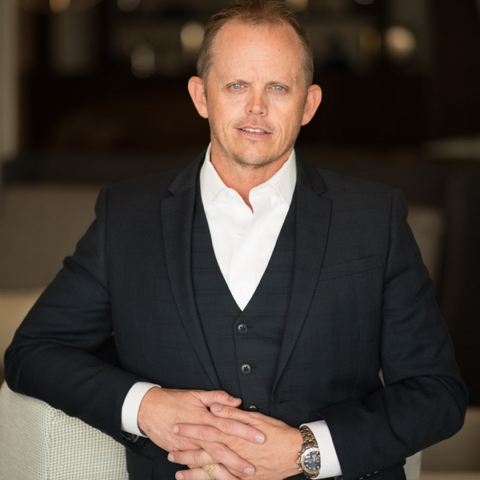
George Wright III
George Wright III is an entrepreneur, investor, and the host of The Authority Formula Podcast. Over more than two decades he has founded and scaled several multimillion-dollar companies and built a renowned seminar business that put some of the world's biggest names and brands on stage. With 25+ years across marketing, sales, and executive leadership, he has made a career of turning expertise into authority — and authority into lasting influence.
Today his mission is singular: help driven entrepreneurs and experts position themselves as the trusted authority in their field. Through The Authority Formula Podcast and Authority Media Network, George shares the strategies that turn knowledge into a platform, audience, and brand that compounds over time.
More about George →