Mark Amell on Small Business Strategies to Avoid Overwhelm and Scale Without the Mess
Small business failure rates remain staggeringly high, and George Wright III sits down with Mark Amell, former leader of one of the earliest artificial intelligence projects for the U.S. military and founder of DMA Consulting and Local Business Rising, to unpack why. Amell has spent over 25 years studying what separates thriving small businesses from the roughly 80 percent that do not survive past three years, and his answer is not more marketing spend. It is structure, strategy, and a full understanding of the buyer journey.
Why Small Businesses Fail Even When Owners Work Hard
Amell explains that most entrepreneurs are excellent at their craft but overwhelmed by how complicated marketing has become. In the past, the fallback was to throw more money at the problem, but small businesses rarely have that luxury. He points out that most agencies only sell four or five services and focus narrowly on those, while the million dollar small businesses he studies typically use ten or more marketing techniques. Because 70 percent of a sale happens before a prospect ever talks to the business owner, a weak foundation means missing out on far more customers than necessary.
The Four Plans Every Business Needs
Instead of chasing tactics, Amell recommends building four foundational documents: a business plan, a marketing plan, a financial plan, and a health and wellness plan. The business plan acts as the operational North Star, defining where the company should be in one year and five years. The marketing plan provides the tools to stay on that path, testing offers and tracking what works. The financial plan forces owners to confront cash flow honestly rather than assuming things are fine because there are still checks in the checkbook. The health and wellness plan rounds it out, because sustained focus and good decision making require physical and mental energy.
The business plan is operations, how you're working, your HR when you start hiring people. It's your North Star of what your company wants to look like at a year, five years.
Avoiding Shiny Objects with the 80/20 Rule
New tools and fast-result promises constantly pull entrepreneurs off course. Amell's fix is simple: before chasing a shiny object, check it against your business plan or marketing plan and ask whether it actually helps. He also flips the common assumption about lead generation. Most business owners believe they should spend 80 percent of their time chasing new leads, but Amell argues the ratio should be reversed. Twenty percent of time should go toward generating new leads, and 80 percent should go toward doing great work and nurturing the relationships already in motion. A focused list of 100 leads, worked all the way to a yes or no, beats a scattered list of 1,000.
Mapping the Full Buyer Journey
Amell breaks the buyer journey into clear stages: awareness (social media, email marketing), credibility verification, the actual sales conversation, onboarding, follow-up, and long-term nurturing. He stresses that once someone becomes aware of a business, their very next move is to verify it is real. A weak or missing Google Business Profile, poor local SEO, and a lack of reviews or testimonials can end the relationship before the owner even knows a prospect looked.
After the sale, most businesses drop the ball on onboarding and follow-up. Amell recommends a structured onboarding process with clear deadlines so customers are not left wondering where their service is. For leads who do not buy immediately, he suggests following up every three days for about four attempts. For those who do buy, ongoing newsletters, press releases, and simple check-ins keep the business top of mind. He shares a personal example: a car detailer who reaches out monthly earns repeat business, while a garage door repair person and a lawnmower repair person who never followed up were impossible to find again when needed.
Building Credibility and Trust Online
With up to 90 percent of online content now written by AI, Amell says credibility has never mattered more. Buyers want to confirm they can trust a business before spending anything over $100, which makes a strong Google profile, accurate SEO, and genuine reviews non-negotiable. Amell describes actively revising his own SEO strategy to keep pace with AEO and GEO trends, underscoring that credibility signals require ongoing maintenance, not a one-time setup.
Biz Golden Nuggets and the Power of Community
Amell also discusses Biz Golden Nuggets, a collaborative book bringing together entrepreneurs from bookkeeping, finance, business coaching, health coaching, and more. Each chapter opens with the author's origin story, using storytelling to help readers find someone they relate to. Amell's goal is to give away 200,000 copies so small business owners can read a chapter every night or two and apply the lessons directly to their own situations. The project also gives the contributing authors visibility, creating a win for both readers and writers.
Beyond the book, Amell runs a free weekly meeting so business owners can ask questions directly to people who have already solved similar problems, rather than getting lost in generic advice online. His broader philosophy is captured in the reminder that it is lonely at the top, and that no one builds a lasting business entirely alone.
Action Steps
- Create your four foundational documents: business plan, marketing plan, financial plan, and health and wellness plan.
- Before adopting any new tool or tactic, check it against your marketing plan instead of chasing it on impulse.
- Shift your time allocation to roughly 20 percent lead generation and 80 percent nurturing existing relationships.
- Audit your Google Business Profile, local SEO, and reviews so prospects can verify your credibility immediately.
- Build a structured onboarding and follow-up process, including a long-term newsletter to stay top of mind.
Mark Amell's approach boils down to a simple but overlooked truth: you cannot scale a mess. By building solid foundations, mapping the complete buyer journey, and surrounding yourself with the right people, you give your small business the structure it needs to grow without burning out.
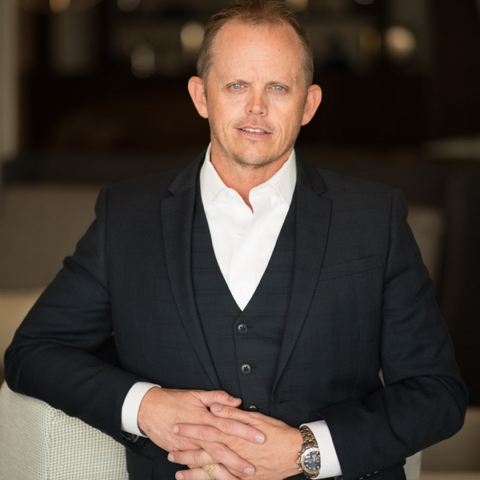
Mark Amell
Education: Masters in Computer Engineering, Bachlors in Computer Engineering, Electrical Engineering, and Math Experience: US Air Force Office where I led the first Artifical Intelligence Project for the United States Military Developed and grew a Software Company now 25 years old with 20 year customer retention Developed an 11 year old Marketing Company that offers over 30 services focusing on the solving buyer journey - not focused on selling services but giving them a solution for their low risk low cost business and marketing challenges Next week we will be sending out my first book to 200,000 small businesses to make their journey easier for Free plus other goodies
Read the full transcript
I've gotten called in and said, I want you to do an AI system because I'm overwhelmed. And I'm like, well, the first rule of business is you can't scale a mess. Let's clean up what you're doing, understand what you're doing. There's so much overwhelm. You know, when you think about that, I offer 30 marketing services. Most agencies or small businesses aren't going to try to understand 30 marketing services and figure out which ones they need. Welcome to the Authority Formula podcast, the show that helps you grow your business, attract new opportunities, and leave your competition behind. I'm George Wright III, your host, partnering with Valiant CEO Magazine to bring you the world's top entrepreneurs, thought leaders, and experts. Let's dive into the strategies they use to dominate their markets and become the authority in their field. I'm so excited today to be here with you. I've got a special guest, Mark Amel. How are you doing, Mark? Good, sir. I'm glad we were able to connect because I've got some great questions that I'd really like to ask you today. You've got an amazing background. For those of you that do not know Mark, let me give you a little intro. Mark's the former leader of one of the first artificial intelligence projects for the U.S. military. He's the founder of DMA Consulting with over 25 years of experience. And today we're going to talk a little bit about his other venture, which is he's the creator of Local Business Rising, which is a community dedicated to helping small businesses succeed. Mark's got a degree in computer engineering, electrical engineering, mathematics. I mean, he's very, very knowledgeable. And he has also created, he's a co-author and organizer of a collaborative book called Biz Golden Nuggets. So we're going to talk about that for a little bit as well. But Mark, let me ask you a question. You were working in artificial intelligence for decades before it really became mainstream. So how did that experience shape and kind of push you into business like you're doing today? When you're doing an artificial program and you're programming it, we didn't have any tools. We had to create everything. But you walk through those paths. How's the people, the buyers, how are they going to use it? And that's basic programming. But in order to think about what's affected by decisions, you know, asking the people you're developing it for, increasing the artificial intelligence is really understanding that way that person thinks and then automating it. There's so many misconceptions about AI right now, but what we want to do is we want to take some of the burden off the things that you know and just help you implement those. Yeah, it's interesting because with the background you have, unlike a lot of people that use AI today, you had to innovate it and think and create. And that's what's missing from a lot of individuals today. But you had this successful software company background. So I'm curious what made you pivot into this passion you have now for helping small business? What pushed you into that direction? And we can talk a little bit about why you're so passionate about small business. I've been a home business for 30 years before it became fashionable. But my software company has 20-year customer retention, so I didn't have to really worry about marketing to them and all and things are going along. And I met this guy 11 years ago now that had a 35-year-old family business, went to sell it and found out it wasn't worth anything. And I decided I wanted to know why. And the more I dug into it, the worse it got. So 80% of small businesses don't make three years. And agent marketing agencies in general, they sell four or five services and they focus on the services they sell. But 90% of million dollar small businesses, they use 10 or more marketing techniques. So what they do is they hire three or four agencies, whether they understand it or not, is they cover the complete buyer journey because you can't just sell a piece. You can't give somebody a thousand leads and they say, okay, what am I supposed to do now? You got to have the complete picture. 70% of the sale is done before they even talk to you. So if you don't have your foundation solid, you're going to get the, you know, 2% that you're happy with, you know, now instead of the 20% that you could have. Yeah. You're pretty passionate about helping small businesses and you mentioned it just a minute ago, but there's this major failure rate of new small businesses. And you've kind of made it your mission to help to change that and reduce the failure rate of businesses. So you talked a little bit just a second ago about, you know, strategies and the overwhelm, but what do you think's like the biggest reason that a good entrepreneur, even though they're working really hard, just struggles to make small business work nowadays. They can be excellent at what they do, but the world of marketing has gotten very complicated. And in the past, it's been throw more money at it. But small businesses don't have that money to throw it, hoping something works. I talked to too many that have spent and nothing happens Yeah And what do you think is the main reason for that Like why are they not prepared I have some personal thoughts on this, but I know you talk a lot about the fact that they need individual business plan, marketing plan, financial plan. Talk to me a little bit about what you do when you talk with these small businesses and what you recommend and basically suggest that they start with. Well, they start with the setting up the four documents, business plan, marketing plan, financial plan, and a health and wellness plan, because you can't work if you're not healthy. What I do is I like to know what's working, what's not working. I've gotten called in and said, I want you to do an AI system because I'm overwhelmed. And I'm like, well, the first rule of business is you can't scale a mess. let's clean up what you're doing understand what you're doing there's so much overwhelm when you think about that i offer 30 marketing services most agencies or small businesses aren't going to try to understand 30 marketing services and figure out which ones they need yeah so what i've been doing is surrounding myself with good people the right people and encouraging small businesses to work on their business three to four hours a week at the most. The rest of the time, they can do what they enjoy, what they got into business for without the overwhelm of worrying about my business is going to fail or I can't take a two-week vacation because the doors will be closed by the time I get back. Yeah, the business is totally dependent on them for sure. I like how you said these four plans, the business, marketing, financial, and health and wellness plan. Breakdown for me, for someone that might be listening to this that maybe thinks they're the same thing. Give me some of the differentiators between a true business plan and marketing plan for a small business owner that's getting ready to launch something. So the business plan is operations, how you're working, your HR when you start hiring people. It's your North Star of what your company wants to look like at a year, five years. the marketing plan. Once you know where you want to go, the marketing plan is how can I give you the tools to help you stay on that plan? Look at what you're doing, what works, what offer works, creating new offers. And the financial plan is so many people used to be funny in the old days, you know, I still got checks in my checkbook, so it must be good, you know, but at the end of the month when you're like, you know, I've been working 10 hours a day and I've got nothing in my checkbook. Why is that? Or if you don't know why, you're not going to be able to fix it. And then, you know, I'm big into health and wellness. I think you got to feel good. And in order to do a good job, you got to have focus. So I think all those are important. Yeah, I think that you hit it right on the head. And one more thing I'd probably add to that is with the health and wellness is I don't think small business, entrepreneurs, business owners, founders, I don't think that they really value the effect that your mind and body will have on the rest of your business. You know, your mindset is definitely something that's going to affect your business and your mind is affected by your health. And so it sounds like something that's something you want to work on and focus on once you're doing well, but it really does affect the rest. And I really like what you said about marketing, because I also think a lot of people feel that to start a business, they've got to get leads. They got to get marketing. And a lot of times I tell people that you don't have a lead problem. You don't have a marketing problem. You just, you don't have any strategy. And so it is a little overwhelming, especially nowadays with AI. You've probably seen that as well, right? There's so many shiny objects and new ideas and fast things that'll get you quick results that entrepreneurs kind of chase everything that comes along, right? What's been your experience? That's why I tell them that these plans are their new best friend. That if you see a shiny object, go have a talk with your business plan or your marketing plan. Is this going to help you or not? Take that time to think about how it fits in because you can update your marketing plan, but jumping at a shiny object because the salesman is good is only going to hurt you. The other thing about leads is what I've been telling people lately is their 80-20 rule. And people think that they should be chasing leads for 80% of the time. They're not happy with what they're doing. They're not in business for what they're doing. But it's really backwards. They should be focusing on 20% of their time chasing new leads. But 80% of doing the work, staying in touch with that person and building that long-term residual income. You can give somebody a thousand leads, but if you whittle it down and you have a hundred leads that you're working, that's all you need because you don't have time for follow-up. You don't have time to build that relationship. So I tell people focus on a hundred leads and work those to the end, either good or bad, and then figure out what you did and then get another hundred leads. You don't need a thousand leads. Yeah. Especially if you're trying to create something that's scalable. You know, you talk a little bit about rather than focusing on individual marketing tactics you kind of have this philosophy of focusing on the entire buyer journey So let talk about the buyer journey for a few minutes So the buyer journey is steps You have awareness, which could be your social media, it could be email marketing. I need those steps, awareness, they found you. The first thing they're going to do after they find you is they're going to verify if you're real or not. So if you don't have a Google profile, you don't have SEO, local SEO reviews, or what do they call it as? Testimonials? Yeah, testimonials or recommendations, yeah. Is a small business is just going to die right there before even the owner knows that you're looking at them. And then what I've done is I've taken the marketing funnel and I've turned it up to the sales funnel, turned it upside down and turned it into a marketing funnel, which is, are you having a problem with lead generation? Are you having a problem with this? And then we say, this is why you're explaining what the problem is so you understand it. And then say, this is why we stand out helping you with this problem. You can give them lead magnets. I like to use landing pages. So then we have onboarding. I don't know a lot of people that do onboarding. Once you sell it, you should have a structured process that you can do the onboarding and they get the information they need. and they get deadlines so that they don't call you in a week and say, hey, I gave you money, where's my service? If they don't buy when you actually talk to them, you have follow-up every three days, maybe four times. And then once they do buy, you put them into long-term, staying top of mind, newsletters, what's new, so that you stay on top of mind. There's also things like geofencing for awareness. You know, there's things like press releases saying, hey, this is what we did. We just merged with this company. We offered this new service. Those newsletters stay on top. And there's a lot of examples. I mean, I had short examples. I had a guy come and detail my car, give me a great price with their own time, everything. And every month I get another email saying, hey, can we come out again? And I'm going to pick him instead of looking around. I had a guy fix my garage door, a guy fix my lawnmower. I've never heard from either of them. And when I needed their service again, I couldn't find them. Yeah, it's funny how just the little things can make a difference. And it goes back to the quality of what you do. I really do believe that it's, you know, how you do anything is how you do everything. And in business, it's especially true that you've got to do things at a world-class level if you want to continue to retain customers. And it's obviously easier to retain customers than to get them. So you would think that that's what most would do, right? But I think that entrepreneurs, maybe they just struggle with that because they don't have follow through. But it's also, I think, goes back to your strategy. If you truly have a client journey strategy, it will make a difference. But you mentioned one other thing, and that is businesses have kind of this credibility problem they've got to address, not just leads, but credibility. So you mentioned, you know, Google business profile and testimonials and things like that. How important is it for businesses to really focus on their credibility and authority? You know that that's one thing that I really emphasize. I think it's critical with 70% of the sale done before you talk to them. They want to be able to look you up and feel confident with all the scams and with anywhere from 70 to 90% of the messages on the internet written by AI. Yeah. People want to feel that they can trust you before they're going to give you money and especially anything over a hundred dollars. They're going to really want to know. Yeah. And it can't show that they can trust you. It's just not going to go any further. So I spent the last month re going through AEO, GEO, all the EOs. And I've got an intern that I'm working on revamping my SEO because it's just become that important. And it's changing all the time, right? You have to stay up with the trends and it's difficult to stay up with it, which is why mentoring and things is such a great, great idea. I want to, because we don't have a lot of time, I wanted to really emphasize what you brought up when we had a previous conversation, which is you've put together this amazing collaboration with entrepreneurs. You have a new book coming out called Business Golden Nuggets and Biz Golden Nuggets. And I think it's a way to really highlight and showcase some amazing thoughts and thought leaders. So tell me about that a little bit. What inspired you to bring together, because you have so much content, why did you decide to bring together several dozen entrepreneurs in order to put this book out? I wanted to get, everybody's got a different point of view and everybody relates to somebody differently. And my dream would be to have small businesses read a chapter every night, every other night, and see how it applies to their business, what they could learn from it, what would help. But you're also not only helping small businesses, but you're helping the authors because they're getting awareness. They say, yeah, I can relate to that. That's somebody I want to follow up and talk to. So it's a win for everybody. And giving away 200,000 copies, I'm hoping that I can make a dent That really that a huge mission And I wanted to kind of emphasize that as well Number one I want to say I really love the collaborative idea If you just think through the simple process of a mastermind this is 25 to 30 business owners that are all thinkers and doers and executors. And so it's a great connection for people to have, but also the amount of diverse ideas. But you just mentioned it. Your goal and mission is to give away 200,000 copies of this book because you're passionate about helping small business and making a change. What made you decide to do that instead of just making this a paid book? Is it driven by your passion? Yeah, it is. I want to get people to understand what we're doing, that we're helping people not to be afraid. We have a free meeting every Tuesday. Say, come and ask your questions. Don't go down, no disrespect to YouTube, but don't go down the YouTube rabbit hole. Come and ask your question to somebody that really knows the answer. Yeah, somebody that's in the trenches, that's doing the work, right? There's so much you could spend hours and days and sometimes people like you say get lost in YouTube, whereas you could just speak with people that are executing and doing it every day and dealing with the problems. And you also made one other comment earlier, and I wanted to make sure that we kind of ended on this thought, too, is you said to me, you said, you know, it's lonely at the top. Talk to that for just a second. What did you mean by that? Most business owners, when they start out, they wear 20 hats and they don't know that they're missing another 10. And so just having people around you that are, you know, the people in our group are there to help each other. They know in the long run, Zig Ziglar saying you help enough people, you have all the help you want. But it's proving true. And I've got surrounded by some great people. And it's hard to talk to somebody. Who do you talk to when you've got a small business? And it's going to give you a real answer. But we put this group together that I'm really pretty proud of. Tell me a little bit about the people that are in this group that are collaborating on the book. What type of industries, what type of makeup? Bookkeeping, finance, business coaches, health coaches, almost every industry you can think of. What I like about the chapters is it starts with their origin story. In marketing, storytelling has a lot of power. They can say, hey, I can relate to that person. I want to keep reading. so we've got people in all kinds of different industries and giving those different points of views I think if they'll take the time to look through the chapters they're going to find somebody that relate to them and at the end of the book I added a few chapters myself of like having a home business some of the challenges some of the advantages but I've got probably half a dozen articles I've also written in the back of it. That's great. I love it. No, this is good. This has been helpful because I think more than anything, I wanted to highlight your extensive background, some of the thoughts you have, because I do think there's a lot of small businesses out there. I think there's people trying to start a business that maybe need to think a little bit more before they quit their job or before they do something else without a business plan, a marketing plan, financial plan, health plan. And I do love the idea of this book as well. And for those of you listening, Mark and I talked, we're going to make sure that we have a link for you in the show notes so that you can take advantage of this book. So if you happen to hear this episode before it's out, make sure you go to the link in there and reserve your copy. And if it's out, then you can go ahead and grab a copy as well. Mark, before we take off, what bit of advice would you leave our listeners with when it comes to they're struggling, they're having a hard time, they're trying not to be one of those failures of small business? What advice would you give these individuals that are trying really hard to, to win at business. Realize that you don't know everything in business and find the right people around you. And slowly at the top, you can't do it yourself. Find the right people around you and do the work ahead of time. If I can take another minute to share another example. Yeah. A lot of small businesses I run into, they talk about, oh, I got friends and family and everything, and they help them. And then at the end of three months, they get, okay, you know, you're on your own. But instead of taking that time to build their business foundation, they're just kind of running, oh, everything's going well until it doesn't. So if you do start a business, you know, it's nice that you've got support and help, but make sure you don't waste it. Yeah, that's great advice. It's very sound advice. And I would echo that and even add to the idea of what you originally said, which is just recognize you don't know it all. And you don't have to do it alone, but that there are resources out there that can help you. And if you don't surround yourself with those resources, you're never going to know what you don't know. And so I agree with that quite a bit. Mark, I appreciate you being here, man. And if you're listening to this episode, please do me a favor and share it. Let us know what you're working on. We want to know what you're struggling with. We want to know what you're winning at. Let's celebrate your wins and help you with your losses. Like I say on all the episodes, the goal here is to bring you some ideas, some inspiration, motivation, and the education to help you to grow your business, grow your life. But in order to do that, you've got to engage. You've got to engage. So I appreciate you being here with us today. Once again, this is George Wright III with Mark Amell, and we look forward to talking with you soon. Have a great day.
George Wright III
George Wright III is an entrepreneur, investor, and the host of The Authority Formula Podcast. Over more than two decades he has founded and scaled several multimillion-dollar companies and built a renowned seminar business that put some of the world's biggest names and brands on stage. With 25+ years across marketing, sales, and executive leadership, he has made a career of turning expertise into authority — and authority into lasting influence.
Today his mission is singular: help driven entrepreneurs and experts position themselves as the trusted authority in their field. Through The Authority Formula Podcast and Authority Media Network, George shares the strategies that turn knowledge into a platform, audience, and brand that compounds over time.
More about George →