Miguel Bautista on How to Beat Chronic Fatigue and Reclaim Your Energy
Miguel Bautista has helped over 1,500 people recover from chronic fatigue syndrome, brain fog, and chronic pain through a structured coaching program he built from personal experience. On The Authority Formula Podcast, hosted by George Wright III in partnership with Valiant CEO Magazine, Bautista unpacks why high-achieving entrepreneurs are among the most vulnerable people when it comes to burnout and nervous system breakdown, and what it takes to get your life back.
The conversation is especially relevant for founders, operators, and Type A personalities who equate relentless drive with success but may not recognize the warning signs building underneath the surface.
Why High Achievers Are the Most at Risk
Bautista's story starts where many entrepreneurs find themselves: pushing hard, performing at a high level, and ignoring every signal that the body is sending. As a former athlete and top-performing personal trainer, he was working 12 to 14-hour days, skipping sleep, and running on a self-imposed mandate to do more. The result was years of worsening symptoms, 35 to 40 specialist visits, dozens of emergency room trips, and eventually eight months completely bedridden, spending two of them in a hospital.
The trap, he explains, is that the very traits that produce success set people up for collapse. Perfectionism, relentless drive, and refusing to show weakness are not just personality quirks; they are risk factors.
Those personality traits, they double down on that. So when they feel these symptoms, they feel more tired, run down. They almost see that as a challenge of like, oh, this is my time to shine.
By the time most people reach out for help, they are already in the severe stages.
What a Hypersensitive Nervous System Actually Means
After ruling out organ failure and other physical causes, a psychiatrist helped Bautista understand what was actually happening: his nervous system had exceeded its capacity. The brain, unable to get the body to slow down through warning signals, had essentially forced a shutdown.
When your threshold is maxed out, there's only so much you can handle on your plate before it starts overflowing. It's like a bucket.
This explains why someone who used to handle stress easily now finds the same situations overwhelming. Symptoms including brain fog, palpitations, insomnia, visual disturbances, and extreme fatigue are not random; they are the brain's way of forcing rest when the person refuses to take it voluntarily. Bautista uses a useful analogy: the issue is not hardware (your organs are fine) but software. The nervous system has shifted into a locked-down survival mode, and it needs to be deliberately retrained back toward a calmer baseline.
How the CFS Recovery System Works
Bautista developed the CFS Recovery System after identifying a repeatable path from bedridden to fully functioning. The program has three core components.
The first is education. Most people arriving at his program have spent years chasing a diagnosis that never came. Understanding why they feel what they feel, and why it is not going away, breaks the anxiety loop that actually worsens symptoms over time.
The second is community. Discovering that other people have the same experience, and that recovery is possible, addresses the isolation and health anxiety that compound the condition.
The third is hands-on, individualized coaching. Unlike general information resources, Bautista's team works daily with clients, five days a week, messaging back and forth to ensure progress without triggering a crash. The critical detail is calibration: for someone who is semi-functional or severe, every activity needs to be carefully graded. How many trips downstairs per day? When is it safe to leave the house? What does returning to work actually look like without a setback?
How to Regulate the Traits That Got You Here
One of the more nuanced points in the conversation is what recovery does not require. You do not need to abandon ambition, discipline, or intensity. You need to learn to regulate them.
George Wright III frames it plainly: the stuff that got you where you are is the source of the problem, but entrepreneurs do not see it that way because they see hustle as the solution to everything, including the damage hustle is causing.
Bautista's take is that these traits are a double-edged sword. The goal of the program is to teach people to use those superpowers to their advantage rather than against themselves. Perfectionism and high achievement are not the enemy; operating at redline with no recovery built in is.
The Neuroplasticity Opportunity
A key insight from the conversation is that the brain's sensitivity is not permanent. Neuroplasticity means the nervous system can be retrained at any age, no matter how long the symptoms have persisted. The shift is from a hypersensitive survival-based brain to what Bautista calls a thrival-based brain: calmer, more regulated, and capable of tolerating normal demands again.
This process takes time and deliberate work. It is not passive. But the evidence from over 1,500 program graduates and thousands more who have used the free content on the CFS Recovery YouTube channel suggests that full recovery is achievable, not just symptom management.
Action Steps
- Rule out other health issues first. Get blood work done and see your doctor. Once physical causes are cleared, shift your frame from a hardware problem to a software update.
- Educate yourself on what a hypersensitive nervous system actually is before trying to fix it. Understanding the mechanism breaks the anxiety loop that amplifies symptoms.
- Take half a day off every week, not just physically but mentally. Stop thinking about work during that time. Bautista calls this the advice he wishes he had given himself earlier.
- Identify your energy leaks. If you are still working but not recovering, look at which activities and stressors are draining you and begin grading your exposure deliberately.
- Seek community or professional support. Isolation and uncertainty are major drivers of the condition. Connecting with others who have recovered is not optional; it is part of the protocol.
It is never too late to start living the life you were meant to live, but it does require taking the first step. If you recognize the symptoms Miguel Bautista describes, the CFS Recovery YouTube channel is a free starting point, and his team works directly with people at all stages of severity.
Miguel Bautista
Miguel Bautista Helped thousands overcome Overcome Fatigue | Brain fog | chronic pain Author of Thriver, Not Survivor: How to Beat Chronic Fatigue — a practical guide to regaining energy and rebuilding life after illness. Developed the CFS Recovery System, a proven program that has helped over 1,000 people go from bedridden to thriving. Former athlete who personally battled years of mysterious, undiagnosed symptoms before discovering the power of brain retraining and neuroplasticity. Leads a global coaching team made up of former clients who have fully recovered and now guide others through the same transformation.
Read the full transcript
Welcome back to the Authority Formula Podcast, where we help you grow your business, attract new opportunities, and outpace your competition. My name is George Wright III. I'm your host, and I've partnered up with Valiant CEO Magazine to bring you the hottest entrepreneurs, thought leaders, and experts from around the world that are crushing it in business. Together, we're going to unpack strategies and tactics that they're using to become the authority in their field. And my goal is to help inspire and motivate you to do the same. So let's get right into it. George Wright III with your daily dose of inspiration, motivation, and education. And I'm joined in studio today with an amazing guest, Miguel Bautista. How are you doing, brother? I'm doing excellent. Just really excited to be here. Yeah, it's been, sometimes it's tough to coordinate, but I'll tell you what, I'm really excited for you to be here because we're talking about the topic of overcoming fatigue, brain fog, chronic pain. And so let me give a quick introduction so our audience knows you. You've done a lot of things. You've written a book, author of Thriver, Not Survivor, How to Beat Chronic Fatigue, but you've helped, more importantly, thousands of people to overcome fatigue, brain fog, chronic pain. You developed this CFS recovery system, which is a program that's helped over a thousand people go from kind of bedridden to thriving. And being a former athlete and someone who's kind of gone through everything from coaching and discipline, I think your topic today is going to be really helpful for a lot of people. So I really do appreciate you taking some time. I'm looking forward to our conversation. Absolutely. And I think it's going to help a lot of people, especially with chronic fatigue syndrome. It's so much more than fatigue. There's so many of these weird symptoms going on. There's lots of burnout that leads into this, which a lot of entrepreneurs get a lot of type A personalities, high achievers. Those are the people with a perfect recipe to get something like this. And usually by the time they're finding us, they're in the severe stages of it. So hopefully this helps people. Yeah. And I think for those of you listening, we're going to be getting into details that you might associate with burnout, stress, chronic fatigue, or you might have something more specific. And we'll kind of get into all that as well. But Miguel, one thing that might really help everyone is to give a little bit of your background and your personal journey, because you had this story of your own, going from being bedridden to hiking in Hawaii, it's pretty inspiring, but it also kind of lays a foundation for why you are really qualified to talk about this subject. So could you kind of share that with us, your story, and what led you up to everything you're doing right now we can dig into? Yeah, so I feel like my story, I think we have to look back even before I had all of these symptoms start coming up, you know, what was life like leading up to it? You know, I was just a regular kid, loved playing outside, grew up in Vancouver, BC, simple family. And growing up, I realized I couldn't sit still. I was always very driven, almost too driven for my own good. I had this extreme personality. I remember in elementary school, the first time I ever got a C plus, I felt like a complete failure, right? So I was used to getting those straight A's. I was like that perfectionist. And I put a lot of pressure on myself growing up to always quote unquote succeed, right? And fast forward several years, this drive inside led to very fruitful things early on in my life, like wrestling team captain, high school football team captain, straight A's honors student. And after I graduated, I was actually, I ended up being one of the top selling personal trainers in a company with over 300 trainers. I was 22 years old at the time and had a nice car, was making decent money. So on the outside, everything seemed like it was on track. Things were moving in the right direction on the surface, but it got to the point where my body just could not keep up with the demand I was placing on it. Working 12, 14, 16-hour days, constantly just reading books about personal development, not sleeping right, not eating right. But most importantly, that inner voice of like, you got to do more, be more productive. You got to keep going, push harder, push harder. And I equated, I guess, success with pain and discipline, blood, sweat, and tears. That's what I told myself in my mind. But eventually, my health started slipping and I fell into a hole that was so deep, I never thought I would get out of it. So after a handful of years, just with my health slipping, it started with brain fog and insomnia, some anxiety, random panic attacks. I didn't even know what anxiety was at that time. I mean, I saw anxiety as this is weakness. You're just a sissy, just push through, right? Until you end up in the hospital over and over again, week after week, because you can't breathe, because you feel like your heart's going to explode. You can't sleep. So anyways, things took a downhill turn. And then after about four years of dealing with that, I was 23 years old. This was when I was at rock bottom. I was lying in that hospital bed, all alone, unable to even sit up, couldn't feed myself. People beside me were being told they have four months to live, just getting out of surgery. And I thought to myself, how the heck did I end up here? Everything was on track. My life was good. And I felt like I did all the right things. And I thought I'm in so deep of a hole. I don't know if I'm ever going to be able to get out because I'd also been to doctors and specialists and alternative health specialists over the years, about 35 to 40 different specialists and doctors, dozens of emergency room visits, and all of them, they couldn't find out anything that was wrong with me. So on paper, it was perfectly healthy, but I was feeling all these symptoms. So they got my worst. I was completely bedridden, getting spoon-fed for eight months straight. And imagine to go from team captain football team, a top performing personal trainer, very active. I had a bunch of other side business projects going on. To go from that to not even being able to shower, My grandma had to wipe me down six months, and then the other two months I was in the hospital. I had to learn how to use a wheelchair, use a walker, get back on my own two feet. Well, and you say something that is kind of an extreme case, which a lot of people had this happen, but I think it's important to note that you said a couple of things I wanted to point out, and that is most people that are success-driven, like entrepreneurs, founders, CEOs, and things like that, The stuff that got them where they want to be is the hard work the grind the hustle and things like that And although you got to a point where some get to that is an extreme case many people are suffering from a lot of those symptoms and it hard for them to recognize it because what has gotten them the success or at least the recognition in their life to this point is the source of the problem, but they don't see that because they see that as what they've needed to be successful. So the last thing they want to do is change that, right? Absolutely. It's exactly what you said. And in fact, those personality traits, they double down on that. So when they feel these symptoms, they feel more tired, run down. They almost see that as a challenge of like, oh, this is my time to shine. This is where champions are made. I got to push through. Or like you said, a form of weakness and they don't want to accept it, right? So they see that as I'm going to push even harder or I'm not going to acknowledge it, right? Exactly. And like these kind of people, type A personalities, they're the last people to reach out for help or show weakness until they have absolutely no choice. So usually by the time- That's what I was going to say. You actually got the symptoms and you had no choice. We're going to talk later about how people can catch this early on. But so finish your story about like, what did you do? How did you get some success out of that? Yeah. So I feel like I won the lottery when I got paired up with my doctor in the hospital. It's a wild story. So like the first month I was in ICU, they're running every test on me, but all my tests are coming back normal. But clearly something's wrong. I can't stop shaking. I have to wear earplugs and construction earmuffs and blindfolds because I couldn't even tolerate light. They had to blend my food a lot of times and I had to drink it because my digestive system just wasn't working. But after they ruled out the fact that my organs were actually functioning fine, they were like, look, this is probably a problem with the way your brain is communicating with your body because on paper, your heart's fine. Your lungs are fine. Everything else is fine. But you know, you say you're dealing with this stuff. You feel it. I'm like, yes, I'm not making this up. So anyways, they were like, well, you have an option here. We can either send you home and you can come back every day to work with these other doctors. And I'm like, I can't even sit up like, so I can't do that. And the other option was they said, you know, we have some, a bunch of extra rooms in the psych ward. If you want to stay there, that way you could work with a doctor every day. I was like, is this their trick to tell me I'm crazy? Am I going to be locked up in there? Do they think it's in my head? And they were like, no, you'd be a volunteer. You get a special wristband. You could go home anytime you want. It's safe. Don't worry. But I ended up spending the next month living at a psych ward where I got to work with a psychiatrist every day. And he's the one who essentially unlocked what was going on. He was like, you're not going to die. You're feeling all these symptoms though, right? You can't even feed yourself. This was when I was in a wheelchair. They rolled me into his office. And they were like, Miguel, you just pushed your body so freaking hard. Your nervous system has a limit. You've clearly exceeded that limit. So what you're dealing with is a hypersensitive nervous system. This is why everything is sensitive. Yeah. I read that when I was looking at some information that you had and kind of learning more about you. And I think so many people suffer from these unexplained symptoms that traditional medicine may or may not be able to define. And when you talked about hypersensitive nervous system or this whole idea behind burnout and chronic stress related, can you actually explain what you mean when you say hypersensitive nervous system just for the listeners? Absolutely. So what it feels like, you feel on edge, you feel overwhelmed a little bit, you feel like your tolerance for stress is much lower than it used to be. So your threshold is much lower. But essentially what it is, we all have this limit in our nervous system of how much stress we can handle. When I say nervous system, I'm talking about the brain, your survival brain. When you stack up all these stressors, like even the pressure you put on yourself, finances, maybe business, relationships, career, eventually, for a lot of people, it starts to hit the ceiling. Now, at first, you'll get early warning signs. You'll start getting anxiety, palpitations, insomnia, but type A personality people, they'll see that as a challenge. All right. I need to double down. So they push harder and harder and harder. And the further you go above that capacity, your limit, the more symptoms you're going to feel until your body, your brain, it kind of just slams on the brake. And it says, we don't trust you anymore. You're clearly just going to run your body into the ground. We're going to start forcing you to slow down because we've tried to warn you. Now we're going to force you. So you want to go work out? Well, we're going to give you crazy palpitations and shortness of breath when you try that. You want to work more on the computer, we'll give you a ton of brain fog. So these are all kind of signs from the body. But people like us, we interpret them as challenges. And it's really common. We see it. There's so many entrepreneurs who actually get this. Does it stack up too? I'm curious. A lot of times people go throughout their lives and as they get older and they kind of move along. What I'm reading is it's not just situational based. Like I've been in this situation before. Can it build up over time so that similar situations you could handle before are just more difficult for you to handle now because it's built up? Absolutely. Because that's why people say, man, I usually can handle this. I can't now. It's because it's built up, correct? Yeah, absolutely. When your threshold is maxed out, there's only so much you can handle on your plate before it starts overflowing. It's like a bucket. And once it slowly starts to reach that point of overflow, that's when your brain starts to signal your body to stop. It'll stop you from like even thinking. It'll give you brain fog. I've seen it stop people from even being able to look at screens because everything is blurry. They have visual snow, visual issues, even hearing issues, memory issues, anxiety, things like that. And usually there's like 40 or 50 symptoms. Yeah. So the starting point for this, is it retraining your brain, rewiring your brain? Or is it because it's not a medical, per se, condition you would jump into? Is it begin with the brain? Or where does somebody start as they're seeing these types of symptoms and things as your specialty? Yeah. So number one, I mean, definitely rule out all other health issues. Go see your doctor. Go get everything checked out. Get the blood work done. Now usually when that all completely fine you left there wondering what the heck is going on Yeah So then people start to develop this health anxiety almost like hypochondria because you feel like you have some mysterious illness you're just going to drop dead. So you start to not even trust your own body. You're like, you feel your heart rate increase, you start to think, am I having a heart attack? So I would start with just educating yourself first on what's even going on. So you get out of that downward spiral, because it's like a loop. You feel physical symptoms, you'll get anxious about them because the doctors aren't telling you what's going on. The more anxious you are, the more on edge you are, which equals more symptoms. So the easiest way I can, the easiest analogy I can describe this as, when we think of a computer, for example, you have the hardware and then you have the software, right? Initially, we think it's a hardware problem. Maybe it's the lungs, maybe it's my muscles, my legs, my adrenals, right? Once you get all of that checked out, Once the hardware is okay, now we have to look at it as a software issue. The good news is you can always update the software, but it takes the individual manually going in there and updating that software, basically from a very hypersensitive survival based brain to a thrival based brain, a more calm, more regulated brain. Well, and a lot of people feel like there's not a lot of ways to change that, but that's why I love that concept of neuroplasticity, right? I mean, it doesn't matter how long you've been, how old you are, what your experience is. You can retrain your brain through conscious frequency, correct, and repetition and that whole concept of neuroplasticity. And also, like you've developed the system, right, the CFS recovery system. Maybe you could walk us through a little bit of what you've done because through the thousands of people you've helped and worked with, your own personal story, you've created a real system for dealing with and creating recovery. So maybe you could take a minute and walk us through that as well or some of the phases and pillars of what you do with your clients. Yeah, absolutely. So there's a duplicatable system to go from as severe as bedridden to fully functioning, like literally running, exercising, traveling, getting your life back and actually being better than you were prior to getting sick. So number one, it really starts with education. You know, it's teaching people what exactly is happening in their body. Why are they feeling these symptoms? And why is it not going away? So we do that through very short condensed like video modules and coaching calls, even a nervous system health assessment where we'll actually analyze someone's specific symptoms, how long they've been sick, what stage are they at in terms of severity. And then we'll match that to a certain approach because the different stages of severity have different approaches. So number one is the education. Number two, it's getting them in the community as well. Once they realize that there's actually other people dealing with this. Yeah, not just them. It helps them feel a lot better. They sleep better at night because most people we see or who come to us, they haven't heard about anybody else who has this. In fact, the doctors don't even know what chronic fatigue syndrome is. Having uncertainty is like the worst feeling, whether it's physical or mental or emotionally or even in business. So that's got to be a huge help. Yeah, I see that. Yeah. So the community is great. And then lastly, it's the hands-on help where we tell them, okay, for your specific situation, here are the activities to stay away from, here are the activities to focus on. If someone's a little more severe, if they're semi-functional, we look at what are those triggers for your nervous system, right? Some people are still working when they come to us, but they're deteriorating. They're just not getting better. So we need to figure out where are those energy leaks? What are those stressors? but the biggest thing it's it's kind of like what we talked about earlier there's certain personality traits that people have that amplify these types of issues yeah type a personality perfectionist over thinker over analyzer high achiever so we have to teach him like we need to teach you to control these things like it's it's a double-edged sword it's a superpower right but if you don't learn how to control it it will control you and you're not even in the driver's seat of your own life. And this is why you burned out. So it's teaching them to turn the dial down on those certain personality traits, which is very difficult for a lot of people. Well, I like what you said though there, because we're not necessarily suggesting that the stuff that's gotten you where you want to be, you give up or you change. You just have to learn how to regulate, right? Because you don't want to take your biggest strength that's gotten you to where you want to be and just turn it off. And that's what we fear, right? As entrepreneurs or business owners or whatever, but if you can learn to regulate it, I like how you said education, but then being aware of it and then obviously being able to kind of dial it in and turn it out. Because by default, let's be honest, most people that have personalities or a type, I'm one of them. You almost at a subconscious level, just operate that way. You don't consciously try to. So you do exacerbate any kind of an average situation for a lot of people, right? You got to learn to recognize that and deal with it. Yeah, exactly. And like, you know, the people who get these kinds of things, if we think about it, like a car driving, the cruise control speed, it's like redlining the engine. That's their baseline cruise control. And obviously something's going to go loose. Like they don't really meditate or they don't take a day off. And even if they take a physical day off, they're still thinking about work, even if they're with family. Right. So that's a big one. I had to learn how to disengage from work, even just temporarily. So it's teaching them to use those superpowers to their advantage and not against them. Yeah. What would you say is some of the uniqueness of what you guys do? You know, as opposed to traditional treatment models and things like that, you know, what makes your approach to recovery different or unique? Yeah. I think for a lot of people out there with CFS or long code or fibromyalgia, which are essentially the same thing, the same family of issue, a lot of the resources out there, it's very education-based and it's like, here's what's going on. And in general, here's what you should do now go apply it. So it's more general information. Whereas with us, we like to get right down there in the trenches with them. We're there every day, five days a week, messaging them back and forth, just making sure things are on track. It's very much like, we'll do it with you program versus you do it yourself. Because it can get very confusing. The information, there's a lot of information you could follow, but how do you actually implement that? It's like if you go to a gym, it's like reading all these gym books but how do you build a program for yourself How do you know when to do more What if you get a tiny injury Like how much do you pull back So with us we really focusing on like especially for the more severe cases how many times can you go walk downstairs to go make your own food each week How many times can you shower in a week? Okay, once we get there, when is it safe to leave the house or start working again? What does that even look like? And how do you balance that out with all these other things without crashing? Because that's another thing. The people who have this, very sensitive. it doesn't take much for them to trigger a flare-up. And a flare-up means you're out for a few days, a few weeks sometimes even, where you are wiped out. How do we mitigate that while reintegrating back into life? Yeah, I think in this day and age, and I've seen this over the last 20, 30 years of working with a lot of businesses and entrepreneurs, thought leaders, you know, it used to be about the information. And nowadays you can get the information, education, what things you need to do so easily and quickly, but I've seen it gravitate towards results really happen from the application of that information. And so I can see why having that, you know, a lot of times you can't see the forest through the trees yourself. And so it does help having someone to help you to do that. There's probably a broad spectrum of people that deal with these types of issues and chronic issues. I think it also extends to just plain burnout and fatigue, you know, long-term fatigue for business owners. Do you have any kind of practical advice or steps that you would give someone if they're just, let's say that they're back where you were and they're saying, And man, I'm noticing these things probably not as big a deal, but they are affecting my life. You know, what kind of advice or strategies or even tips would you give them in order to sort of grab the reins on this type of problem they're dealing with? Yeah. I'd say the biggest advice I could give, and this is something I wish I, well, I don't regret anything. But if I could go back in time, I would tell myself this advice of, dude, just take half a day off every single week. Take half a day off, not just physically, but when you're doing the thing, mentally be there. Like you just you need some distance from the work or something your mind is so obsessed with. You need that space for it to just breathe. Take your foot off the gas pedal just 5% of the time and you'll be OK. But, you know, of course, it's harder to do that than it is to give the advice. Right. So that's what I would say. Yeah, it's interesting because I've mentioned this a couple of times. You know, we look at ourselves sometimes as corporate athletes. Right. There's athletes, professional athletes. They run and drive and grind and stress their muscles and things, but they put a lot of effort into recovery. Like they put time and energy and cold baths and massage and things like this. And it's in the recovery that we grow. And so if you're listening to this episode and you're out there grinding, you're experiencing some of these things, and you just haven't learned to prioritize, you've got to understand the benefits of recovery because recovery is when the growth happens. And so I agree with your advice. I think even if you were to just block into your schedule some of the most important things, take some time, I think you can see a lot of benefits there. If somebody wanted to kind of start educating themselves and getting some more information and connect with you, what's the best way, where can they go and sort of connect with you, get some thoughts on this and start to educate themselves? Because there may be things they're not even recognizing, right? So where do they start to do that? Yeah, the best place to do that is gonna be on YouTube. YouTube, our channel CFS Recovery, pretty much any symptom. I have a video about it. Any issue people come up with CFS or long COVID, we have over 1,800 videos on the YouTube channel. So pretty much go to the channel, type it in there, and you can learn about it. Everything from physical symptoms to even the emotional aspect of this stuff. And then we also have an Instagram if you want to DM me, just CFS Recovery. But we give out all the information for free. Yeah, I love it. If you're listening, I'll put all these links in the show notes in addition to the website. You know, you got some great content. I was kind of binging it the other day. And so I definitely would recommend people check this out because I recognize the importance and the effect that, you know, not just chronic fatigue and burnout have on your business, but on your personal life and relationships and mental and, you know, personal growth even. So yeah, man, I really appreciate you joining us to share this thought. I want to ask you maybe one more time. Is there anything that you feel is important, a message you want to kind of put out there, anything related to, you know, what you're trying to do with your business and with this whole topic. Any last few thoughts that you have to leave our listeners with? Yeah. So, I mean, if you are somebody who is dealing with a bunch of strange, mysterious symptoms that the doctors just can't figure out, just know that there is hope. There's millions of people who deal with this as well. And recovery is absolutely possible. You know, as long as you've had your tests and scans ruled out, you can definitely get your life back and start thriving again. So, you know, if you need help with that, just check us out on YouTube. And if you know somebody with something like this or fibromyalgia, a big one nowadays is long COVID. There's a lot of people getting this. Then just send them to our channel. We've helped at this point over 1,500 people come through our programs and we've helped them. And that's not even including all the people who were covered with the free content. So like 3,000 testimonials, 50 hours. Share this episode, guys. Listen, do yourself and others a favor. You don't know what people are going through. So don't just think about it from a standpoint of somebody you might think struggling. Most of the struggle's on the inside. So share this episode for sure. And we appreciate you spending time here listening to Miguel and myself. And I just, I guess I'd add one more thing. And that is I always tell people it's never too late to start living the life you're meant to live, but you do have to take steps. It takes work. It takes making the moves. And you know, if you're suffering from burnout, fatigue, chronic stress, anxiety, or even more serious symptoms, you know that. So take the steps. Your life and everything you're doing right now will improve and get better, but you've got to take action. And so I appreciate you being with us today. Miguel, I appreciate you being here, man. That's a great topic. So thank you so much for being here. Yeah, appreciate it. Appreciate it. That was fun. All right. Well, listen, everybody, have an amazing day. I'll look forward to talking with you soon. Outro Music
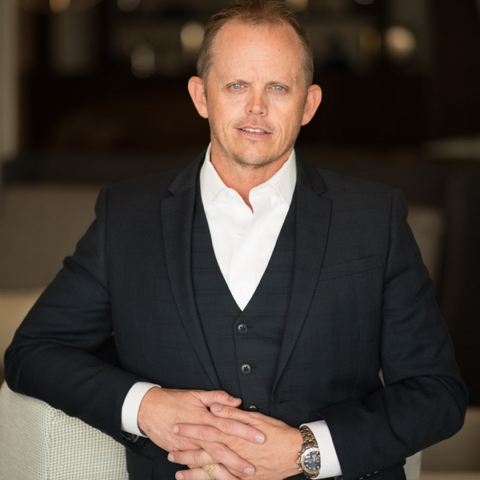
George Wright III
George Wright III is an entrepreneur, investor, and the host of The Authority Formula Podcast. Over more than two decades he has founded and scaled several multimillion-dollar companies and built a renowned seminar business that put some of the world's biggest names and brands on stage. With 25+ years across marketing, sales, and executive leadership, he has made a career of turning expertise into authority — and authority into lasting influence.
Today his mission is singular: help driven entrepreneurs and experts position themselves as the trusted authority in their field. Through The Authority Formula Podcast and Authority Media Network, George shares the strategies that turn knowledge into a platform, audience, and brand that compounds over time.
More about George →