Florian Rolke on Mindset, Clarity, and Lasting Change
George Wright III sat down with Florian Rolke, a high-performance coach who works with AI entrepreneurs, investors, and family offices focused on generational wealth. In a wide-ranging conversation on The Authority Formula Podcast, produced in partnership with Valiant CEO Magazine, Florian unpacked a framework built on self-awareness, personalized habits, and one of the more provocative ideas in the personal development space: that mindset itself is a form of action.
Florian’s path to coaching was anything but linear. He left Germany at 18, sold strawberries door to door in Australia, then came home, looked around at his old bedroom, and realized he had not moved forward at all. A chance rediscovery of a persuasion course led him to a 1984 audio by Jim Rohn that he listened to 60 to 80 times. As he tells it, Jim Rohn said something simple enough to seem obvious but rare enough in practice to reshape his life: if you want to change your life, you can.
How a Simple Idea from Jim Rohn Started Everything
From that audio, Florian ordered a crate of used books from Amazon and a pair of dumbbells. He was not chasing a specific outcome; he was moving away from a life he did not want. The direction came from Jim Rohn's principle:
"The book you don't read won't help."
He went on to study more than 170 books spanning philosophy, psychology, psychotherapy, and psychoanalysis, eventually enrolling in business psychology before leaving to start his own business. The pivot toward coaching came when he attended a seminar by Maxim Mankiewicz, a speaker who distilled the habits and mindsets of figures like Michelangelo, Leonardo da Vinci, and Nikola Tesla. Florian walked in and had what he describes as an inner knowing: public speaking and transferring knowledge was what he wanted to do.
Why You Don't Need to Know What You Want (Yet)
One of the most practical insights Florian offers is borrowed from Tony Robbins, who studied under Jim Rohn. When people cannot articulate what they want, Robbins asks a different question: what do you not want? The answer to that second question tends to be the inverse of the answer to the first.
Florian applied this to his own early twenties. He was skinny, lacked direction, and struggled to connect with people despite a natural aptitude for communication. He could name all of that clearly. The inverse gave him a workable goal: physical capability, direction, and genuine relationships. Start with what you do not want, and the path begins to clarify itself.
For entrepreneurs who feel paralyzed by too many options or who cannot commit to a single strategy, this inversion technique cuts through the noise faster than most planning frameworks.
How Hidden Patterns Keep You Stuck
Florian spent years tracing a harder thread in his own story. His mother's family carried a pattern of self-destruction that played out across generations. Despite his deep commitment to personal development, he found himself cycling through the same depressive patterns he had explicitly tried to avoid. That contradiction drove him toward psychedelics, ayahuasca, hypnotherapy, and extended time in stillness in Peru.
His conclusion has direct relevance for entrepreneurs: most of the forces that prevent consistent action are invisible until you name them.
"Once people can identify it and have language for the pattern, they are no longer identified with it."
As long as you are inside the pattern, you are the pattern. The moment you can observe it, describe it, and name it, you create separation from it. A coach, a trusted friend, or even a structured accountability relationship can do this for you when self-observation is not enough.
What Personalizing Your Habits Actually Means
Florian is direct about something the personal development industry tends to avoid: there is no universal habit stack. Some people are wired to move toward a compelling future vision. Others are driven by the pain of their past and the determination not to repeat it. Some build momentum through community and accountability partners. Others need technology, calendar reminders, and scheduled triggers.
His own practice includes a motivational image as his phone and laptop background, and a set of custom affirmations and incantations he recorded for himself, distilled from hundreds of sentences down to 25 to 50 that carry the most personal resonance. He listens to them in the shower. One example he shares: "All of the answers and resources are inside of me and within reach."
The lesson for founders: if a habit is not producing results, the problem is often not discipline. It is a mismatch between the reinforcement method and how that person actually receives motivation.
How to Build Focus and Clarity in Your Business
For his clients in AI, SaaS, and family offices, focus is not an attitude. It is a decision about where collective thought energy goes. Florian works with leaders to identify their real criteria for decision making, which are often different from the criteria they think they are using.
A common pattern he sees: founders resist committing to a single initiative not because they lack discipline but because of a deeper fear. What if I put everything into this one thing, do everything right, and it still does not work? That question, left unanswered, produces scattered attention disguised as strategic optionality.
The solution is to speak it out. Name the fear, walk through the scenarios, and confront the worst case. His experience in Peru reinforced this: inner stillness and inner cleanup produce visible order on the outside. When a person is clear about who they are and what they are built for, the pull toward shiny objects weakens naturally.
Action Steps
- Start with what you do not want. If you cannot identify a clear goal, list everything in your current situation you want to leave behind. The inverse of that list is your starting direction.
- Name your patterns. Talk to a trusted friend, a coach, or an accountability partner at least once a week. Shared articulation breaks identification with the pattern.
- Personalize your habits. Before adopting a new practice, ask whether you are more motivated by moving toward a vision or away from past pain. Build your habits around the answer.
- Find your focus criteria. For your next major business decision, write down why you would say yes and why you would say no. Honest criteria, not aspirational ones, drive better commitments.
- Audit what you consume. As Florian puts it, you already have enough information. Protect your attention from content that plants thoughts that are not aligned with the direction you have chosen.
Florian closes every conversation with a line that doubles as a standard for everything you let into your mind:
"What you behold is what you become."
It is a reminder that the work is not just what you do each morning. It is what you allow to take up residence in your thinking. George and Florian would both agree: it is never too late to start living the life you were meant to live. The clarity and the habits are available to you. The next step is simply to begin.
Florian Rolke
Florian Rolke is a high-performance coach specializing in working with AI entrepreneurs, investors, and family offices focused on generational wealth. His core mission is to help clients unlock clarity, sharpen focus, and build lasting strategic momentum in both life and business. With a deep foundation in business psychology and personal development, Florian has spent over a decade immersed in the science of success—studying more than 170 books and attending countless seminars. His unique coaching approach blends practical strategy with mindset mastery, enabling high-achievers to break through internal limitations and align their actions with their highest potential.
Read the full transcript
Welcome back to the Authority Is podcast, where we help you to grow your business, attract new opportunities, and outpace your competition. My name is George Wright III. I'm your host, and I've been partnering up with Valiant CEO Magazine to bring you the hottest entrepreneurs, thought leaders, and experts from around the world that are crushing it in business. Together, we're going to unpack strategies and tactics that they're using to become the authority in their field and my goal is to help to inspire and motivate you to do the same. So let's get right into it. All right, welcome back to George Wright III and I am joined on the podcast today by a great guest. I'm looking forward to introducing you to Florian Roque. How are you doing, Florian? Very good. Thank you. I'm glad to be here, George. How are you? I'm great and I'm glad our schedules lined up because you have some really cool knowledge. It's a great story. And I really feel like it'll be inspirational for people that are listening to the podcast. So before we get going, let me just give everybody a little bit of a taste as to why, you know, they know I don't, I don't do a lot of interviews on the podcast. It's just individuals that I really feel will bring a lot of value. And so I want them to know a little bit about you. So if this is your first time listening, by the way, make sure you hit that like and subscribe. I want you to be with us every day. My goal is to help you to unleash your potential and create your best life. And Florian's here because, look, he's a high-performance coach specializing in AI entrepreneurs and investors and family office generational wealth. And what his main focus is to help people gain clarity, focus, and strategic momentum. And so he's got a very deep background in business psychology, personal development. He studied over 170 books and attended a ton of seminars and really mastered the science of success. So we're going to get into his story a bit and some of the things that he feels helps his clients. But Florian, maybe what you could do for us is, for those that don't know you, give us a little bit of your backdrop before we get into a whole bunch of the rest. Where did you come from? What was your journey? What sort of brought you into this realm of what you do today. So give us a little bit of your background and journey. Yes, absolutely. Thank you, George. And yeah, the backstory has been evolved over the last 11 years now. And the first seven years were fairly humbling and fairly humble, I had to say. So I had the good fortune of starting personal development very, very early. So I left school when I was 18, graduated, had very good grades. And there was a promising future for me, at least from the academic path of how you think about life, when you finish school, you get good grades. Everything is altered, but they don't necessarily teach you about the real life skills and about the skills of personal development and skill acquisition, do they? Yeah, it's cool. I didn't quite know what I wanted to do, so I went to Australia, perverse away from Germany, where I was born and raised as I could. And I started to gather some life experience. I was selling door to door fresh produce, strawberries. That's a very humbling first thing. Wow. But high volume sales. I realized that a lot of people who do well later in life in business, they tend to have a background in sales. And it's either cold calling or door to door. So it was very, very beneficial to do a whole lot about yourself and about people. And yeah, strawberries are a great product to get your foot in the door. A lot of people said yes to that. How could you not? You learned. Yeah. Oh, why not? Right? Yeah. Anyway, so that was my humble beginnings. And then I came back to Germany and realized that I really needed to clean up my life. I still didn't have a girlfriend bed. I was smoking, drinking a lot of alcohol, really going down a bad path. Apart from doing well in school, I didn't do well in life. Yes, I knew how to relate to people, but there were a lot of things that I needed to clean up. And it was a wake up moment to me when I came back when I was then 20 years old, being in my old room and looking around and realizing I haven't really progressed at all in those two years where I was away. So I stumbled across, I opened the drawer in my old desk and there was a manual, the persuasive oratory course that I've took back in middle school. And that led me to a video by a button language teacher. And that eventually led me to a video by Jim Rohn called Jim Rohn, who live a mediocre life in 1984 in Annahean, California. and it was so impressive on me that i just listened to that audio probably 60 to 80 times in my car i thought there were other audio problems that was the first thing that i found and the message of it sounds so simple the message of if you want to change your life you can like you can change your life by action it wasn't part of my mindset growing up in germany in the DR of where was a lot of Soviet rule and my parents, my grandparents. It was ingrained in them through the school system and through how they were brought up. And that changed my life. So I bought a pair of dumbbells and a crate of used books from Amazon because Jim Rohn said, the book you don't read won't help. You better read. Right? Exactly. That's how I got started. it and everything from the intersection between philosophy and psychology, all the old classics from psychotherapy, even psychoanalysis, Freud in the original. And I didn't really know what I was looking for. I didn't even know what. I just knew I had to read and lift some weights and just try to clean up my life. And so this is where I started. I inscribed myself in business psychology, went to college for a year, realized I was way too slow and I wanted it more pure. So I started my own business instead, served the industrial paint manufacturing industry in Germany, because that was a business that my father was working in. And so I knew that a little bit and I'm like, yeah, I'm so good at marketing. I'm going to apply that here. It did kind of work, but I also realized that was not quite my true passion. And then I went deeper into personal development, got some... Wow. ...patient. Yeah, it's interesting. It's interesting you say that because a lot of people don't know what they're looking for, but they know that there's something more. And then some piece of information, whether it's an audio, a video, a person. And Jim Rohn, I mean, he's a master. He is definitely one of the fathers of personal development. You know what? I'm going to take a quick pause right there. So we got, we're five minutes in. I'm going to take a quick pause for a couple reasons. Do me a favor on your microphone and I can cut this part out. Is that a Blue Yeti? Yes. Okay. I think, so can you hold it up and show me the back so I can see what setting you have it on? Absolutely. I double check the before. Is it on the one that's kind of like a little wrap like that? Okay. So you need to turn your mic because that's the one I use forever and ever. the microphone on that one is on the other side the side that's on me and it's on the side right there so put that yeah so it's not on the top of a blue yeti it's on the front so so tilt tilt it towards me tilt it towards me like that yep and if you look at it it's that's where the microphone is on that it's funny because i did a bunch of podcasts forever thinking it was on the top which on the sure mics they are but i have my my yetis right over here it's on the front so pull it a little closer to you and i think that's why i could sort of hear you a little better if you got close to it but talk for a second just so i can tell yes now the sound should be better oh my gosh yeah that's that's way better yeah and i do a little bit but i triple check the settings listen man that's that's me like that's literally what i did so um yeah there's there's a setting on there that's why I looked at the setting there's a setting where it's on both sides one for the guest one for you but it's always on the side but the setting you have is perfect that means it's on the side but it's on the side with the volume knob so you're good you're solid okay so I'm gonna catch us back up into the Jim Rohn story but I figure let's get it let's get that sound even better if we can so this is perfect okay cool um let's see so we're two we're two minutes into that. And then my editing team will just cut that all out. Okay. So Florian, here's the thing. Jim Rohn gave you this opportunity to change your life. And even then though, it sounds like you didn't really know what you wanted to do. You just decided I'm going to go get some dumbbells. I'm going to start working out. I'm going to start doing things. And so you proceeded to start going through. And I mentioned as you got going here, 170 books, tons of seminars. What gave you this voracious, if that's how you say it, appetite for personal development? Because there's a lot of people I know that are like, I heard that message and that changed my life. But you seem to really go heavy into personal development and mindset. Why do you think that was? Yeah, a couple of reasons. First of all, yeah, you see there in the back wall, two of those certificates are from Tony Robbins' company, Jim Rohn was Tony Robbins' original teacher. And Tony Robbins always says when he works in seminars with people and they don't know what they want oftentimes he is starting with where do we want to go what do you want they don't know and then he goes what do you don't want what don't you want what do you want not anymore in your life and so this is what it was for me i just knew that the way i was living i did not want because it was looking down at me i was fairly skinny not very strong didn't really like the situation that i couldn't relate to women even though i wanted very much to but i just didn't have the skill Although I had this verbal capacity, you know, since I was two or three years old, people have been telling me, man, if you don't become a teacher of some kind, like, then there would be, you've got to do something with your voice. You've got to do something with talking, right? I know your voice is way better than mine. I was like, oh my gosh, this guy's got like a voice for like, ority and speaking, right? Thousands of hours of practice that also didn't come natural. I can send you some videos five years ago. Wow. So this is very high pitch, boys, very trying, forcing, very pleasing. And that's all practice. That's part of my message, too. It's like we've got to put in the hours and practice. Life-changed action through behaviors. And you uploaded this great video yesterday. We went through the last two of your 10, I forgot what you were calling it. But micro habits was one of them. Neuroplasticity and then the minimization and strategic micro habits that compound Yeah It so important right Yeah that interesting But I also like what you said and I want to make sure I really emphasize that for our listeners. You don't have to know what you want, but you do need to just start taking action because along the way, you're going to create what you want. But it is interesting that you say, and I haven't heard this a lot, so I like that you said, but if you don't know what you want, you can really identify what you don't want. Most people do know what they don't want, right? And that's what you did. And as a result, you just started taking action to move away from that, which is amazing. Certainly. And that's all credit to Tony Robbins, because usually what you want is very close to the inverse of what you don't want. If you play it out. Very interesting. So people who there are lots of psychological reasons why people can't come up with what they want. That can be perfectionism, that can be not wanting to make a mistake, many different things. But if you ask them what you don't want, they're usually more clear on that. And then you as a coach or as a similar facilitator can then inverse that and feed that back to them so that they say, well, yeah, that's actually kind of what I want. So if I look down at me and said, I'm skinny, I don't have a girlfriend, and I don't know what to do with my life, then probably the inverse of that is I would love to have a loving relationship, be a little bit more physically capable and have a direction. That is such a great point. You know, you think about people do know what they don't want. And it usually is the inverse of that. Why do you think people don't recognize that? Is it that they are almost sometimes afraid of what they do know what they want, but they don't think they can get it? Because you're right. It's very intuitive. If you know what you don't want, you most likely know what you want. Yeah. Why that is. You've worked with a lot of individuals and maybe sometimes it just takes going that roundabout way. So, well, so let me ask you this, what took you from your passion of personal development and all the knowledge that you were doing into the actual field of working with people and coaching and consulting high net worth, uh, business owners and things like that? What was there a moment, a pivot moment, or did you just evolve into that business? So when I was telling the story, these were basically the first two or three years. There are another many years until this point we're talking about. But when I was in college, after the second semester, I was always listening to these business podcasts, right? And one of the speakers there by the name of Maxim Mankiewicz in Germany still, he was giving seminars, personal development seminars. And his take on that was that he was distilling the best practices of past and present geniuses, Michelangelo, Leonardo da Vinci, Nikola Tesla, and even modern people that we consider outstanding in their field. And he was breaking that down into the habits and their mindsets and their daily actions and teaching that in a seminar. And so I was listening to that on the podcast and I realized I just needed to meet this person because the same bookish pursuit of knowledge was very appealing to me. And so I went there and the first time I set foot in that seminar, it sounds like I made up the story, but it was just like an inner knowing that this is what I want to do in my life. I looked around like if I can make money doing that, public speaking, being on stage and transferring the knowledge of some kind, that's what I wanted to do. So that was clear for me. But still, my life wasn't quite working out in the way that I thought it should. Right. And so this is where the journey of the actual work started, where I had to look at the topics within. And part of my upbringing that I haven't talked about is that I had very loving parents. They educated. They put a lot of emphasis on education and experiences. We were going to a lot of holiday parks and science museums. They really took care of our education, my brother and I. But they were also quite confused. from my mother's side, all three children of my grandparents, my mother and her sister, they both ended up committing suicide. And her brother, my uncle as well, he worked himself into the ground. And one day he just passed out. And yeah, he just worked himself into the ground. And I asked myself, why is that? That we have these invisible things that seem to be affecting us so much. And especially because I was running the same patterns. A lot of people here in the audience and you probably as well have realized from reading books on psychotherapy and psychology that oftentimes people do end up living out the same patterns that their parents but even though they don't want to so for example they were physically abused as a child as horribly as it is and then usually the person says i will never do this i will never be like my father who did this but then at some point you realize man i'm just like my father in these moments where the anger comes out and a lot of people have that right or i will never i will never cheat i will never be cheated on right these types of patterns that are so ingrained in us and i realized that i was living out the same kind of depressed manic depression kind of cycles even though i tried so hard not to do that and that really led me to the work with psychedelics with ayahuasca with hypnotherapy with all kinds of things in order to really pinpoint these psychological forces inside of us that make us live out these patterns. And that's what I believe is one of my unique things that I want to bring to the world of personal development, that I'm able to articulate that for people. So if somebody comes to me and they struggle with something that they can't explain, a habit that they don't want to do, or they can't do something that they feel they should be doing, why that is, I've gained the capacity to articulate that and to help people with that. Because here's the thing. Once people can identify it and have language for the pattern, they are no longer identified with it. So you can't even abstract from it and explain it or give a name to it. You are identified with it. You're in it. You're living it out. But once you have the capacity to identify it, it breaks the identification with the pattern. Does that make sense? Yeah, I think most people are in the movie. They're there. You know, you know, it's like we were watching a movie and the lights are out and you're so into it that you're like you're scared, you're fearful, you're you're rooting for the hero. But they're in the movie. And I love that analogy because I think you're right. I think until you become the conscious observer of your not just your life, but your thoughts and everything, I think you are absolutely right. And it's, it's interesting because you've had such a, a hard journey that a lot of times people will be overwhelmed and, and it'll, and it'll take them down. You were able to kind of notice that, but I think you do have that gift for the two things you said. I kind of like to say the awareness and, and, and, and seeing what's going on, but you have that because a lot of people without a coach or a mentor, like they don't have the ability to even see their patterns. like you have the awareness and identification, but then the ability to articulate that, because usually it's, I would hope you would agree, multiple levels deeper than they think it is anyway, right? They just, on the surface, I get angry. Well, why is that? Because I like my job. Well, why is that? And it's this level, but you have this ability to articulate it. And I've noticed, I was going to ask you, you really do emphasize, and you mentioned it a minute ago, habits and mannerisms. And I think to be successful, you talk about how that's so important. Could you give us some ideas of what you think are ways you can shift or maybe even back up from that? How do people identify their patterns and start to begin to do that? And what are some shifts they can take to change them? Because that's the hard part, right? Changing. Do you have some suggestions on what ways people can start to shift their mannerisms and their habits? Yeah, definitely. Let's unpack that. So that's a two-sided answer. First of all, how do people identify that? Well, I do believe in the power of talking to people. Yes, I believe that it is beneficial to hire a coach, but this is not meant to be a sales pitch. Even if you don't hire a coach, talk to friends. People don't do that. Another thing that we can go into is the framework that I help facilitate for people in order for them to do better in their life. One of those four factors is friends, including spouse. But most people realize that having a support of spouse is beneficial. Most or a lot of people do not see the value of friends and people that you can talk to on a weekly basis as a habit. Concern or like consult with other people and get their feedback. This is a way how you can get perception and awareness on those patterns. You actually make a point, and I don't mean to interrupt you, you make a great point. Most people just see friendship as, oh, that's the fun stuff. What you're saying is, there's a real tangible, specific result in your life helping you to identify things through friendships. That's a great point. Yeah. And tying it also back to the previous question of how long I've been doing that and coaching people. I've been talking to people for a lot of years, even in those years where I was still struggling myself. I had a few people from back in the days, very selected, a lot of people I had to let go of in my life. But a few people, even though they weren't financially successful, but they had one area or one certain strength that we could help each other with. And so we were weekly having accountability calls and connecting with each other because I was able to point out something in him and hear the maturity and the awareness and the willingness to do better in order to hear me and vice versa as well. So I'm really a proponent of making things easy and practical. If you don't want to hire a coach, talk to friends and be willing to be told the things that you don't want to see. That's how people gain awareness. And now the second piece to the answer, how do you actually shift that? Yeah, unfortunately, that does depend on the person. It does depend on how the person receives reinforcement the best. For some people, it is easier to do things together with people, with friends. That's one way to do that. Other people like to utilize technology and apps, calendar reminders. They like to schedule that That is another way how you can form better habits Another way is to just really get clear on why that is So some people get motivated by realizing that their past failure to do that has gotten them to the point. And by re-emphasizing the pain, which they can also do for themselves of re-visualizing that, is what's driving them. For some other people, it's the future outlook and now we can go deeper into Tony Robbins' psychology of human needs and all of that I know you've been talking about that on your channel as well in the meta program some people are more towards some people are more away from some people well then I have a client that really does it for him when he when he looks back at his past and says okay I am not doing this and the reason why I'm here at this point where I don't want to be is because I failed to do so in the past, that's what is doing it for him. For some other person, he's like, okay, let me help me out. Like, let's get clear on the future vision, where I'm going. And once I see that, once I put like an image in front of me, like a vision board, this is what does it for me. I'm sure in another 20, 30 years, I will have a more precise answer. But right now, it really depends on the person. I'm telling you, Florian, that's beautiful how you say that, because I think you're breaking it down for people to realize you've got to, you've got to be aware of it. You've got to identify it. Obviously you're great at helping to articulate that, but you said something that a lot of people don't really say in the personal development space. They give you all these lists and all these people in personal development, okay, I'm going to meditate and gratitude and vision board and, and take action and all these things, doing something that works for you, personalizing habits that work for you. And if you don't, a lot of times, obviously with a coach or a mentor, they can help you to identify what's really getting you the results. But I think that's beautiful, man. Like I think that that is really what creates the results is personalizing your approach so that you can get results. You can beat your head against the wall all day long with affirmations or vision board. And if that's not what gets you going, where do you go? So I like that, that you said that that's huge. Yeah. For some people, it really is circle of friends that they surround themselves with. For me, I'm a very visual person. The background on my phone, the background on my laptop is a motivational image. I don't look at a meadow like the standard windows background. It's not helpful for me because the things that you behold habitually, they do something for you auditory as well. I've made myself my own affirmations and incantations when basically went through hundreds of sentences that were meaningful to me and really cutting it down to like, what are the 25 to 50 sentences that are most impactful for me? Right? and then listening to that over and over in the shower. So, for example, all of the answers and resources are inside of me and within reach. That's for me very impactful and very important because it also carries to other people that I'm working with. Just a very tiny example on that end. I was working with a client and I noticed that he had a really good handwriting and he was starting trying to break out of his job. That was a few years ago when I was working with him. but then I talked to him and was like, did you realize that these posts on LinkedIn that are handwritten are doing so incredibly well? That can literally be your habit to freedom. Your resource of having this good handwriting is a true resource. And so by me incantating that and like reinforcing the awareness within myself of making the most out of the resources that I have carries over to the people that I'm working with as well. It's very, very interesting how that works when you really believe a thought. I mean, we can geek out on that. Yeah, no, no, that's so true. Absolutely. And it is also interesting to me how sometimes some of the most successful people, because personal development isn't for people not having success. I mean, some of your clients, some people that I've worked with over the years, some of the most successful people struggle with self-doubt, struggle with lack of clarity, lack of focus, which kind of leads me to one of the questions I was going to ask you. One of the core things I believe, and I think you've articulated this, that you do in your purpose for helping individuals and these AI SaaS founders and B2B AI owners and family office generational wealth individuals is to create focus and clarity. Could you kind of speak to what do you do and how do you approach creating focus and clarity? What do you mean by focus? Because, you know, obviously people hear focus and clarity all the time, but in business, what does that mean? Yeah. Focus, first of all, means what do you focus on in your business? There are many things that you can do, but they are the right things to do at the right time, aligned with the strategy. And this is where the focus comes in. So are we working on implementing a sales process this quarter or are we incorporating a new social media channel or do we say no to a new social media channel and just do three times more of what we're already doing, what's working on the social media channel. And in investing as well, families oftentimes ask themselves, well, AI is a great opportunity, blockchain, Web3, but we know commercial real estate. Does it make sense for us to go in there? And if we don't, is there a way how we can utilize that in order to enhance our primary focus of investment so that it is not a pivot, but rather a strategic taking additional resources to align with the one strategy that we've already committed to and have decades and sometimes centuries of experience with yeah so so focus means what do we do where does our collective thought energy move towards also for our teams because as the leader we set the direction and then the team if we're a good leader they will follow that and so what's the process of going about that that is also a very individual yes individual case but what i usually do is i find out what is really important for the person and what are their criteria for decision making so if we decide on something there's a reason why we would consider either yes or no and then we can play it out that's usually where my conversations come in where we really find out what is the one outcome that we want to get done ideally in this call and then we can take 45 minutes to really go deep on this one thing because once we get this right it's worth it it's worth to spend 30 or 45 minutes just on this one thing and so then we play it out why would you do that okay and what would be the risk involved with that and why would you doubt that and then ah okay because of this person and this team member but we've also committed that and these resources are here okay and then we go through a process of basically bringing it together and that's more of an intuitive art in the same way as Tony Robbins he has his seven master steps of lasting change but what he does is is quite intuitive and um yeah from that point I just yeah my past experience kind of work with it but what it really is is finding the criteria for decision making and this is oftentimes not quite so obvious because oftentimes people think they should be making the decision based on a decision making criteria which is not really aligned with what they would actually decide on if nobody else was involved and had influence over the decision, right? Well, and life and business is so complicated. I was doing a podcast the other day. I'm a co-host on the Franklin Planner podcast, and we were talking about the digital overwhelm. So sometimes it's hard to get clarity and focus when you're barraged with things. In fact, it reminded me as I was planning for our discussion about how you did a lot of deep work in Peru. and it kind of shaped your coaching style because of stillness. Tell me how that, because it's the opposite of the digital overwhelm, right? But you had a lot of experience and time in Peru and you had said that that really influenced your style for getting grounded and becoming still and things like this. Could you speak to that? Because I think a lot of people have trouble blocking out the noise, which I think is critical to create focus, right? 100%. and this is always a reflection of your inner state. The reason why people oftentimes, so when I speak to AI SaaS and app founders, oftentimes they have challenges committing to just one thing because they tend to have different businesses, different partners, different opportunities. And in the same way as it is hard for a person to commit to just one spouse, it is also hard to just commit to one person. And there are two main reasons that so far I've identified. The first reason for that is, what if it doesn't work? And the second reason is what if I did everything that I could and it would still not work? That's an even deeper reason that I oftentimes see where people when they commit to just one thing the fear is there, okay, now if I put myself on the line and I did everything right, I am narrow, I am focused and I do all of the right things what would that say about me if it still wasn't enough? And the reason, I mean And the answer would be, well, it would give you accurate feedback that you would just need to persist more on the path that you've chosen. But this is why it's so important to articulate all of these things. Because once you face it and once you speak it out with somebody, it's not so scary anymore. Right. Once you say, it's like, man, I just, I don't know if I can, if I can share this about myself. What if people leave me? What if people hate me? What if my spouse or my father or whoever the person is, what if they never talk to me again? What if my business partner leaves and then I sit here in this debt? Yeah, we want to confront it. We want to speak this through, right? What would be the scenarios that we envision? So that was the piece on the inner work and how the, okay, that was the point that I wanted to make as well. How the inner cleanup facilitates a cleanup on the outside. It's so interesting how these mirror principles tend to work. Once we clean up inside of ourselves and once we know who we are and what our strengths are and what we feel inclined to and not and what works for us, exactly what we've spoken about before. Yeah. Visualization is it, what is it, right? Once we're clear about that and once our physical space is also clear, what we surround ourselves with, we see that things clean up on the outside as well. When we clean up on the inside, things clean up on the outside as well. And so in the same way as some people like it was the case with me when I was younger and chasing different women out of the significance of validation of having multiple partners And as much as I look back now and say that this was a huge mistake, it was a reflection of my own disorder inside of myself. And then you manifest disorder on the outside in the same way as if you don't have this very deep grounded sense of who you are, you are attracted to different opportunities and You're more prone to switch paths and not commit to anything. And this is where this inner spiritual transformation takes place and has real effects. Oftentimes people think, what's the benefit of this healing work? Why would I go see a therapist or drink ayahuasca or go do mushrooms or sit in the mountains for a week or take a breathwork retreat or sit in silence in a sensory deprivation? What would that be? What would the benefits of that be? Well, these are the benefits. that the manifestations on the outside will be different because they're not resonant anymore with the disorder inside. Very, very interesting. And so, yeah, I've worked with that a lot. I know that a lot of people who are listening may not resonate with that. And I'm sure that I lose respect for some people for that, but I don't care. It's part of my brand. Correct. And that's the thing is, is you can only speak your truth. And at the same token, And I think what people are becoming more and more aware of, because personal development 1.0, personal development 1.0 is what the mind of man can conceive and believe he can achieve through a positive attitude. You know, Napoleon Hill, thinking, grow rich. You know, personal development 2.0 is your inner world creates your outer world. and that outer world is not where you get the validation, the success and things like that. If it's not first grounded in stable, specific, clear, focused inner work. And so I think that's huge. You said another thing. I think I was listening to another deal that you were doing and you made a comment that I thought kind of caught me off guard, but it made a lot of sense. and I wanted you to explain it. You said you believe that mindset itself is a form of action. And I thought, well, usually inner work and mindset is not action. So what do you mean by that? Mindset itself is a form of action. Can you explain that? 100%. And thank you for bringing that up. You are asking amazing questions. That's where we buy so well because you know the industry and all of the doubts and the what-ifs that people have around that. It's beautiful. But it got my attention is the point. So obviously you got some really good content there. So I love it. Go ahead. And so personal development needs some innovation as well. Definitely. And I think it can be much more action focused because as we all know, life changes through action. But there are also a lot of invisible forces that affect our action taking. If it were so easy, everybody would do it. Yeah. Right. If you go to any kind of motivational Instagram quote page, you know all of the things that you need to be doing. take a cold shower or don't and get up and eat well and exercise and surround yourself with the right people and it's like it's nothing new to people but why don't we and these are these invisible forces that affect us that are numerous and we don't need to get into that right now what i mean by that is also when i say mindset is is action it is habitual so when sensation is being evaluated it becomes perception we have a sensory input and then we give meaning to it and then it becomes a perception right we perceive it in a way of is it relevant to us right if you are about to get married other things rings dresses in these they are appealing to you when you're looking for a new car the old story you see the car everywhere we know that and so and when you're like a drug addict then other things stand out to you as if you are a wealth-oriented growth-oriented person where you're like, huh, this person, maybe I can ask him a question when you're looking for a mentor and when you're young. You see what I mean? Other kinds of ideas are attracted, attractive to you. Mindset is an action in the way that it is a habitual set of evaluations. For example, when something bad happens right now, for example, the internet should go out or I have a blackout because it's the rainy season in Peru. I would train myself to say, oh, well, that would be an opportunity to connect with george once again and to hold my ground and to not get angry at myself which would be the default response right it's the set of habitual behaviors of what you do with a certain perception so in the same way as i can go around here in this nice little jungle town where i tend to live and there are a lot of beautiful women and so is my default set for for the perception to go look at the attractive characteristics of that woman or is my mindset focused on something else? When I see somebody in a conversation, what is the opportunity? Is my mindset towards judgment and my own insecurity of trying to tear the other person down of like, oh, man, you are so much more successful. And then I tried to rip on your magazine and how you look and whatever to try to bring you down. A lot of people do that, don't they? in order for them to feel better when they get a little bit insecure? Or is my mindset towards building you up and finding things that I can throw you the ball, so to speak, in the sense of how can I elevate you and your perception on this show? How can I give? Right? That's what I mean with mindset, because as we are wired in life, we form certain sets of habitual evaluations. heuristics in this way for us to process life in an easier way. And this is what I understand by mindset. And this is also action because we drive it into our nervousness, repeated actions. Yeah. I love, I love because I heard you say it when we were talking earlier, but it's, well, one of my mentors that one of the very first mentors that I learned from was Robert Stuberg who ran Nightingale Conant. He helped Tony Robbins, Deepak Chopra, Wayne Dyer, build other programs and things like that. And he started his own program and we became partners before he passed away. But he used to call it your philosophy, your philosophy being the, your thought patterns that you talk about. He said the same thing you did. It's a decision. It's not, uh, uh, it's not some magic recipe. You can decide life happens for you or to you. You can decide what you want and go get it. But your thought and your philosophy, that lens is going to affect everything you do. Because if you're a victim, if you feel like your past has defined you versus you defining your past, that's a philosophy. And so I love that you said it in a way that was like mindset is a form of action because it's a decision and you do decide your philosophy. Of course, we have beliefs and things have influenced us, but you can choose to adopt that as a philosophy or not. Wouldn't you agree? 100%. I love it. I love it. I love it. Well, man, I wish we had a lot more time. We don't. We're kind of out of time. But I want to do this before we go. So where is the best place for people to connect with you? Because I think not only conversations, but, you know, coaching, mentor, and everything like this, I think you've got a great philosophy and a great way about you. Where's the best place for people to connect with you? Yeah, LinkedIn, definitely. I mean, a book is in the process, but it is still in the process, and it will be coming out when the process is done. So I will not promise that yet. For now, connect with me and shoot me a message on LinkedIn. People may find me from, yeah, whether they're a family office, CIO or CEO would be different than somebody who is just generally struggling in life and needs some advice for a coach. Look, I will apply to people and give them what they need. So hit me up on LinkedIn. That would be the place where I'm most active. Great. And listen, if you're listening to the show, I'll put Florian's information and his links in the show notes. You can check out the show notes. But I highly recommend you kind of start to having those conversations. You've learned a lot here today. I think that, you know, finding your path, taking action, really working on your inner game. I think all of that is so, so important. So connect with Florian. And before we take out and take off here, Florian, do you have any last thoughts or anything you'd like to leave, you know, the listeners with? What you behold is what you become. Be very careful, very, very careful of what you let into your mind. Jim Rohn said that your mind is a garden. you gotta pull out weeds constantly you gotta attempt to it like it's a piece of real estate sometimes things get rusty you gotta maintain the garden you gotta maintain that thoughts as well I would want to encourage people to ask themselves do they really need that much stimulation and information and what it really does to their minds what kind of foreign thoughts it is planting in their minds that may not be their own cause for a lot of people they have enough information they should listen to their own thoughts and their own positive thoughts much more than all the variety of even a lot of podcasts and a lot of shows. Like people have enough information. They should take action, listen to their own thoughts, the positive thoughts that they want to be listening to, and then come back and listen. So be careful about what you do. Yeah, that's great advice. And it aligns perfectly one of the reasons I wanted you on the show with what I believe. And that is that, you know, we all have greatness inside of us. more than likely you don't need anything outside of you to really become and create the life that you were meant to live, but you do need to do the work and creating, like Florian said, you know, clarity and focus and identifying your thoughts and sitting with your thoughts and doing the work. I mean, let's be honest. I mean, it's, it may seem like hard work, but it's not as hard as life. I mean, life is going to be a lot harder work than most of you want anyway. So listen, if you're listening to this for the first time, like I said, make sure you follow us and do me a favor, share this show. You know, people need to hear the message. I think Florian has a lot of great stuff to be able to give to the marketplace. And so share the show, make sure you hit us up on the Daily Mastermind. And once again, you know, I really believe that you can live the life that you're meant to live. And it's who you surround yourself with, those conversations like you're having with Florian and myself today. So appreciate you being here. Appreciate you listening. Once again, my name is George Wright III, and I look forward to talking with you tomorrow. Have a great day
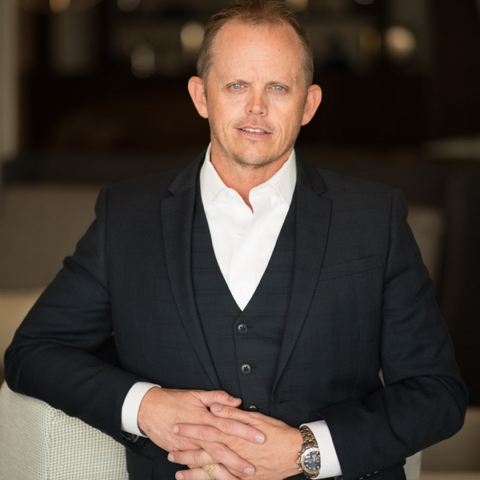
George Wright III
George Wright III is an entrepreneur, investor, and the host of The Authority Formula Podcast. Over more than two decades he has founded and scaled several multimillion-dollar companies and built a renowned seminar business that put some of the world's biggest names and brands on stage. With 25+ years across marketing, sales, and executive leadership, he has made a career of turning expertise into authority — and authority into lasting influence.
Today his mission is singular: help driven entrepreneurs and experts position themselves as the trusted authority in their field. Through The Authority Formula Podcast and Authority Media Network, George shares the strategies that turn knowledge into a platform, audience, and brand that compounds over time.
More about George →