Tom Hazzard on Building Influence Through Podcasting
George Wright III recently sat down with Tom Hazzard, co-owner of Podetize and a podcast strategist with over 30 years of experience as an inventor and entrepreneur. In a wide-ranging conversation on The Authority Formula Podcast, produced in partnership with Valiant CEO Magazine, the two unpacked how podcasters can turn a single recorded episode into a multi-channel authority-building machine.
Tom's backstory is unusual: he trained as an industrial designer at the Rhode Island School of Design and spent decades creating consumer products sold at Costco, Staples, and Target. When the product design world shifted around 2014, he and his business partner Tracy launched a podcast on 3D printing, studied what the industry was teaching (and what it was deliberately leaving out), and grew that show into one of the fastest-growing podcasts in its niche, earning coverage in Forbes and surpassing 100,000 listeners. That experiment became Podetize, now a leading podcast production and strategy company.
Why Your Blog Post Is the Most Valuable Output of Every Episode
Most podcasters treat show notes as an afterthought. Tom's team treats them as the anchor of the entire content strategy. He calls them "verbal SEO blog posts," and the concept is grounded in how Google has indexed content since 2009: text derived from human speech is ranked differently, and typically higher, than text written the traditional way.
When a podcast transcript is shaped into a well-formatted long-form blog post (sometimes 4,000 to 6,000 words), Google reads it as high-authority content and ranks it across far more keyword phrases than a short written post would generate. Tom's customers see their average blog rank on over 80 keyword phrases in Google Search. More important, those posts compound in value over years. Tom shared the example of a blog post from a 2018 episode that still ranks on the first page of Google today.
For a return on investment perspective, it's the what we call verbal SEO blog posts, which are like a magazine page on your website when we're done with it, that have the longest term value and return on investment for your time of recording that.
How Multicasting Multiplies Your Reach Without Extra Work
Tom introduced the term "multicasting" to describe the full potential of one recorded episode. A single session can produce:
- Audio distributed to two dozen or more podcast listening apps simultaneously
- Video posted to YouTube and your website
- A full long-form verbal SEO blog post
- Social media graphics and short video clips
The core insight is that you record once and let the content propagate. Syndication means your podcast registers on all listening apps a single time, and every new episode pushes to all of them automatically, including YouTube Music. This is structurally different from social media, where each platform demands its own format. One recording, dozens of destinations, hundreds of potential content pieces.
What Podcasting Does for Your Authority
Tom draws a clear comparison to books: a decade ago, writing a book was the credibility signal that got you onto stages and television programs. Today, having a podcast fills that role. Podcast hosts are now regularly featured on the same news programs and media outlets that used to book authors exclusively.
Beyond the credibility marker, the real authority comes from the relationship your voice builds with listeners. People who subscribe and return week after week already trust you. Tom noted that conversion rates from calls to action inside podcast episodes can reach up to 40% of listeners following through to a landing page, a number that is hard to match in social media or display advertising. Listeners opt in to hear you, so when you speak, they pay attention.
Is It Too Late to Start a Podcast?
One of the most common objections George hears: "There are already millions of podcasts. Have I missed the boat?" Tom's answer is direct: podcasting has not peaked.
Of the roughly 3 to 4 million podcasts in existence, fewer than 10% (approximately 350,000) actively publish new episodes on a regular basis. Within that group, far fewer are executing a complete content strategy. The market is large and the real competition is thin. Listenership continues to grow, with more than 115 million people in the United States listening to podcasts monthly.
The most common question I get asked by people who are considering launching a podcast is when should I start it? The answer to that is always last month.
The sooner you start, the sooner you build the library of blog posts, keyword rankings, and listener trust that compound over time.
The Promocast Strategy: Paid Amplification at Scale
For podcasters who want to reach audiences beyond their existing network, Tom's team at Podetize developed a system called Promocast. Short audio clips of your podcast, paired with custom graphics, are served as ads across a network of more than 1,000 mobile apps. The typical entry cost is a couple hundred dollars per month, which delivers a minimum of half a million ad impressions each month. That is a fraction of what a traditional paid media campaign in this space would cost.
The click-through numbers sound modest (15 to 20 clicks per day), but every click comes from someone who heard a portion of the show and chose to learn more. Tom's data shows measurable listenership lifts of 30% to 50% within 60 to 90 days. One case study showed a show growing from 6,000 downloads per month to more than 30,000 downloads per month within a year of starting the program.
How Guests Amplify Your Message
If you conduct interviews, your guests are a built-in distribution network. When you produce polished, ready-to-share content (clips, graphics, the formatted blog post), you make it easy for guests and their PR teams to share your episode. Tom pointed out that even guests who are not naturally inclined to self-promote will do so when the content is gift-wrapped for them. Every guest share also introduces their audience to your show, bringing in new listeners who arrive with a baseline of trust already established.
Action Steps
- Convert every episode into a long-form verbal SEO blog post formatted for Google indexing, not just a raw transcript dump.
- Register your podcast on all major listening apps through a syndication tool so every new episode distributes automatically.
- Treat the blog post as the highest-ROI output of each recording session and invest time in formatting it correctly.
- Explore Promocast or similar paid audio-clip advertising to reach potential listeners who do not yet know your show exists.
- Start now. Keyword rankings and listener trust compound over time, and there is no better moment than this one.
As George noted at the close of the conversation, it is never too late to start living the life you were meant to live, and it is never too late to launch a podcast. You just need to approach it with a real strategy behind it.
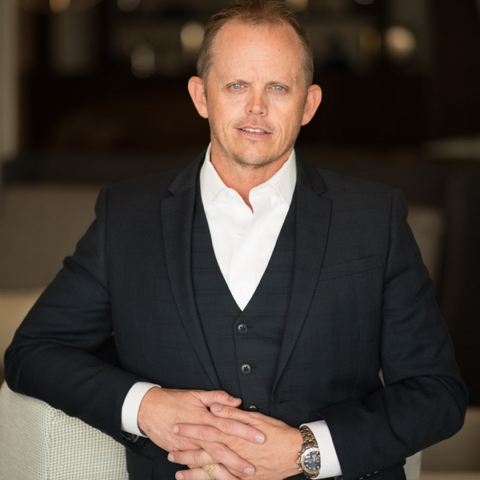
Tom Hazzard
Tom Hazzard is the co-founder of Podetize, a leading company in the podcasting industry. With over 30 years of experience as an inventor and entrepreneur, he holds approximately 40 U.S. patents. Tom has collaborated with a diverse range of clients—including sports stars, entrepreneurs, and influencers—to enhance their reach through podcasting, broadcasting, and videocasting. He also co-hosts multiple podcasts, starting a new one each year to better understand his clients' experiences. His work has been featured in publications such as the Harvard Business Review, Forbes, and Wired.
Read the full transcript
Welcome back to the Authority Is podcast, where we help you to grow your business, attract new opportunities, and outpace your competition. My name is George Wright III. I'm your host, and I've been partnering up with Valiant CEO Magazine to bring you the hottest entrepreneurs, thought leaders, and experts from around the world that are crushing it in business. Together, we're going to unpack strategies and tactics that they're using to become the authority in their field. And my goal is to help to inspire and motivate you to do the same. So let's get right into it. Welcome back, George Wright III. And I'm very excited today to introduce you to a new partner of Evolution Group and The Daily Mastermind, as well as an awesome individual we have for you. So I'm going to give him a quick intro here before we get going. His name's Tom Hazard, and he's the co-owner of Podatize. He's also an inventor, but let me give you some of his background here. He's a strategist for speakers, authors, and experts. He's really promoted all kinds of individuals through major publications, sports stars, entrepreneurs, influencers, through broadcasting, podcasting, and video casting, but he's also an inventor, and he's successfully produced, in fact, I think he's got about, I'll have to ask him here, 40 US patents, and he's been innovating for over 30 years. His latest creation is Podatize, which totally reinvented the podcast hosting, advertising, and branding space. It's one of the reasons the Daily Mastermind has now partnered up with him. And Tom's the co-host of multiple podcasts. In fact, one of the things I love about him is he starts a new podcast every year just to put himself in the shoes of his clients. But he's been featured in Harvard Business Review, Forbes, Wired, Authority Magazines, and he's guested on a ton of podcasts. He's responsible for, geez, over $2 billion worth of products and innovation throughout the world. So welcome to the podcast, Tom Hazard. How are you? I'm doing good straight. Just great, George. Thank you so much for having me today on Daily Mastermind. Yeah, man, I'm super excited because many people don't know that we have been really deep in the strategy because we've been focusing a lot on authority marketing. What I found is that podcasting is just really the very top of the list. So before we get too far into, guys, some great strategies and tactics today, Tom, give us a little bit of a background on you. Because I was, as we did some research and got to know each other, I realized you have quite an extensive background. And what has led you to podcasting? So give us the backdrop for a minute here. Wow, that's a great question. I don't, I actually don't often get asked. So my education is actually in art, believe it or not. I was an art student in college, Rhode Island School of Design. And really, I'm a designer, industrial designer, inventor, just general creative type, and worked in consumer product industries for more than 20 or 25 years in my career. And it was through that work as a design consultant, I mean, you probably bought products that I've designed myself and my business partner, Tracy, that you bought at Costco or Staples or Target, all sorts of different places. You just didn't know that we designed them because we were behind someone else's brand. The invention creativity is just an inherent part of what we did in servicing those customers. And product design and development has changed a whole lot with offshore manufacturing over my career, among other things. And there was a point around 2014 where, you know, we, things shifted a little bit and we needed more ways to try to raise awareness of what we do to market and grow our brand, our design brand. And my business partner, Tracy was an avid podcast listener and she said, we might find success launching a podcast around this topic or that topic. And we spent, gosh, together probably nine months researching everything about podcasting and how to start one. Watched probably 50 videos on it, listened to dozens of podcasts on it. And Tracy's a huge reader. She read easily 75 books about this. And she found every one of them while telling a big part of the story was holding something back. And reading between the lines, we figured out, all right, I hear what everybody says to do, but I'm also seeing they're not telling us something and we're going to do some things a little differently. So we did it the hard way. We spent way too much money buying equipment in the beginning, like everybody does who starts podcasting. And then finally did launch a podcast in 2014. It's been a decade now. And very quickly had tremendous success. We were written up in Forbes for having one of the fastest growing podcasts very quickly and we got sponsors, we monetized it and it was in a geeky topic area of 3d printing, which is related to product design and development. That's why in your unique talent, right? And we very quickly grew and had over a hundred thousand listeners. It was significant and we monetized it at third party sponsors and everything. And in doing it though, we didn't just do it the way everybody else said to do it. We learned and tested on ourselves and invented some unique deliverables created from a podcast that were where the true value of podcasting was. That's what we found. And as we did it, other people we were networked with in business were saying, wow, that's great what you guys do with your podcast. Could you do that for me? and we hadn't really thought of starting a business around podcasting at that point but enough people kept asking and i'm like all right we're entrepreneurs we're creative people i really felt like what kind of entrepreneurs are we if we don't take advantage of what i see here as a real potential business and market opportunity and it we were able to do it because we had a successful business. And now on the side of that, I could take some of that money and put it into this experiment in podcasting is what it started out as. Yeah. So going through that- Well, one of the things I wanted to point out, just stop for a second is, I think part of what made it successful is you were pursuing it in an area of interest that you had, that you were good at, and it was in that 3D printing. But I also love that your creative mind, because a lot of people just go try to copy what people are doing. Your creative mind was trying to find an innovative way. And that's one of the things about you that sets you apart. So what was it that you thought you noticed they weren't telling you or what were some of those couple of things that you felt were different that they weren't telling you that helped you right off the bat? Because I'm assuming you applied those things right off the bat, which is what helped you be successful. Sure. I'll tell you, there are two key things. One, in terms of the content that we were recording and creating and what we did with it and the other is more of a tech thing regarding podcast distribution and advertising that came out of this so the first one every podcaster was putting out their audio show back when we started very few were doing video we we now every episode that we record is put out as video and audio but it wasn't back then it was not as common it was a lot more work but putting out the audio show everybody in podcasting who was serious had their own website and would have info about their podcast on their website even a decade ago and they would usually have a small little what i would call show notes post on their website which really was not much more than what was published in the podcast listening app yeah but tracy my business partner was a blogger and is a real writer and she was an ink columnist for four years and had a great experience doing that knew the power of blog posts and then we also did some more research and found that in starting in 2009 google when they scan an index a blog page on a website is able to tell just from the word order and the imperfect grammar maybe if a post came from somebody thinking and typing, writing the traditional way, or if it came from human speech. Like just a transcript or something. Got it. Or yeah, any parts of the writing or the whole blog. Yes. And it has to be in the right format. There's a lot to it. You don't just want to throw a transcript up on a blog and then that's it. Got it. There's an awful lot more to it. But the core content was Google sees as very valuable when it comes from human speech and they rank it for keyword phrases at a much higher level than they do the similar phrases contained in a traditionally written blog. So we said, this is great. We can speak our way to blogs and produce all this written content for our website gets indexed by Google. Well, what we found with the 3D printing podcast, we built an authoritative website that came out of Google penalty box When you have a new brand new URL Google doesn trust it at first It doesn know what your website is going to provide in terms of content Usually it takes a site about four months to come out of that penalty box We came out of it in just over two months because of these blog posts we were creating for every podcast episode, which is very powerful content. Love it. Sometimes four or five, 6,000 words. And it's not that we expect anybody to read the entire blog, but all that text got them there from a Google search. Yeah. So it got, you got them seen, got you seen and got you visible. Got it. That's huge. Yeah. So not just the audio, but you did the, the blog and the video, but it wasn't a ton of other stuff. It's the same podcast that you did. You just multifaceted it, right? Yeah. We say we multicast it every which way you do one recording, you get the video on YouTube and on your website. You get the, obviously the audio going through all the podcast apps. You get a whole ton of social media materials, graphics, video clips. for a while there were audiograms although I don't think they're setting the world on fire very much today anymore and then the blog itself out of all that is really for anybody podcasting related to their business is the most valuable part of the entire equation don't get me wrong I love podcasting I'm putting it out there and reaching people your voice is powerful through podcasting video is also very powerful, but for a return on investment perspective, it's the, what we call verbal SEO blog posts, which are like a magazine page on your website when we're done with it, that have the longer, longest term value and return on investment for your time of recording that. So do you want to put it everywhere? I want to really put an emphasis on that though, Tom, because we talked about that before, and maybe you could just double down on that for a second, because people don't think of it as strategically. And this is the reason you're so successful and certain people's success leaves clues. They're so successful is they're strategic about what they do. We're not just talking about, hey, if you're doing a podcast, you could also have a blog. You could also have a video. It's very specific things that you're doing. And what you found is that one of those pieces that you might think is an afterthought, a blog or a transcript, a thing you might be doing, that piece of content is actually the most valuable. And why is that? Why is it the most valuable? For a couple of reasons. And again, I'm going to preface this by saying I'm a podcast listener. I'm a video viewer. I love all those mediums and they're very powerful. However, the greatest value really does come from the blog post. Why? Because as much as there are now more than 115 million people monthly in the United States listening to, I believe it's an average of eight and a half different podcasts every week. And that's a large group of people. And they are always looking for new podcasts to listen to. The search engines for finding a podcast are really pretty lousy in our modern world of search. The Apple Podcasts, Spotify, iHeart, whatever preferred listening app you have, their search function is not very sophisticated and it only searches through the titles and descriptions of your episodes. It doesn't search through everything that was said within the episode. When you create this blog post, it makes the majority of everything that was said in the episode gets indexed by Google and is searchable in Google. Yes, people are searching in podcast apps for content to listen to every day and there are ways to optimize that search so you're found by as many of those people as possible, but they're not searching through all your stuff and all your content. YouTube, yeah, it's the number two search engine, but it's a very distant number two. Still a single- Well, but you're hitting a point that I talk a lot of times to our listeners about, and that is it's searchable, but it also speaks to the intent of your target audience. In other words, when people are binging audio, video, real, social, whatever, they're just blowing through things. But if you have ever thought about going to the internet and saying, I want to go find some information about this topic or this topic, and you search, most of that you're saying is also based on blog topics because that's what's optimized in the search engine. So not only is there intent of the right people looking for you, just like with marketing, you can interrupt market or you can have the people searching. But then you also mentioned to me that it's the longevity of the content too, right? Absolutely. And it's because so many more people every day are searching to meet their needs in Google, then are searching in YouTube, then are searching in a podcast app. We want to be where people are searching. We want to be found where people are searching. And it is the blogs that do that. Google wants to serve people the highest quality, relevant content that it can find related to whatever somebody is searching on. And the blogs do this. Our typical customer, their blogs, average blog, it ranks on over 80 keyword phrases in Google search. and the reality of the longevity of these blogs i have even from my own podcast and our customers who've been working with us for seven eight years blog posts from episodes that long ago six seven eight years ago are still ranking on the first page of google search for a lot of keyword phrases i still get traffic to the podatize.com website every day for people searching on certain topics So that's the longevity. First of all, the blogs, the day that they're posted on a website that already has built trust with Google, so it's not a brand new website. They know about the website can actually be ranked. So I got in May of 2018, I got a very angry phone call from the CEO of a company I mentioned in one of my podcast episodes. Now he misunderstood what I was saying about him. So we had an interesting conversation, but he got a Google alert. when our blog post that was published 11 hours earlier. Oh, wow. That came up in a Google alert. And I found that post that day ranked on three high value phrases on the very first page of Google search. That podcast episode, that blog post still ranked on the first page of Google search today, six and a half years later. So that's the longevity value of this. You actually build equity in your website in keyword rankings and free. keep in mind you can do pay-per-click all day long and spend a lot of money to get traffic to your website i'm talking about free traffic google is just managing people up with what they're searching on with your valuable content yeah for not much more and i think this speaks to the fact that listen guys if you're going to do anything you want to do it right you want to do it strategically and it it's pretty clear to me right now that podcasting has become a massive trend it's definitely taking on more. It's something where it's a core piece of content that could generate you multiple avenues like blog, website traffic, audio, video, social media, like you said. But I guess sometimes I get people that ask, and I'm going to ask you this question. They say, okay, I love that. Was it too late for me to get into podcasting? You know, so many, like you said, so many podcasts out there. What would you say to somebody that says, oh, I love that strategy. I see what you're saying. It could do a lot of things for me. And by the way, as much as paid could do for me, but in a bigger way, but am I late to the game? What are your thoughts on where podcasting is at right now as an opportunity? It has not peaked yet in terms of listenership or the opportunity for podcasters. And I've often wondered the same thing. Is it going to peak? What's going to take it over? Nothing has achieved that yet. There is still a huge opportunity. So here's the thing. You hear all these numbers that, oh, there's over 4 million podcasts in existence today. That is fairly true. It's somewhere in the upper 3 million to 4 million total podcasts. However, do you know how many of them are actively publishing new episodes on a regular basis? How many? Less than 10%. It's about 350,000. It depends how you measure. Like anything else in life, right? Very few people do. And even then I think of the 10%, how many are doing it right and getting anything out of it? You know what I mean? So strategically. There's an awful lot of people just recording their audio message and putting it out there in the listening apps. And it's wonderful. They're bringing their message to the world, but that's only going to do so much for you. And it either takes a lot of work for you to do it yourself or you pay somebody a little money to assist you to do the rest of it and do what we call multicasting it everywhere, every which way. But if you're willing to record yourself and then have that content put out there in all those ways, it can actually be the most effective way to establish your authority as a center of influence in your niche and to market and grow either your personal or business brand in ways that are so much more valuable and produce a better return for the money spent than just dumping huge marketing dollars at, say, social media advertising or something If there a very measurable return I all about measurable results and everything that we do there are very good analytics to report and check up whether it working or not and so let's talk about authority for a second actually what i want to do in the limited time we have is i want to talk a little bit about authority and then i want to talk a little bit about promotion because i think they're the thing about podcasting that i really one of One of the reasons I recommend it to so many people is that besides getting your message to the world, besides using it as opportunities for lead creation and growing sales in your business, there's this authority piece that comes in involved with it. In other words, authority is really just creating that credibility in your space for your customers and your market that you wouldn't otherwise have. And that sort of shortens the timeframe to trust with clients. And I can speak to this many times. I've had people just call me out of the blue and say, hey, I love your podcast. Can we do business? And unlike going out and trying to market your products in the marketplace, when you have built authority, then you just have something that a lot of other businesses, a lot of other competitors of yours don't have. So how does a podcast help you create authority? And I think that with all the multicasting you talk about, that's a perfect strategy to create authority. But how have you seen it create authority? And what would you speak to when it comes to authority with podcasting? there are so many ways it builds authority and certainly name recognition or prior to the pandemic when we're all going to tons of events and i do see that starting to happen again now in-person events taking place but whether it's in-person events or virtual events it be it has become the modern everybody had a book 10 years ago exactly it was trying to be relevant. You had to have a book. It was like the big thing. You're an author. You get to be a guest on television shows, look at late night TV or news programs, 24 hour news programs. And I don't care which news programs or channels you listen to. They're all the same. Okay. It used to be authors got on there first. And in order to get on a show, you had to be an author. You had to have a new book now every week and sometimes multiple times a week for the shows that have like daily shows. you will see podcast guests featured, podcast hosts, rather, podcast hosts featured. If you have a podcast, it puts you on the map in a different way. So that's part of why it's an authority building because it has become a new sort of credibility factor for people in business. But the other thing about podcasting, it is true, the power of your voice. And here's where actually publishing the podcast and listening is very powerful you're speaking to people who've subscribed to you let's say you have a weekly show or in your case you have a daily show you're in their ears every day or a couple times a week or every week at minimum they wouldn't be coming back and listening to you if they didn't like you and they you hadn't built trust with them yeah so your voice has a tremendous amount of power and it's very meaningful and when you share some an opinion with that audience or you offer them something maybe of value either to opt into whether they're buying something or they're just opting in to be notified of something and there are many ways to convert listeners to take action of some kind your voice is so powerful because they trust you whatever you offer them they're going to listen to and consider very carefully. And we see conversion rates from offers and calls to action in podcasts convert at up to 40% of the listeners going to a landing page to take action. And when you offer them something or you even have an ad within your podcast, listeners don't mind listening to them because they have opted in to listen to you. so yeah I've gotten that same exact I've seen that I've seen it happen and and I think you're right the power of the voice I hadn't actually thought of it from that standpoint because the power of voice I've run into people that have listened to my podcast and it's almost like they feel like they know you and when someone knows you it's one thing to say they're aware of you but I'm saying they feel like they know you they trust you more and podcasting is actually simpler than video right so people could be just their voice and not feel like they have to be on camera. And so I think it also makes it simpler to come in, but I think it allows you to really just have people know you and control your narrative. If you wrote a book, like you said, your stuff's there, your message is there, you're not changing it any later. But with podcasting, you can control the narrative and you can really syndicate that. That's the other thing that I really thought was interesting is unlike social media, where you got to change the format of the content for every channel, you could syndicate a podcast in, and maybe you could speak to what syndication is or what it is. But look, once you produce an episode, it can go on to many platforms and expand your reach without you doing anything. It just goes out. It's definitely a one to many distribution platform. Yeah. So you publish one podcast episode and it goes out in our world on Podtize to a minimum of two dozen different listening apps And it can go out to more. We have the standard ones that we believe are the most relevant. And every six months, another one becomes more relevant. We add that to the list, right? So it's a one-time thing to syndicate, meaning register your podcast on all those listening apps. And then every time you publish one, it pushes to all of them at the same time, including now YouTube Music, which has replaced Google Podcasts, which went away. and of course YouTube is owned by Google so it's all part of the Google family and so you even if you don't have a video show you have just an audio podcast it can be on YouTube and YouTube music listening app and as a podcast so many different ways. And so I want to make sure people get this let's think about this again for a second so you're saying one episode I just want to clearly put this out for people one episode not only can get distributed to several dozen destinations but can also be converted into a blog, put into video, put on your website, added to social media clips, added to, literally we're talking about, you can be talking hundreds of pieces of content in dozens and dozens of different formats from one method that actually you can control the narrative on. And if you're smart, you'll do interviews. And so you actually can piggyback and bridge the credibility of other people. Maybe you don't know everything. I certainly don't know anything about podcasting. I've done a few episodes, but we can bring guys on like Tom. So I hope you get that if you're listening to this episode, because nowadays it blows my mind, Tom. People talk about whether the economy, whether the marketplace is crowded or whatever. We have so many tools at our disposal that literally can change your life overnight. Blogs that could immediately be ranked and things like this, that I think there's just no excuse, matter what kind of business you're doing i can see that podcasting is a great outlet for anyone couldn't agree more not only is there still tremendous opportunity in the podcasting ecosystem itself there's always room for your voice your unique perspective even if you're in a crowded field you got to understand people are are hungry to listen to new content there is always something new that you can put your unique perspective on something and also bring out something unique from guests and of course the big opportunity if you're going to have guests on your show is incentivizing them to share your show with other people and so there's a very powerful amplification of your message that can take place that way especially when you're creating all those different things you mentioned all those different ways you're multicasting your content And when the guest, even if they are not someone who would share it themselves, if they have a social media manager or a PR team or anybody else helping them amplify their message, they love what you do as a podcaster when you gift wrap for them all this content and make it easy for them to do their job. So there's a whole lot of advantages. I like those strategies. You've gotten to advertising your own stuff. Yeah. Now that I think about, um, we're going to have to do another episode because I try to always keep the time to that 30 minute slot. However, I want to cover one more thing, because I think if you're listening to this episode, what you're realizing is that how you do anything is how you do everything. So if you're strategic about your podcast, you're going to get more success. If you're doing it the right way, you can amplify your message, build authority. And then what you're going to find is that there, and this will probably be our next episode, a ton of strategies outside of that, like how do you promote to your guest? How do you get your guests to promote? How do you create lots of content How do you repurpose it How do you do those We talk about all that but I do want to touch on one thing because I think you do a phenomenal job of promotion and you got and this is not by the way, guys, this is not a advertisement for it or anything, but I was blown away by this topic that Tom created around promo cast, meaning I've always been told and I've told people that I know, promote your podcast because the best way to get your message out there is to promote it. in addition to all the syndication we talked about, but you have something you call Promocast and it's a unique way of getting the message out there. Could you speak to that for a minute? Because it's not just about the product. It's more about like the innovation that you created with getting the message out there. Tell me what Promocast is. Okay. So we've been podcasting for a decade. We've been in business for almost eight years doing this and every podcaster that we support and everything we do is really about how to take your unique message and get the most out of it i would say organically first right or meaning get the most out of it without dumping huge amount of money into social media marketing or other things that may have right paid ads of some kind But so many podcasters were needing ways to reach more people they weren't already connected with, right? You probably didn't get into podcasting just to speak to the people who already knew you, right? You want to have new people who don't know you find you. So is there a way, maybe in a very small incremental paid way, that we can raise awareness of your show? And so we worked on this for a couple of years and actually invented a process that we do now advertise. And I know this is not truly not meant to be an advertisement for this, but just to explain what it really is. It is paid advertising, but what we've done is made it so that the average podcaster can participate in an ecosystem they otherwise couldn't afford to. That might cost them $4,000 or $5,000 a month to do traditionally, but can be just a couple hundred dollars a month and in a fractional way. And so their podcast can be advertised minimum of half a million times every month in an ecosystem of more than 1,000 mobile phone apps, not podcast apps, all kinds of different subject matter and utility apps. as long as your ideal podcast listener is a mobile phone user, I guarantee you they're using some of these ads. Which is everybody. It really is everybody. And most people are listening to the podcast either on their phone or on a mobile watch through their phone. So they're going to see using these apps and see some of these ads. But we take, usually start with 25 ads, good soundbites, clips of your podcast audio and advertise them with a unique graphic that lets people know not only the name of your show, but they can click to hear more. And then when they click, they go to wherever the podcaster wants them to go. We usually recommend a page on their website about their podcast. And so this is in a push proactive way. We have all the analytics for the number of ad impressions every month and the click through and typical show ends up getting 15 to 20 clicks a day. And I know from a half a million ads, that sounds like it's not a lot of clicks. You know what? 15 to 20 people a day who didn't know your show, like what they heard, maybe after seeing an ad 60 or 10 times, it takes a lot, right? But then they go to immediately where they can listen to a whole episode. And then a lot of them are going to subscribe. And we do see a measurable lift in listenership, usually in the 60 to 90 day timeframe in the program of at least 30% up to 50%. And then we now have case studies of shows that have been in this program more than a year now. Growth, one case study is 6,000 downloads a month before being in the program. Three months into the program, they're getting 10,000 downloads a month. And a year later, more than 30,000 downloads a month. Now, there are a lot of variables, a lot of things that can impact it. But again, measurable growth. All we want to see is growth and listenership. Yeah. What I love about that is I love how you really are on behalf of the podcast or trying to figure out innovative ways. Because obviously as a marketer, I can get ads, pay-per-click, Facebook ads, Google search and things like this for people. And they spend tens of thousands of dollars on that. But if you think about it, folks, if you're listening to this and you can do a podcast for free and you basically for less than a hundred bucks, you're hosting the thing. You're syndicating to dozens and dozens of platforms. You're using it for a blog. And by the way, guys, with the power of VAs and services offered by Podatize and everybody else for less than a couple hundred bucks, you can have everything done for you. You could actually literally have blogs made and website done and videos and posting and now get little clips of your audios put in front of half a million to a million people. This is all stuff that not only drives organic, but trackable lead volume. this is the power that podcasting is and it's a message you can craft. I really am a huge fan as everybody knows from podcasting with over a thousand episodes but I did it as a passion project but what I'm starting to learn associating with guys that's why you're listening to the mastermind individuals like Tom and his company and others that there's a lot of advantages you can have in the world of marketing and building and putting your message out to the world but you have to get seen. You have to get heard. You've got to get the people to pay attention. And if you do it in a strategic way, it's huge. Tom, I really love our conversation and I know we're going to have to do a follow-up with some actual strategies, tactics, but because we don't have time, if someone's saying I either have a podcast and I need help or I want to start one, because I know you have lots of free resources and things. How can people learn more about what the best way is to start a podcast, how to do it, where to go, stuff about Podetize, where's the best place for them to connect with you. So pilot test.com is our website. And if you already know, you already have a podcast, you're looking for more support, or you for sure want to launch one, then right on the homepage of pilot test.com, scroll down about three quarters of the way down. There's a booking calendar. You can book an inquiry call just to talk about your show or your goals. That's one easy way. I also have a podcast called feed your brand, where we talk about all these things every single day and you can go through a whole history of episodes there and then we record ours live every week so if you want to get it first then you actually can go to podcastersunited.org which is a non-profit in podcasting that we support but our show is live streamed on podcastersunited.org and you can find it through any social platform if you watch on linkedin or facebook or youtube it's multicast streamed live to all those. Now, not every podcaster does that. We do that now with this one show and it's a great way to reach people. Feel free to come tune into that. And I can put all those shown, I'll put all those links in the show notes so that everybody has access to them. And I think what's going to happen is I know we're going to have you back as one of our mentors inside our mastermind group. We're going to do a full masterclass in there, but I know just because I experienced it guys listen I went to the website that's how I learned and got a bunch of information from Tom and Tracy and I'm really excited for people to delve into this world so I appreciate you being here and I think it's been a big privilege of mine to get to know you we got a lot of things going so folks I know we're short on time so I want to be able to just recommend that you spend a little bit of time if you have a business at all which you are if you're listening to this you're a CEO business owner high achiever there's no better way for you to really craft your message, your narrative than podcasting. So I encourage you to check it out. And I'll put inside the show notes, a bunch of links for Tom. And like I said, it was one of the things I say all the time. It's never too late to start living the life you're meant to live. It's never too late to start a podcast. It's never too late to just get out there and make things happen. So anything else that you would add, Tom, before we take off? I just want to echo one thing you said, which is the most common question I get asked by people who are considering launching a podcast is when should I start it? The answer to that is always last month. You already should have started it because it always takes time to build and grow that audience and to realize the return on investment. So the sooner you start, the sooner you realize those results. Yeah. The best time is last month. The second best time right now, And actually legitimately right now towards the end of the year, guys, I'm telling you, this is a great time. So if you need anything, obviously do me a favor, share the show. We definitely love to hear from you as well. Also, you can hit me up on The Daily Mastermind on Instagram, Facebook. Let us know what you're working on. How can we help you? And have an amazing day. That's our message for today. I'm glad you could spend time with Tom and I, and we'll look forward to talking with you more. .
George Wright III
George Wright III is an entrepreneur, investor, and the host of The Authority Formula Podcast. Over more than two decades he has founded and scaled several multimillion-dollar companies and built a renowned seminar business that put some of the world's biggest names and brands on stage. With 25+ years across marketing, sales, and executive leadership, he has made a career of turning expertise into authority — and authority into lasting influence.
Today his mission is singular: help driven entrepreneurs and experts position themselves as the trusted authority in their field. Through The Authority Formula Podcast and Authority Media Network, George shares the strategies that turn knowledge into a platform, audience, and brand that compounds over time.
More about George →