Owned Media vs. Earned Media: What Should Your Business Build First?
Owned media is content and channels your business controls, such as your website and newsletter. Earned media is unpaid coverage or recognition from others. Our recommendation: build a clear home for your expertise first, then pursue relevant coverage. If a timely opportunity arrives, prepare a focused destination and do both.
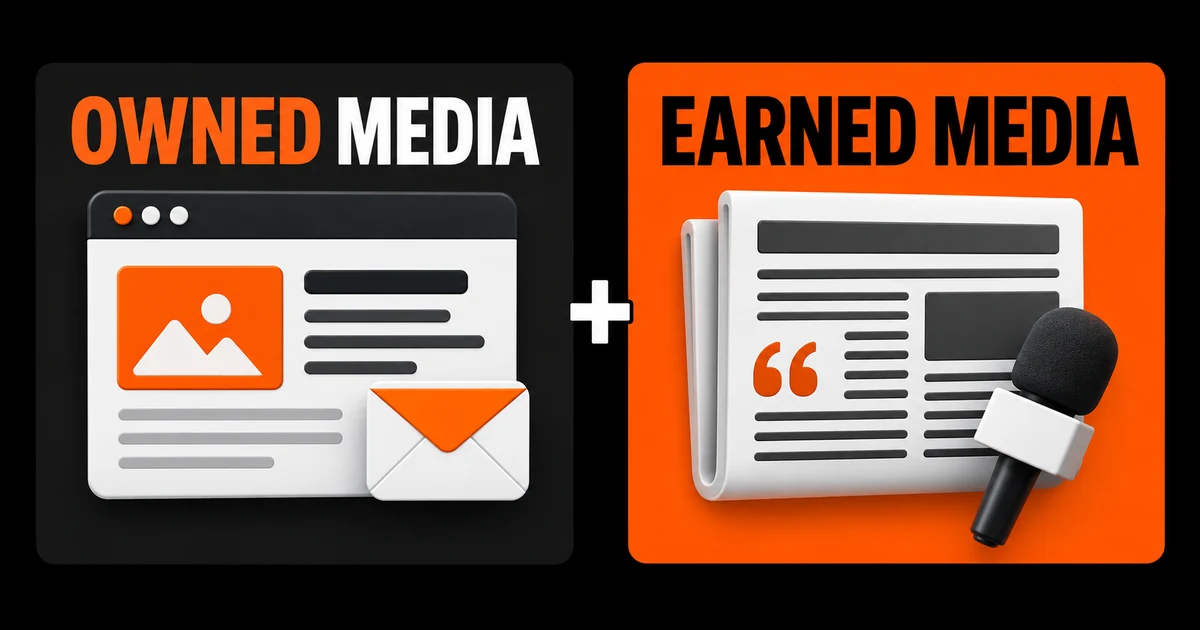
The difference is control and who is speaking
Your website explains your expertise in your own words. An independent publication quoting you introduces that expertise through someone else's editorial judgment. Both can be useful; they answer different questions for a prospective client.
An owned article lets a reader investigate your approach. An earned mention can give that reader a reason to investigate you in the first place. Neither substitutes for the work, evidence, and experience behind your advice.
The comparison below is a practical way to plan those roles. Definitions follow the distinction between brand-controlled channels and independent, unpaid recognition; the sequencing advice is our recommendation for established experts building their authority.
Owned and earned media: the differences that affect your next decision
Swipe the table to compare owned and earned media.
| Decision | Owned media | Earned media |
|---|---|---|
| Who publishes? | Your business, on channels it operates. | An outside publisher, host, or other independent source. |
| Typical examples | Website guides, newsletters, and your own show. | Independent articles, expert quotes, and unpaid guest invitations. |
| What can you control? | Your message, format, updates, and next step. | Your contribution; the publisher decides what appears. |
| What must you invest? | Content, production, distribution, and maintenance. | Research, relationships, preparation, and outreach; coverage is not purchased. |
| Useful evidence | Readers engaging, subscribing, and making relevant inquiries. | Relevant sources covering your expertise and audiences responding. |
| Main limitation | Publishing does not create an audience by itself. | You cannot guarantee selection, timing, framing, or referrals. |
What counts as owned media?
A business website, an original resource library, and a permission-based newsletter are examples of owned media. You decide what to publish, how to explain your work, and what readers can do next. You still depend on hosting, delivery providers, and the quality of the experience.
Treat ownership as an operational question, too. Who controls the domain, source files, publishing account, and subscriber export? Can you move the assets if a supplier changes? A branded page is less useful as a lasting asset if nobody on your team can access or maintain it.
Social accounts are useful distribution channels, but you do not control the platform or its rules. Keep an accessible home for your most useful material and a way for people to hear from you directly, with their permission. A follower count and a contactable subscriber list are different assets.
What counts as earned media—and what does not?
Earned media includes independent news coverage, an expert quotation selected by an editor, or an unpaid invitation to contribute to someone else's show. The defining feature is an outside party choosing to feature you rather than your business buying the placement.
Paid advertorials, sponsored interviews, and purchased placements belong in a different category. They can have a role, but do not describe them as independent editorial endorsement. Likewise, an article on your own publication remains owned content even when it looks like a magazine feature.
Unpaid placement also does not mean cost-free work. Preparing evidence, identifying suitable outlets, responding to requests, and working with a communications team take resources. Keep those costs in your plan without confusing them with paying a publisher for coverage.
Which should your business build first?
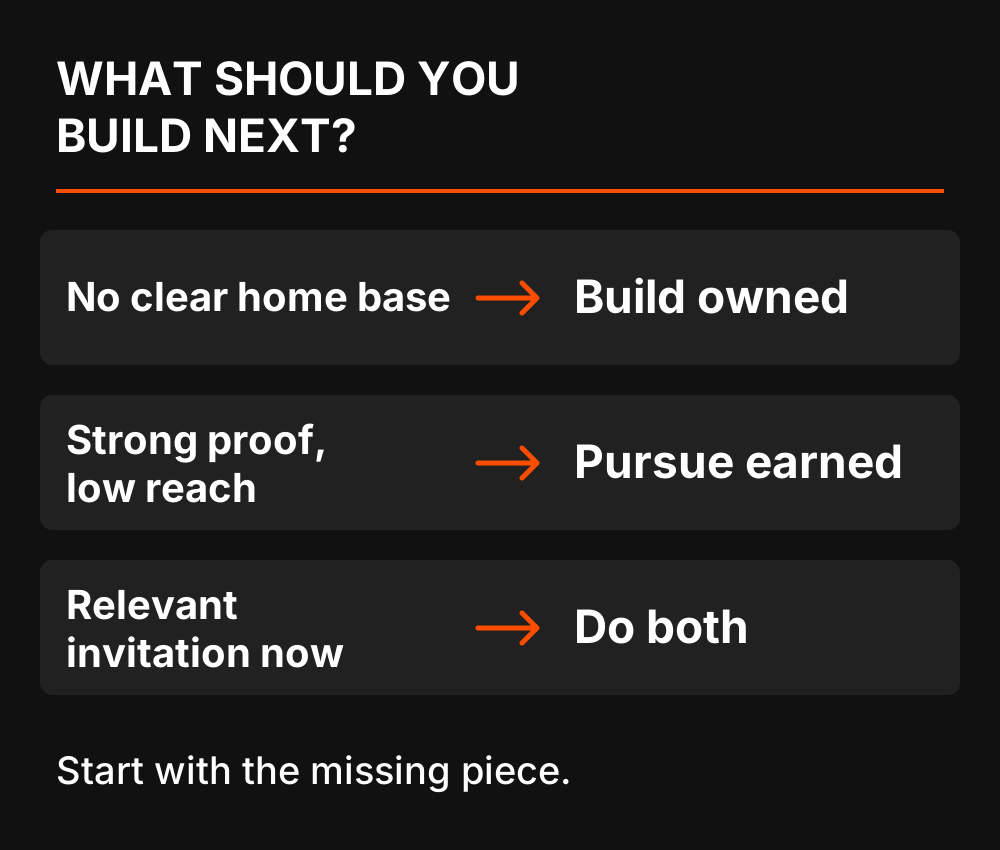
Start with the missing piece. If someone hears your name today, can they find a clear explanation of what you do, credible proof, and a relevant next step? If not, build that owned foundation before making a large commitment to outreach.
That foundation does not require a studio, a new podcast, or a weekly magazine. A focused service page, one useful guide, an accurate expert profile, and a working inquiry path can be a sensible starting point. Improve assets you already have before adding channels to maintain.
If that foundation exists but the right people rarely encounter it, relevant earned opportunities become a stronger next move. Choose publications and hosts whose audiences have a real reason to care about your expertise. A recognizable logo is not enough to establish audience fit.
A time-sensitive invitation is the exception to a rigid sequence. Do not turn down a good interview simply because your website is unfinished. Prepare the relevant page, check the next step, and use the opportunity while completing the foundation.
Explore AMN's approach to building an owned authority platform
Give each appearance a useful destination
Before an appearance, decide what an interested listener or reader would reasonably want next. If the discussion is about choosing a specialist, send them to a guide that helps them make that decision—not a generic page that forces them to start over.
For example, imagine a consultant invited to discuss a common hiring mistake on an industry podcast. They prepare an original checklist on their website, explain the idea in the interview, and give the host a relevant link. A reader can use the checklist immediately and contact the consultant if the problem fits. This is an illustrative workflow, not a client result.
Afterward, link to the original coverage where it helps readers assess your expertise. Publish your own follow-up analysis rather than copying the publisher's article or assuming you can reuse its artwork. Ask about reuse terms when needed. Keep attribution clear.
If the publisher accepts a campaign-tagged link, consistent UTM parameters can help identify referring traffic in GA4. Many publishers choose their own links or do not link at all, so also ask inquiries what brought them to you. Use both forms of evidence without pretending either captures the entire journey.
A focused first-month plan
Choose one audience and one problem for the first month. The aim is a complete, useful path from discovery to understanding—not a large output quota. Adapt the pace to the source material and production capacity you actually have.
- Week 1: audit the destination. Update the relevant service page and expert profile, verify your proof, and test the inquiry path on mobile.
- Week 2: publish one useful resource. Answer a buying question with your own explanation, examples, and appropriate sources. Existing interviews and FAQs can supply material; a new recording is optional.
- Week 3: identify a short list of relevant outlets or hosts. Read or listen first. Prepare a specific contribution that serves their audience rather than a generic request for exposure.
- Week 4: review what happened. Check engagement and inquiries, record outreach responses, and improve the weakest part. An outreach response is progress, not a promise that coverage will appear this month.
Measure the connection, not just the coverage
Review owned and earned media together, while keeping their jobs distinct. For owned content, look at relevant readership, meaningful replies, subscriptions, and suitable inquiries. For earned activity, record which sources featured you, why their audience fits, and any response you can trace to the appearance.
Keep paid, partner, and independent mentions separate. Avoid treating estimated publication reach as the number of people who saw your feature. A spike in website traffic is worth investigating, but it does not by itself demonstrate trust, qualified demand, or revenue.
Our brand-authority measurement guide gives you seven signals and a monthly worksheet for that review. Use it to decide what deserves another investment: a stronger explanation, better proof, more relevant distribution, or a clearer next step.
Build a path your audience can follow
Owned media gives your expertise a place to be examined. Earned media can introduce it through another person's platform. The stronger plan connects the two around a real audience, a useful contribution, and a credible next step.
Before commissioning another asset or pitching another appearance, finish this sentence: ‘When the right person discovers us, the next useful thing they can do is…’ If the answer is unclear, that is where to work next.
What is missing from your authority platform?
See how AMN brings positioning, owned media, and distribution together around the expertise you already have.