Thought Leadership Strategy: Turn Your Expertise Into an Editorial Plan
A thought leadership strategy connects what you know to decisions your audience needs to make. Choose a specific audience and buyer decision, define a useful point of view, gather evidence, then turn those inputs into an editorial plan with clear responsibilities, distribution, and review. Start with one decision you can help someone make better.
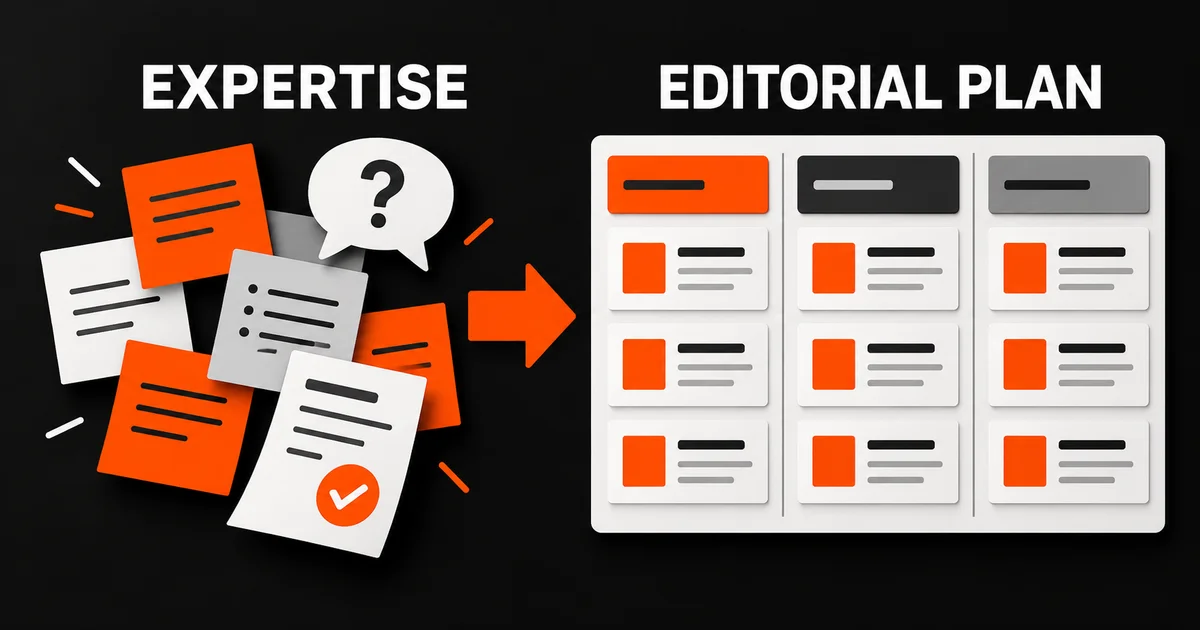
Give your expertise an editorial purpose
You may have years of experience and still struggle to decide what to publish. The knowledge is there. What is missing is a connection between that knowledge and the questions a prospective client is trying to resolve.
LinkedIn describes thought leadership through a trusted voice, a clear point of view, and original insight. That gives you a useful editorial standard: help the reader understand something differently, then show why your perspective deserves consideration.
At Authority Media Network, we call the distance between earned expertise and market recognition the Authority Gap. An editorial plan gives you a practical way to address part of that gap: make your judgment visible through useful, supported explanations that the right people can find.
Your strategy
Who are you helping? What decision do they face? What useful perspective can you contribute?
Your content calendar
What will you publish, where will it appear, and who will make it happen? Set the direction before filling the dates.
1. Choose one audience and one buyer decision
Start with a situation you know well. Who is the reader, what has changed in their business, and what choice do they face? ‘Business owners’ is too broad to guide an interview or commission a useful article. ‘Owners deciding whether their growing company needs a specialist’ gives you something to work with.
Use questions from actual inquiries, discovery conversations, service delivery, and existing FAQs. Look for uncertainty that repeatedly slows a decision: recognizing a problem, comparing approaches, evaluating a provider, or preparing to act. Search data can help you understand the language people use; a keyword alone does not explain their full situation.
2. Make a point the reader can use
Your point of view should change how the reader evaluates the decision. It might expose a trade-off people overlook, explain when a popular approach fails, or offer a better sequence for solving the problem. It does not need to be provocative to be useful.
For example, ‘Choosing a consultant is important’ leaves the reader where they started. A more useful position is: ‘Define the decision you need help making before comparing consultants, so you can evaluate relevant judgment rather than a list of deliverables.’ That position creates questions you can answer and evidence you can show.
Test the idea with three questions: What would the reader do differently? Why do we believe this? When would the advice not apply? A clear limitation often makes an explanation more helpful. It shows where your judgment begins and ends.
3. Gather evidence before choosing a headline
Collect the source material that can support the idea: approved examples, documented processes, relevant research, existing interviews, or an expert explaining how they made a decision. Separate what happened from your interpretation of it. A completed project can demonstrate a method without demonstrating a revenue increase.
Keep a simple claim record alongside the brief. For each consequential statement, record its source, the context, who can verify it, and whether it is ready to use. Hold an uncertain client result until it is confirmed. If you lack permission or useful proof, choose another example or label a hypothetical clearly.
Google's people-first content guidance asks creators to assess originality, useful analysis, sourcing, and demonstrated expertise. Use those questions during editorial review. They are quality checks, not a guarantee that an article will rank or attract business.
A new recording is optional. Review the material you already have, identify what it proves, and ask the expert only for the missing explanation. AI can help organize notes and surface gaps; the expert still needs to verify the meaning, facts, and judgment attributed to them.
4. Turn one decision into complementary resources
Choose a substantial home for the explanation: an original website guide, a detailed video, or another resource suited to the question. Then decide which smaller pieces help people discover, understand, or use it. Each piece needs a job beyond repeating the same headline.
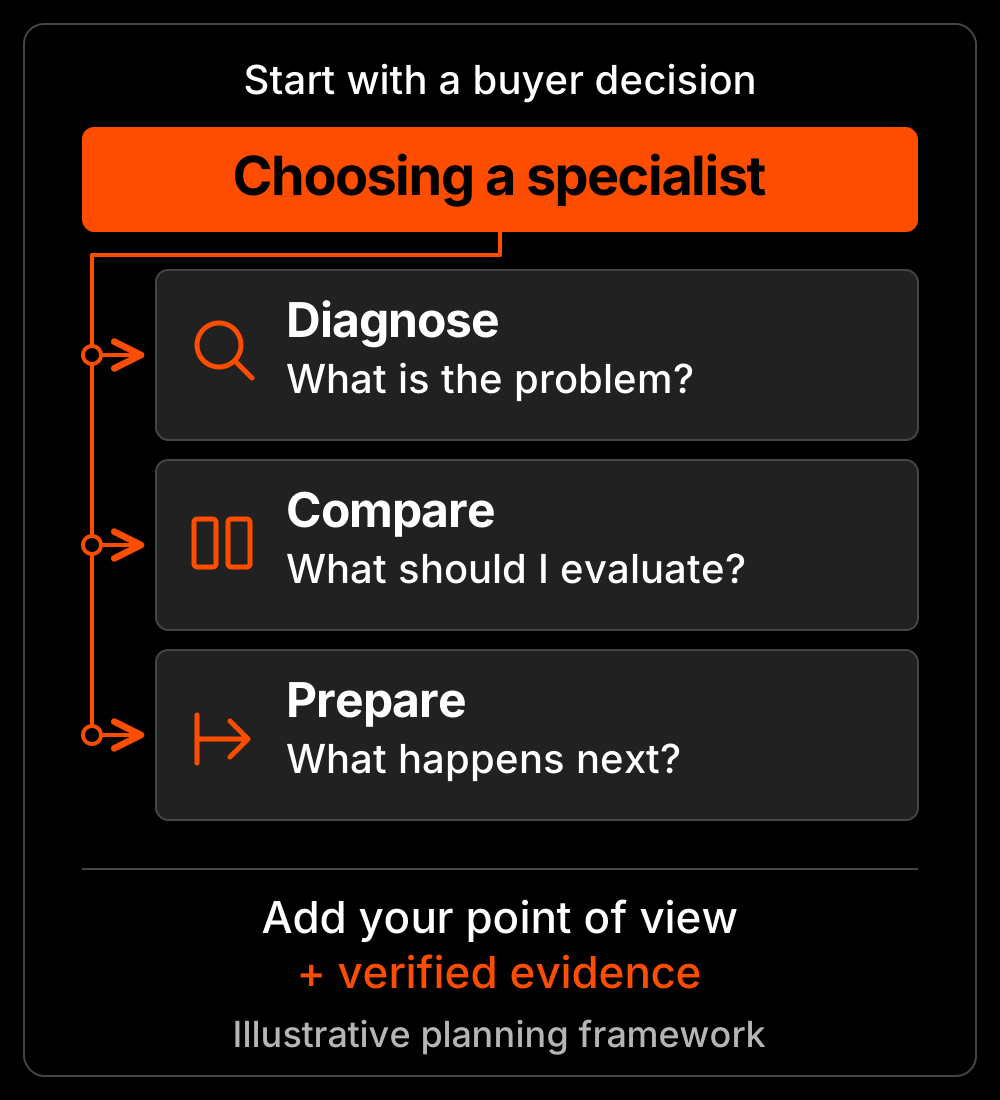
Consider an operations consultant helping owners choose outside support. The following is an illustrative editorial plan, not an AMN client case study or a report of results. Its central point of view is that owners should identify the decision and capability gap before comparing providers.
Diagnose
Help an owner distinguish a capacity problem from a missing specialist skill. Use a labeled hypothetical situation and explain the assessment questions.
Compare
Explain which evaluation criteria matter once the gap is understood. Show a sample selection checklist, its reasoning, and its limitations.
Prepare
Explain what to gather before an initial conversation. Link to the relevant guide so the reader can use the advice immediately.
Apply
Work through one common objection and point to the section that answers it. Adapt the explanation to a channel the intended audience uses.
5. Put responsibilities and review into the calendar
For every resource, record the buyer question, point of view, evidence, format, destination, owner, reviewer, and next action. Add a realistic publication date after you know what source material and approvals are required. A calendar is useful when someone can carry out the work from the brief.
The expert contributes judgment, examples, and factual approval. An editor shapes the explanation and checks whether it answers the question. Production adapts it to the format; a publishing owner checks the finished page, links, and distribution. One person may cover several roles, but each responsibility still needs a name.
Pick a cadence the team can sustain. One completed resource with a clear purpose is a better starting commitment than a calendar full of topics without evidence, owners, or review time.
Before you publish
- Answer the buyer question and support the main claims.
- Preserve the expert’s meaning through the headline, excerpts, and final layout.
- Give the reader a sensible next step and confirm who owns distribution.
6. Decide how the right people will encounter it
Distribution belongs in the brief. Where does this audience already seek advice? Which existing subscribers, relevant professional conversations, or sales discussions could benefit from the resource? Specify the initial distribution and who will handle it before publication.
Keep a useful home for the full explanation on a channel you can maintain. Use social posts, guest appearances, and other relevant opportunities to introduce a specific idea and guide interested people to the right resource. Our owned-versus-earned-media guide explains how to plan those roles together.
Match the next step to the reader's situation. Someone diagnosing a problem may need a worksheet. Someone evaluating a provider may want to understand your process or request an assessment. A useful article does not need to force every reader into the same action.
Use the editorial planning worksheet
For a first cycle, select one core resource and the supporting pieces you can produce and review properly. Complete the evidence check, publish the resource, distribute it in the places you chose, and record the questions people ask in response. Use those questions to improve the next brief.
The worksheet is a planning aid, not a required publishing frequency or a promise of results. If you cannot yet support the central idea, the next task is gathering evidence rather than assigning a publication date.
Review whether the content helps the intended decision
Define useful response before you publish: a substantive reply, someone using the checklist in a conversation, an inquiry naming the resource, or a recurring question becoming easier to answer. Review those examples alongside relevant traffic and engagement. Keep recorded analytics events separate from verified inquiries and booked assessments.
Our brand-authority measurement guide provides a broader review framework. Here, ask a narrower editorial question: did this resource help the audience understand the decision we chose? If people repeatedly ask for a missing comparison, add it. If the content reaches the wrong audience, revisit the framing and distribution.
Thought leadership becomes more deliberate when your experience, evidence, and publishing decisions work together. Begin with the expertise you can demonstrate, give it a clear editorial purpose, and make the next resource more useful than the last.
Give your expertise a clearer direction
Explore how the Authority Formula connects strategy, content, technology, and distribution. If you want help identifying your Authority Gap and priorities, apply for a complimentary Authority Assessment.